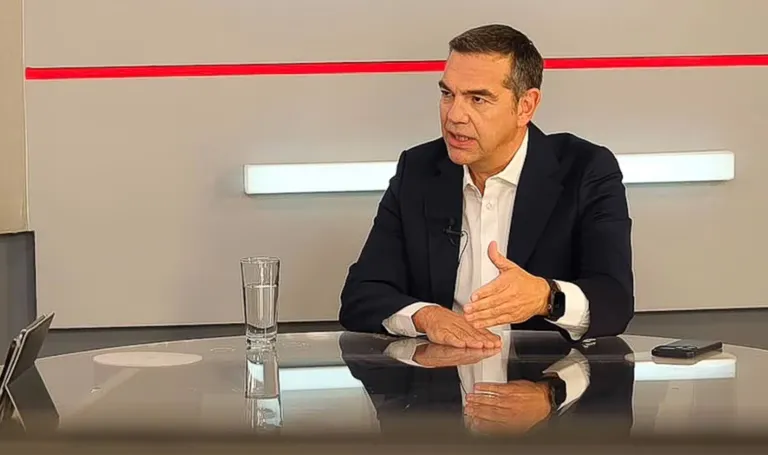
Why is Alexis Tsipras visiting Paris during this period?
Alexis Tsipras is traveling to Paris to observe and engage with the ongoing social mobilizations in France firsthand. The visit, occurring amidst widespread protests against the policies of President Emmanuel Macron, focuses on the rising cost of living and deepening social inequality that have sparked unrest across the French capital.
Beyond mere observation, the former Prime Minister's itinerary includes high-level contacts with the French opposition. While his party, SYRIZA, has previously supported these movements, this visit suggests a strategic expansion beyond the traditional confines of the French Left. Tsipras aims to leverage his established rapport with former French President François Hollande to forge stronger connections with the French social democratic movement.
This diplomatic maneuver is part of a broader effort to solidify his standing within European political circles. Having served as an observer for the European Socialist Party during his tenure as the leader of the Greek opposition, Tsipras is seeking to reintegrate himself into the core of European social democracy. This international outreach serves as a counterbalance to his domestic political restructuring, which has seen him move toward a platform defined by social democracy and ecology.
How is Tsipras reshaping his political identity?
Tsipras is actively positioning himself as a representative of a new social current that blends social democracy with ecological concerns. This shift is evidenced by the founding principles of his current political trajectory and his recent participation in major international forums, such as the Socialist International.
The former Prime Minister's political evolution includes a deliberate move toward the political center, a strategy intended to broaden his appeal. By articulating a vision that encompasses both traditional leftist values and modern ecological imperatives, he seeks to create a platform of "social democratic ecology." This approach is designed to capture a wider spectrum of the electorate, including those who feel disillusioned by the current political status quo in Greece.
The strategic move toward the center
The transition toward a more centrist-leaning position is not merely a matter of rhetoric but a calculated structural change. By moving away from the more radical edges of the traditional left, Tsipras aims to build a "current of contestation" that can compete effectively in the contemporary Greek political landscape. This strategy seeks to attract moderate voters who are dissatisfied with the current government but are wary of extreme political stances.
What is the nature of the confrontation with Kyriakos Mitsotakis?
The political landscape in Greece is currently defined by a direct and aggressive confrontation between Alexis Tsipras and Prime Minister Kyriakos Mitsotakis. Tsipras has adopted a highly critical stance, accusing the current administration of systemic failures and moral lapses.
Tsipras has used the provocative label "high priest of corruption" to describe Mitsotakis, a term used to characterize the series of scandals that have surfaced under the current government. He argues that these incidents—ranging from criminal networks to the mismanagement of public institutions—are not isolated cases of individual misconduct but rather evidence of a system operating under the tacit tolerance of the administration.
Specifically, Tsipras has pointed to the oversight of the Independent Authority for Public Revenue (AADE) and its relationship with other regulatory bodies. He has highlighted allegations involving the intersection of public officials and organized crime, suggesting that the government's management of these institutions has allowed corruption to flourish. This offensive is designed to frame the Mitsotakis government as fundamentally incapable of maintaining institutional integrity.
Allegations regarding institutional oversight
A central pillar of Tsipras's critique involves the management of key state institutions. He has specifically cited the renewal of terms for high-ranking officials, such as the head of the AADE, as a point of contention. Tsipras argues that such actions bypass legal norms—such as the two-term limit—and serve to consolidate power within a narrow circle of loyalists. This narrative seeks to paint the government as an entity that prioritizes political survival over the rule of law and institutional independence.
How does Tsipras address economic and legislative concerns?
Tsipras is extending his critique of the Mitsotakis administration to include specific legislative actions that he claims threaten the financial security of ordinary citizens. One primary example is the controversy surrounding "Article 23," a legislative provision that critics argued weakened protections for borrowers against investment funds.
Although the government eventually retracted the article following significant backlash, Tsipras maintains that the danger has not passed. He argues that the administration's willingness to propose such measures demonstrates a fundamental bias toward powerful financial interests. He warns that if the current government were to secure a third term, similar legislative risks could reappear, leaving the middle class vulnerable to predatory financial practices.
This economic critique is paired with a broader accusation of inequality. Tsipras asserts that the Prime Minister is the architect of a policy framework that benefits a small group of powerful individuals at the expense of the general population. By framing the issue as a struggle between the "few and the powerful" and the "great social majority," he attempts to mobilize voters across the political spectrum.
Appealing to the center-right electorate
A significant aspect of Tsipras's current strategy is his explicit call to center-right voters. He is targeting citizens who may be ideologically opposed to the left but are deeply dissatisfied with the current government's performance. By focusing on issues of corruption, economic fairness, and institutional stability, he is attempting to build a broad coalition of discontented voters that transcends traditional partisan lines.
Frequently asked questions
Why is Tsipras visiting France in November 2026?
Tsipras is visiting Paris to observe the social protests regarding the cost of living and Macron's policies. Additionally, he aims to meet with French socialist leaders and the opposition to strengthen his ties with European social democracy and leverage his relationship with François Hollande.
What does Tsipras mean by calling Mitsotakis the "high priest of corruption"?
This term is used by Tsipras to accuse the Mitsotakis government of allowing criminal networks and corruption to operate within state institutions. He argues that recent scandals are not accidents but a result of the government's tolerance and mismanagement of public authorities.
How is Tsipras changing his political platform?
Tsipras is shifting toward a platform of "social democratic ecology." This involves moving closer to the political center to attract a broader range of voters, including moderates and those disillusioned with the current administration, while maintaining a focus on social justice.
What was the controversy regarding Article 23?
Article 23 was a legislative proposal that critics claimed would reduce protections for borrowers against investment funds. Although the government withdrew the article due to public pressure, Tsipras argues it proves the administration favors powerful financial interests over ordinary citizens.
Who is the target audience for Tsipras's current rhetoric?
While maintaining his leftist roots, Tsipras is actively targeting center-right voters. He seeks to unite anyone—regardless of whether they are left, right, or center—who is dissatisfied with the current government's perceived focus on the interests of the powerful.
Key takeaways
- Alexis Tsipras is visiting Paris to engage with French socialists and observe social unrest.
- The former Prime Minister is shifting his platform toward social democracy and ecology.
- Tsipras has accused Kyriakos Mitsotakis of presiding over systemic institutional corruption.
- His political strategy includes an explicit appeal to dissatisfied center-right voters.
- He warns that recent legislative retreats do not guarantee future protection for borrowers.
Conclusion
The political maneuvers of Alexis Tsipras in late 2026 signal a dual-track strategy of international realignment and domestic confrontation. By rebuilding his connections within the European socialist framework in Paris, he seeks to bolster his legitimacy on the continental stage. Simultaneously, his aggressive rhetoric against the Mitsotakis administration aims to consolidate a broad domestic coalition of discontent. By framing the current government as an architect of inequality and institutional decay, Tsipras is attempting to redefine the political struggle in Greece as a fundamental contest between elite interests and the social majority.