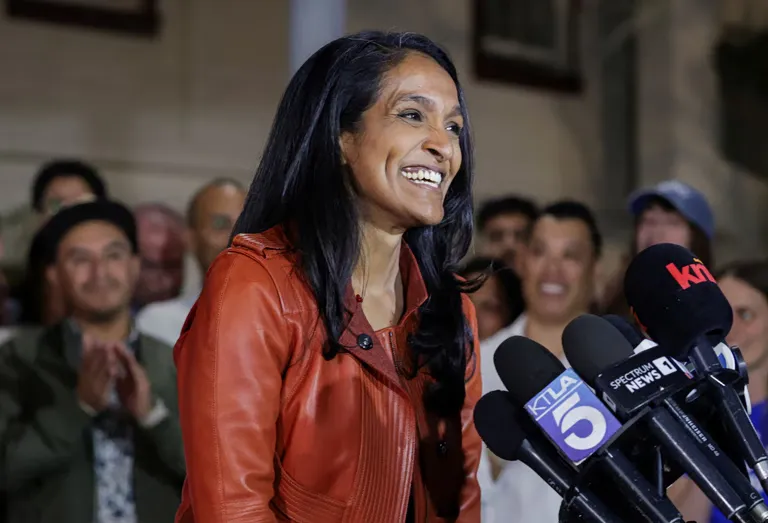
How did Nithya Raman win the Los Angeles mayoral election?
Nithya Raman secured her victory by capturing 52% of the total vote in a contest that saw her defeat the veteran incumbent, Karen Bass. The election followed a decisive open primary in June, which effectively narrowed the field by excluding Republican candidates from the final stage of the race. Raman, a 45-year-old former city council member, successfully mobilized a significant portion of the electorate by positioning herself as a progressive alternative to the established political order.
Raman's path to the mayoralty was characterized by a shift in strategy; while she initially supported the candidacy of the outgoing mayor, she eventually decided to run her own campaign. Her victory represents a notable moment in American municipal politics, as she joins a growing cohort of progressive leaders in major US cities, mirroring the political trajectories seen in New York and Washington, D.C.
The role of the open primary
The June open primary played a crucial role in shaping the final outcome. By allowing all voters to participate regardless of party affiliation, the process allowed Raman to build momentum early on. This structural element of the election meant that by the time the general vote occurred, the contest had become a battle between two prominent Democratic figures, ultimately allowing Raman to consolidate the progressive wing of the party.
What are the primary policy goals for the new administration?
The incoming administration under Nithya Raman is expected to prioritize housing affordability and urban infrastructure. In her post-election communications, Raman emphasized the necessity of constructing affordable housing units to combat the city's ongoing crisis. She also highlighted the importance of public spaces, specifically mentioning the development of parks where children can play safely, as a core component of her vision for a better future in Los Angeles.
Raman's platform is deeply rooted in the principles of the Democratic Socialists of America (DSA). Her approach suggests a move toward more interventionist urban policies aimed at addressing systemic inequality. The focus on "building an extraordinary future" through tangible improvements in living standards is intended to resonate with a constituency that has felt increasingly alienated by the current economic landscape of the city.
Why did voters move away from the Karen Bass administration?
The defeat of Karen Bass, a 73-year-old veteran of American politics, can be attributed to several critical challenges faced during her tenure. Bass, who took office in 2022, faced intense scrutiny regarding her management of the devastating and deadly wildfires of 2025. These natural disasters left a lasting impact on public perception and highlighted vulnerabilities in the city's emergency response and resilience frameworks.
Furthermore, the persistent homelessness crisis in Los Angeles remained a central point of contention. As the second-largest urban center in the United States, the scale of the unhoused population has become a defining issue for the city. Voters expressed dissatisfaction with the progress made under the current leadership, viewing the existing approaches as insufficient to address the magnitude of the problem.
The impact of the 2025 wildfires
The 2025 wildfires served as a major turning point for the Bass administration. Beyond the immediate loss of life and property, the fires created a sense of crisis that tested the limits of municipal governance. The perceived inability to adequately mitigate the disaster's effects contributed to a loss of confidence among key voter demographics, providing an opening for Raman's more radical reformist message.
Who is the core electorate supporting Nithya Raman?
Nithya Raman's support base is largely composed of younger voters who are increasingly disillusioned with the traditional Democratic establishment. This demographic has been particularly impacted by the skyrocketing cost of living and housing prices in Los Angeles. For many in this group, the centrist or moderate approaches of the past have failed to deliver meaningful change, making Raman's democratic socialist platform highly attractive.
By tapping into this energy, Raman has successfully bridged the gap between grassroots activism and mainstream municipal governance. Her ability to attract voters who find the current Democratic mainstream "too moderate" has been a decisive factor in her success. This shift indicates a changing political landscape in Los Angeles, where the priorities of younger, urban residents are beginning to dictate the direction of city hall.
What challenges does the new mayor face regarding the 2028 Olympics?
The administration of Nithya Raman inherits a city on the brink of hosting one of the world's largest sporting events: the 2028 Olympic Games. While the Olympics offer significant economic potential, they also present immense logistical and social challenges. The city must balance the massive infrastructure requirements of the Games with its existing commitments to solve the housing and homelessness crises.
There is a significant risk that the focus on Olympic preparations could exacerbate existing inequalities if not managed carefully. Raman will need to ensure that the benefits of the Games are distributed broadly and do not come at the expense of the city's most vulnerable populations. The successful management of this period will likely be a primary metric by which her administration's effectiveness is judged.
FAQ: Nithya Raman Los Angeles mayor election
Who is the new mayor of Los Angeles?
Nithya Raman is the newly elected mayor of Los Angeles. A 45-year-old member of the Democratic Socialists of America, she won the election with 52% of the vote, succeeding the incumbent Karen Bass.
What were the main reasons for Karen Bass's defeat?
Karen Bass faced significant criticism over her handling of the deadly 2025 wildfires and the city's persistent homelessness crisis. These issues, combined with voter dissatisfaction regarding housing costs, contributed to her loss against Raman.
What are Nithya Raman's top priorities?
Raman's primary policy goals include increasing the availability of affordable housing, developing more public parks, and addressing the economic challenges faced by Los Angeles residents through a democratic socialist lens.
How does Raman's political identity differ from her predecessor?
While both are Democrats, Raman identifies as a democratic socialist and represents the more progressive left wing of the party. Her platform is more closely aligned with the political styles of leaders in New York and Washington, D.C.
What major event is Los Angeles preparing for?
Los Angeles is preparing to host the 2028 Olympic Games. This event will require significant urban management and infrastructure development during Raman's term in office.
Key takeaways
- Nithya Raman won the Los Angeles mayoral election with 52% of the vote.
- The incoming mayor is a member of the Democratic Socialists of America.
- Key challenges include the housing crisis and the 2028 Olympic Games.
- The incumbent, Karen Bass, faced criticism over the 2025 wildfires.
Conclusion
The election of Nithya Raman marks a transformative moment for Los Angeles, signaling a shift toward more progressive, democratic socialist governance. By capturing the support of a younger electorate frustrated by housing costs and systemic inequality, Raman has secured a mandate to overhaul the city's approach to urban living. However, her success will be tested by the immediate pressures of the 2028 Olympics and the long-standing challenges of homelessness and climate resilience. As the city moves into this new era, the balance between large-scale global events and local social welfare will remain the central tension of her administration.