What triggered the PASOK private debt dispute?
The political confrontation between PASOK and New Democracy (ND) stems from the recent legislative vote on private debt management and housing regulations. The tension reached a peak following the controversial withdrawal of Article 23 due to public outcry, a move that PASOK leadership used to criticize the Prime Minister's administration. This friction extended beyond parliamentary debates into a series of accusations regarding the transparency and intent of the new law.
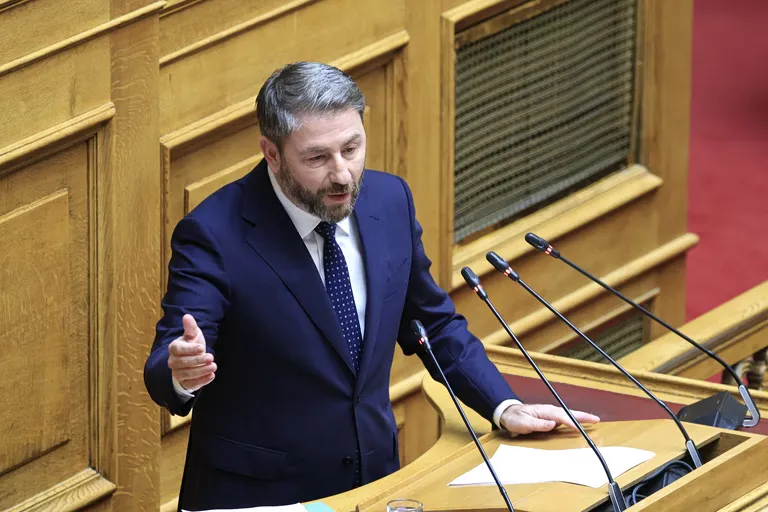
Nikos Androulakis, representing PASOK, has been vocal in his criticism of the government's alignment with financial institutions. During a recent media appearance on BEST TV with journalist Th. Kanellopoulos, Androulakis maintained that the inclusion of Article 23 was designed to facilitate a pathway for investment funds to seize citizen assets without requiring a formal judicial decision. He stated that the current administration has proven itself to be "frontrunners for the funds," suggesting that the legislative framework favors institutional creditors over individual debtors.
The controversy surrounding Article 23
Article 23 became the focal point of the debate because of its implications for property rights and judicial oversight. PASOK argues that the provision weakens the protections that prevent creditors from accessing personal assets without rigorous legal scrutiny. The opposition maintains that the government is creating a legal environment that prioritizes the liquidity and interests of international funds at the expense of the Greek taxpayer's security.
How did the parties clash over the legislative vote?
A significant portion of the dispute involves conflicting narratives regarding how PASOK voted on the massive 390-article bill. Government-aligned sources leaked information suggesting that PASOK had actually supported the majority of the legislation, claiming that the opposition voted in favor of 285 out of 371 non-nominal articles. According to these leaks, this represented approximately 77% of the bill, contradicting PASOK's stance of viewing the legislation as unacceptable.
PASOK leadership, specifically Charilaou Trikoupi, has dismissed these claims as organized "propaganda" by New Democracy. The party argues that the government is attempting to aggregate a vast array of unrelated regulations to create a false impression of consensus. To clarify their position, PASOK released a statement explaining the structure of the bill: while the total number of articles is high, only the first 41 actually pertain to private debt. The remaining 349 articles cover diverse topics including the integration of six European directives, banking regulations, capital markets, cryptocurrencies, public accounting, and pensions.
Why is the interest rate structure a point of contention?
The disagreement over the mechanism for debt restructuring is centered on the sustainability and cost of repayments for citizens. The current government measure proposes a repayment plan spanning 120 installments, but PASOK argues that this is insufficient without stricter criteria to ensure long-term viability. A primary point of friction is the interest rate applied to these restructured debts.
According to Nikos Androulakis, the government's plan applies a 5.8% interest rate to the installments. In contrast, PASOK has proposed a significantly lower rate of 3%. The opposition contends that the current 5.8% rate does not provide enough relief to the most vulnerable debtors and fails to meet the threshold for a truly sustainable debt settlement. They argue that for a restructuring plan to be effective, it must prioritize the ability of the citizen to maintain a basic standard of living while fulfilling their obligations.
What are the proposed solutions for the housing crisis?
Shifting the focus from debt to the broader cost of living, Nikos Androulakis has presented a series of housing proposals aimed at the younger generation. During a meeting with youth in Kalamata, Androulakis outlined a strategy to reduce housing costs through state intervention and social housing initiatives. He emphasized that the government's refusal to adopt certain European models is a missed opportunity for Greece.
The PASOK housing platform includes several key pillars:
- Social Housing and Long-term Rentals: Creating social housing stocks and providing tax incentives for the renovation of vacant properties to be used as long-term, low-cost rentals for students and families.
- Regulation of Short-term Rentals: Implementing limits on short-term tourist rentals in high-demand areas, citing the Barcelona model of managing capacity to protect local residents.
- Golden Visa and Rent Caps: Abolishing the "Golden Visa" program and establishing rent increase ceilings based on criteria such as building age and energy efficiency.
- Student Support: Providing tax relief for families sending children to study in different cities and increasing rent subsidies in tourist-heavy regions.
Learning from European precedents
Androulakis pointed to successful models in countries such as Portugal, Spain, Italy, and Austria to justify these proposals. He argued that by following these central European and Mediterranean examples, Greece could stabilize its rental market and ensure that housing remains an accessible right rather than a speculative asset. The proposal also includes a comprehensive plan for the renovation and energy upgrading of existing student dormitories to improve living standards.
FAQ: PASOK and the Private Debt Debate
What is the main criticism of Article 23?
The main criticism is that Article 23 allows investment funds to access the property and assets of citizens without a prior judicial decision. PASOK argues this undermines legal protections and prioritizes the interests of financial institutions over the rights of individual debtors.
How much does the PASOK debt proposal differ from the government plan?
The primary difference lies in the interest rate and sustainability criteria. While the government proposes a 5.8% interest rate for the 120-installment plan, PASOK advocates for a lower rate of 3% to ensure the debt remains manageable for citizens.
Why did PASOK vote for some parts of the bill?
PASOK clarifies that they did not support the debt legislation, but rather that the bill is a massive compilation of 390 articles. Many articles covered unrelated topics like pensions and crypto-assets, which the opposition did not oppose, leading to the government's claim of "over-voting" the bill.
What are the key housing proposals for young people?
Key proposals include creating social housing, limiting short-term tourist rentals, abolishing the Golden Visa, and implementing rent caps. Additionally, PASOK suggests tax relief for families with students and increased rent subsidies in high-cost areas.
How does PASOK plan to handle the rental market?
PASOK plans to manage the market by incentivizing the renovation of closed homes for long-term use and regulating short-term rentals based on local capacity studies, similar to the regulatory approach used in Barcelona.
Key takeaways
- PASOK accuses the ND government of prioritizing investment funds over citizen protections regarding private debt.
- The political dispute involves a disagreement over the interest rate, with PASOK proposing 3% against the government's 5.8%.
- Article 23 is a major point of contention due to concerns over judicial oversight and asset seizure.
- PASOK's housing platform includes social housing, rent caps, and the abolition of the Golden Visa program.
The future of Greek debt and housing policy
The confrontation between PASOK and New Democracy highlights a fundamental ideological divide regarding the role of the state in managing economic crises. While the government focuses on legislative frameworks that integrate with European directives and maintain financial market stability, the opposition is positioning itself as a defender of individual property rights and social welfare. As the debate moves from the parliamentary floor to the concerns of students and families, the resolution of the private debt issue and the implementation of housing reforms will likely become central pillars of the upcoming political cycle in Greece.