How does popular will determine political legitimacy?
Political legitimacy is not merely a matter of holding office through formal procedures, but rather the continuous recognition of authority by the governed. When a significant portion of society feels disconnected from the ruling administration, a gap emerges between legal authority and social mandate. This gap often manifests as a crisis of legitimacy, where the government continues to function legally but lacks the moral or social backing required for stable governance.
In many modern political contexts, there is a growing tension between the 'legal' right to rule and the 'substantive' legitimacy derived from public consent. When political actors attempt to govern based solely on a narrow, loyalist base—even if that base represents a minority of the total population—they risk entering a state of permanent friction with the broader citizenry. This friction can lead to social instability if the mechanisms for expressing discontent through formal democratic channels are perceived as ineffective or rigged.
What can we learn from the electoral shifts in Brazil and Serbia?
Recent electoral outcomes in Brazil and Serbia provide empirical evidence that mass mobilization can successfully challenge political trajectories that seemed predetermined. These cases highlight how organized social pressure and high engagement levels can act as a corrective force against perceived democratic backsliding.
The Brazilian Experience: Countering Authoritarianism
In Brazil, the electorate faced the prospect of a return to far-right authoritarianism, a movement that threatened to dismantle the social and institutional gains made under previous administrations. Despite pessimistic forecasts, the mobilization of the Brazilian populace led to the re-election of Luiz Inácio Lula da Silva. A critical factor in this outcome was the surge in voter participation; during the second round of the presidential elections, turnout exceeded 80%, demonstrating that high engagement can override political momentum favoring radical shifts.
The Serbian Context: Grassroots Demand for Change
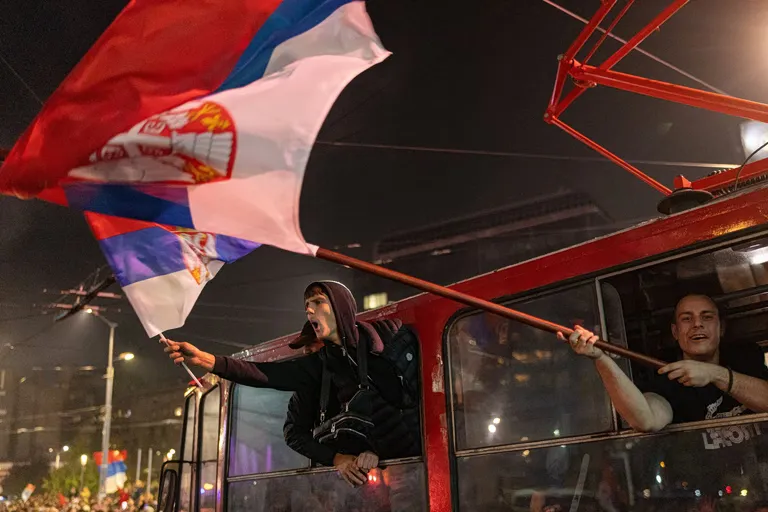
Similarly, in Serbia, prolonged social mobilization driven by public outcry over specific crises—notably the tragic events in Temkin—facilitated a 'bottom-up' political process. This movement sought to provide an outlet for a society demanding change from a government that had increasingly functioned as a closed regime. This mobilization resulted in a significant 10% increase in voter turnout, proving that when citizens perceive a direct link between their vote and the possibility of systemic change, they are more likely to participate in the democratic process.
Why is voter turnout a decisive factor in democratic stability?
Voter turnout serves as a barometer for the health of a democracy and a direct measure of the populace's belief in the efficacy of the electoral system. High turnout often correlates with a heightened sense of agency among the citizenry, which can disrupt the strategies of political elites who rely on voter apathy to maintain the status quo.
When turnout is low, political parties often focus their resources on mobilizing a 'hard core' of loyalists, effectively narrowing the political discourse to serve a small minority. This can create a feedback loop where the majority of the population, feeling their voices are irrelevant, retreats into passivity. However, as seen in the cases of Brazil and Serbia, a sudden spike in participation can shatter these narrow political calculations, forcing a realignment of power that reflects the broader societal will rather than the interests of a concentrated elite.
How does political passivity affect national governance?
Political passivity is often a strategic target for governments seeking to maintain power with minimal social mandate. By fostering an environment of disorientation and apathy, administrations can govern through a 'social minority,' using their core base to provide a veneer of strength while marginalizing dissenting voices.
This strategy of governing through a minority relies on several key assumptions:
- The belief that the majority will remain disengaged due to cynicism or lack of alternatives.
- The use of media and political narratives to frame the current administration as the only viable option for stability.
- The exploitation of the 'fear of chaos' to coerce undecided voters or smaller political entities into supporting the incumbent.
However, this approach is inherently fragile. The moment a compelling political alternative emerges—one that offers a credible vision for the future—the perceived necessity of the incumbent can evaporate. The transition from passivity to active engagement is often triggered by a crisis that makes the cost of inaction higher than the perceived risk of change.
FAQ: Popular Will and Democracy
What is the difference between legal and substantive legitimacy?
Legal legitimacy refers to the formal, procedural right to govern based on established laws and election results. Substantive legitimacy is the broader social acceptance of a government's authority, rooted in the public's belief that the administration represents their interests and adheres to democratic values.
How did voter turnout affect the elections in Brazil?
In Brazil, voter engagement was a decisive element in the presidential election. Participation surged during the second round, surpassing the 80% mark. This high level of involvement helped counteract predictions of an authoritarian shift and supported the re-election of the incumbent leadership.
Why did Serbia see an increase in election participation?
The increase in Serbian voter turnout, which rose by approximately 10%, was driven by intense grassroots mobilization. Public discontent regarding specific social and political crises prompted citizens to use the electoral process as a tool for demanding systemic change and governmental accountability.
Can a government rule with only 30% of the vote?
Technically, a government may hold power through legal parliamentary majorities even with low popular support. However, such a government often lacks substantive legitimacy, leading to social tension, a lack of public cooperation, and a persistent crisis of authority within the country.
What role does political mobilization play in preventing authoritarianism?
Political mobilization acts as a check on authoritarian tendencies by activating the citizenry. When large segments of the population engage in voting and social activism, they create a political cost for undemocratic actions, making it harder for regimes to consolidate power against the public will.
Key takeaways
- High voter turnout in Brazil and Serbia acted as a catalyst for significant political shifts.
- Substantive legitimacy requires broad social acceptance, not just legal electoral victory.
- Political passivity is often leveraged by administrations to maintain power via minority support.
- Grassroots mobilization can successfully challenge entrenched regimes and prevent democratic backsliding.
Conclusion
The tension between institutionalized power and the actual will of the people remains a central theme in modern politics. As evidenced by recent global shifts, the stability of a democracy depends less on the strategies of its elites and more on the engagement of its citizens. While governments may attempt to navigate through social apathy, the historical precedent of Brazil and Serbia demonstrates that organized, high-turnout movements can fundamentally redefine a nation's direction. Ultimately, the capacity for a society to mobilize around a credible alternative remains the most potent safeguard against the erosion of democratic legitimacy.