Why are internal tensions rising within New Democracy?
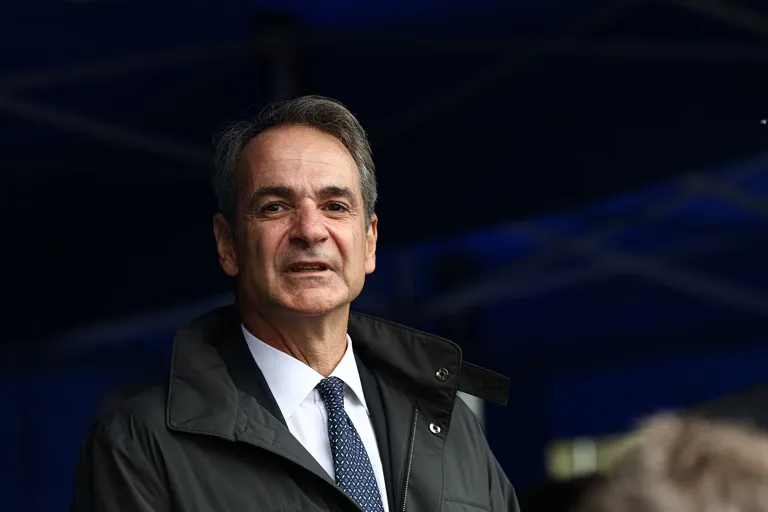
Internal friction within the New Democracy party has escalated following a series of pointed remarks by former Prime Minister Kostas Karamanlis. The tension is not merely rhetorical; it has manifested in explicit public dissent from current members of parliament, signaling a potential fragmentation of the party's unified front on foreign policy. The most visible sign of this unrest is the alignment between Karamanlis's strategic warnings and the critiques voiced by senior party figures.
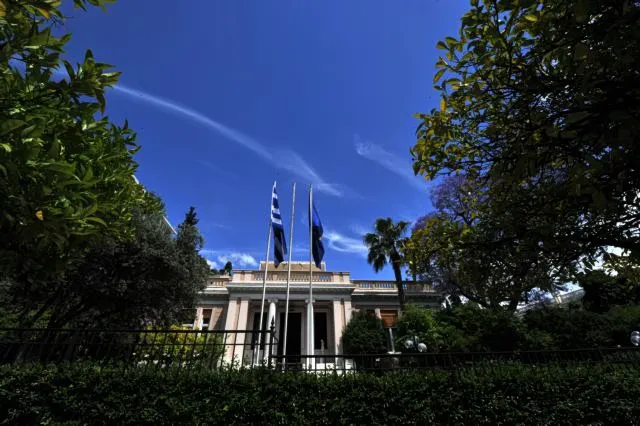
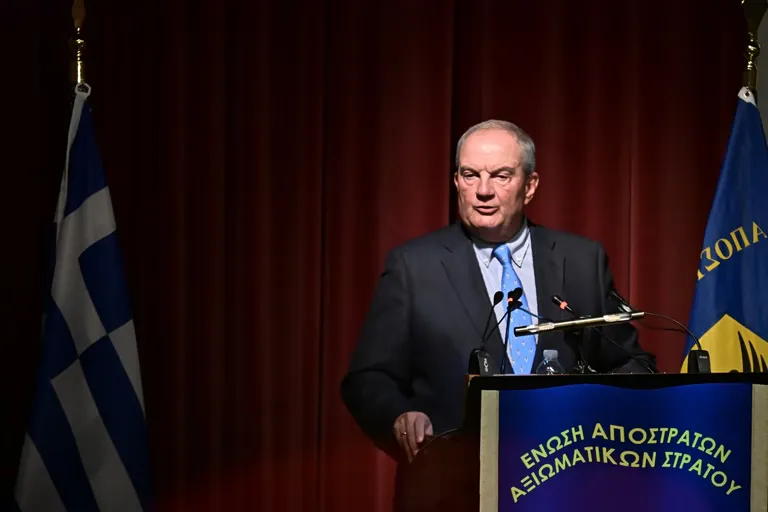
The recent appearance of Karamanlis at the War Museum served as a catalyst for these 'aftershocks.' His commentary touched upon sensitive national issues, including the management of the Aegean and the diplomatic approach toward Turkey. This has forced the Maximos government into a defensive posture, attempting to manage the fallout without alienating the traditionalist base of the party or creating a permanent schism with a heavyweight political figure.
How has the Greece-Cyprus interconnection sparked dissent?
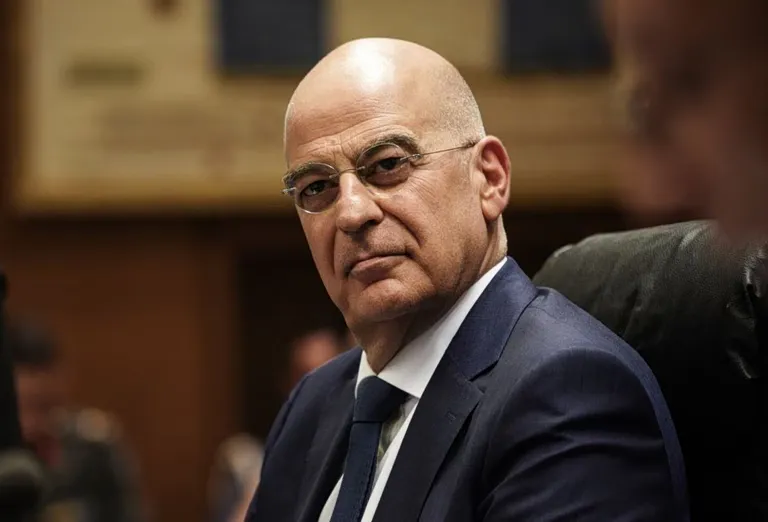
The proposed electricity interconnection cable between Greece and Cyprus has become a primary flashpoint for debate regarding national sovereignty. Evripidis Stylianidis, a former minister and current MP, has openly broken from the government line, supporting Karamanlis's warning that any perceived concession to Turkey could undermine Greek rights.
According to reports on October 26, 2026, Stylianidis expressed concern that even a simple 'notification' to Turkey regarding the project could be misinterpreted. He argued that such a move might be used by Ankara to challenge Greek sovereignty in areas where it holds no jurisdiction. Stylianidis emphasized that since multiple cables already traverse similar areas under international law without issue, requiring any form of communication or permission from Turkey constitutes an act of political retreat.
The risks of diplomatic notification
The core of the argument rests on the legal and symbolic distinction between 'requesting permission' and 'providing notification.' Karamanlis had previously warned the government that any request for authorization from Turkey would effectively grant Ankara a veto over Greek infrastructure projects, including those between Greek islands. The fear within the party is that by treating the project as a matter for Turkish notification, the government is inadvertently validating Turkey's illegal claims in the Aegean.
What is the impact of the Turkey-Libya memorandum?
The ratification of the Turkey-Libya memorandum by the Libyan House of Representatives has been characterized by party critics as a significant diplomatic miscalculation. While avoiding the term 'national defeat,' Stylianidis described the situation as a 'bad moment' where Greek diplomacy failed to accurately assess the geopolitical landscape.
The critique suggests that the Greek government invested too heavily in specific regional actors, such as Khalifa Haftar, without securing the necessary strategic advantages in return. This perceived failure has left Greece in a position where Turkey can demonstrate strength and create 'faits accomplis' in the Mediterranean. Karamanlis echoed these sentiments, noting that while the memorandum might not have immediate legal consequences, it serves as a display of Turkish influence and a provocation against Greek interests.
How has the government responded to these criticisms?
The Maximos government has attempted to dismiss these concerns as exaggerations, seeking to maintain a distinction between Karamanlis and other political figures like Antonis Samaras. Government spokesperson Pavlos Marinakis has worked to downplay the impact of the former Prime Minister's remarks, framing them as a critique of 'unpleasant developments' rather than a fundamental failure of state policy.
Regarding the electricity cable, Marinakis clarified the government's stance by distinguishing between legal implications and administrative procedures. He argued that requesting a permit would recognize foreign jurisdiction, whereas a 'standard notification' carries no such legal weight. The government maintains that no permit will be sought from any other state and that the notification is a purely formal step required for such large-scale infrastructure projects.
What are Karamanlis's broader strategic warnings?
Kostas Karamanlis has leveled broader criticisms against the current administration's strategic reading of Turkey, suggesting that the government is consistently underestimating Ankara's long-term objectives. He described Turkey's strategy as a comprehensive plan to overturn the status quo in the Aegean and secure rights in the heart of the sea, potentially extending control up to the 25th parallel.
Furthermore, Karamanlis criticized the international community's perceived inconsistency. He pointed out that while allies call for sacrifices and unity in support of Ukraine, they often remain silent on the issue of Cyprus, effectively favoring solutions that validate illegal occupation. His critique extended to the 'woke agenda' and the complexities of modern alliances, suggesting that true friendship between nations requires a mutual defense of principles and national interests, rather than one-sided demands.
FAQ: New Democracy internal tensions
Why is Evripidis Stylianidis criticizing the government?
Evripidis Stylianidis is criticizing the government because he believes its approach to the Greece-Cyprus electricity interconnection and the Turkey-Libya memorandum undermines Greek sovereignty. He views the government's diplomatic actions as a form of retreat that could allow Turkey to challenge Greek rights in the Aegean.
What is the government's position on the electricity cable?
The government maintains that the notification regarding the Greece-Cyprus cable is a formal, routine procedure that does not imply a request for permission. Spokesperson Pavlos Marinakis stated that such a notification does not grant any legal jurisdiction to Turkey and is necessary for the project's execution.
How does Karamanlis view Turkey's strategy in the Aegean?
Kostas Karamanlis views Turkey's strategy as a deliberate attempt to overturn the existing status quo. He believes Turkey aims to acquire rights in the heart of the Aegean and use the issue of demilitarization as a tool to challenge the sovereignty of Greek islands.
What was the criticism regarding the Libya memorandum?
The criticism regarding the Turkey-Libya memorandum focuses on the idea that Greek diplomacy misjudged the situation. Critics, including Stylianidis, suggest that the government's investment in certain regional figures did not yield the expected strategic benefits, allowing Turkey to assert more influence.
Does the government agree with Karamanlis's assessment?
The government does not agree with the severity of Karamanlis's assessment. While acknowledging that certain developments are 'unpleasant,' the government seeks to differentiate its active foreign policy from the criticisms leveled by the former Prime Minister, attempting to avoid a direct confrontation.
Key takeaways
- Internal New Democracy tensions are rising following Kostas Karamanlis's strategic critiques.
- MP Evripidis Stylianidis publicly broke from the government line on Greek-Turkish issues.
- The Greece-Cyprus electricity cable is a major point of contention regarding sovereignty.
- Critics argue the Turkey-Libya memorandum represents a diplomatic miscalculation.
- The government defends its actions as formal procedures rather than legal concessions.
Conclusion
The recent political developments within New Democracy reveal a complex landscape of internal dissent that challenges the government's unified foreign policy stance. By addressing sensitive issues like the Greece-Cyprus interconnection and the Turkey-Libya memorandum, figures like Karamanlis and Stylianidis have highlighted perceived vulnerabilities in the administration's strategic approach. While the Maximos government attempts to frame these criticisms as mere procedural disagreements, the alignment of high-profile voices suggests a deeper debate regarding the preservation of national sovereignty. As the political climate evolves, the leadership's ability to reconcile these internal pressures will be critical for party stability.