What is the impact of executive power centralization on accountability?
The primary consequence of concentrating authority in a single figure is the unavoidable fusion of personal reputation with state performance. When political legitimacy is organized around a single individual, the boundaries between personal success and institutional achievement vanish. This creates a volatile political environment where the leader becomes the sole target for public frustration.
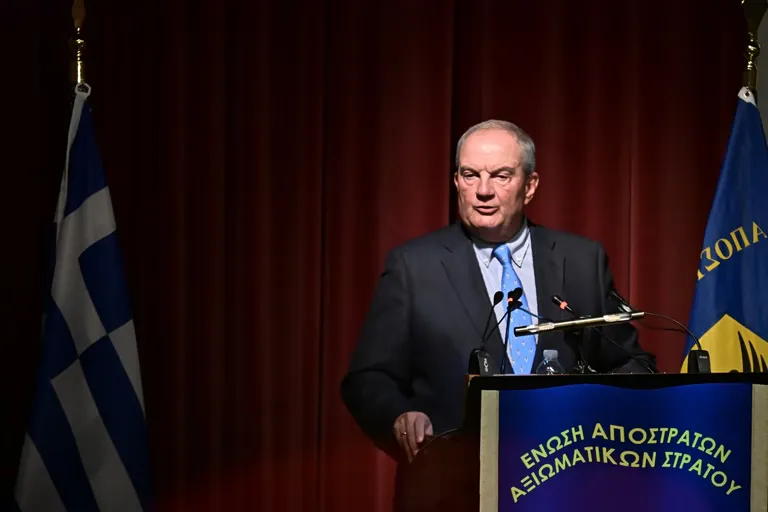
According to Andreas Andrianopoulos, the current model ensures that the Prime Minister becomes the ultimate recipient of dissatisfaction regarding government failures. This phenomenon creates a paradox of leadership: while a leader may claim credit for every triumph, they are structurally unable to deflect blame when policies fail. The more a leader is credited with success, the more difficult it becomes for that same person to distance themselves from systemic errors.
The paradox of personal responsibility
In a person-centered system, accountability is not a mechanism for correcting policy, but a tool for political retribution. Because the leader is seen as the 'guarantor' of all decisions, any administrative or departmental failure is interpreted as a personal failure of the Prime Minister. This prevents the development of a nuanced political discourse where specific ministers or agencies can be held responsible for their respective domains.
How does person-centered authority differ from institutional governance?
Person-centered authority relies on the charisma and direct control of a leader, whereas institutional governance relies on the stability of organized structures. The current Greek model, characterized by the Prime Minister acting as the central coordinator for almost all government actions, represents a departure from a purely institutionalized executive.
The transition required is not a move toward a fragmented government or a return to ministerial 'fiefdoms,' which would only serve to diffuse responsibility and weaken the state. Instead, the goal is a transition toward a constitutionally organized executive power. In such a system, the Prime Minister continues to define high-level strategy and coordinate the cabinet, but ministers possess genuine, autonomous competence within their portfolios.
Under an institutional model, the following dynamics change:
- Strategic Direction: Remains with the Prime Minister to ensure government cohesion.
- Operational Authority: Is delegated to ministers with clear, enforceable mandates.
- Oversight: Parliament and administrative bodies function as independent mechanisms for control and continuity.
Why is a change in governance architecture necessary?
Structural reform is required because simple cosmetic changes, such as cabinet reshuffles or new communication strategies, fail to address the underlying problem of power concentration. A change in personnel does not fix a flawed architecture if the decision-making process remains centralized in a single office.
The core issue is not merely that a Prime Minister holds significant power, but that the state's functionality is inextricably linked to the individual's persona. For a democracy to remain resilient, the operation of the state must be decoupled from the person holding the office. This decoupling ensures that even when leadership changes, the administrative and strategic continuity of the nation remains intact.
Moving beyond the 'guarantor' model
The 'guarantor' model of leadership creates a single point of failure. If the state's success is perceived as the result of one person's brilliance, then any perceived error by that person threatens the legitimacy of the entire government. Moving toward an institutional model allows for a more granular distribution of accountability, where dissatisfaction can be directed toward specific departments or ministers responsible for particular failures, rather than being funneled entirely toward the head of government.
What are the requirements for a successful transition?
A successful transition to institutionalized executive power requires the implementation of three fundamental pillars: clear competence, distributed authority, and independent accountability.
First, authority must be distributed in a way that empowers ministers to act as more than mere implementers of the Prime Minister's will. They must have the legal and political mandate to manage their sectors independently. Second, responsibilities must be clearly defined to prevent the overlap of powers that leads to centralisation. Third, accountability must function independently of the political standing of the Prime Minister.
Ultimately, the objective is to ensure that the state can function effectively regardless of who occupies the Prime Minister's office. This requires building mechanisms where the administration is driven by law and institutional procedure rather than the personal whims or the centralized coordination of a single individual.
Key takeaways
- Centralized authority makes the Prime Minister the sole target for both successes and failures.
- A transition to institutional governance requires moving from person-centered to structure-centered power.
- Cabinet reshuffles are insufficient if the underlying governance architecture remains centralized.
- Effective governance requires ministers to hold genuine, autonomous responsibility for their sectors.
- The state's functionality must be decoupled from the individual identity of the leader.
FAQ: Executive Power and Governance
What is the main risk of a person-centered executive?
The main risk is the total fusion of personal reputation with state performance. This ensures that the leader becomes the sole recipient of public dissatisfaction, making it impossible to isolate specific policy failures from the leader's personal political standing.
Does institutional governance mean less power for the Prime Minister?
No, the Prime Minister still defines strategy and coordinates the government. However, the difference lies in ministers having real authority and the state's operations being driven by institutional mechanisms rather than personal coordination.
Why aren't cabinet reshuffles enough to fix centralization?
Reshuffles only change the people in office, not the way power is distributed. If the decision-making architecture remains centralized in the Prime Minister's office, the new ministers will still lack genuine autonomy and responsibility.
What is the difference between a 'fiefdom' and institutional authority?
A 'fiefdom' is a fragmented, uncoordinated ministerial center that avoids accountability. Institutional authority, conversely, provides ministers with clear, legal mandates and responsibilities that are subject to independent oversight and parliamentary control.
How does institutionalization improve state continuity?
Institutionalization decouples the state's functions from the individual leader. This ensures that the administration, strategic direction, and legal frameworks remain stable and operational even when there is a change in the person holding the highest office.
Conclusion
The debate over executive power is not a question of how much power a leader should hold, but how that power is structured. Moving away from a person-centered model toward a constitutionally organized executive is essential for healthy political accountability. By empowering ministers with genuine competence and ensuring that oversight mechanisms operate independently, a state can protect itself from the volatility of individual leadership. The ultimate goal of governance reform is to ensure that the machinery of the state remains robust, predictable, and capable of functioning effectively, regardless of the individual occupying the highest office.