The Turkey-Libya maritime memorandum has triggered a significant diplomatic recalibration following its ratification by the Libyan House of Representatives. While an initial US State Department announcement appeared lukewarm, a subsequent correction on October 25, 2026, adopted much more assertive language, labeling the development as "unconstructive and provocative." This shift follows intense lobbying by Greek diplomats and the Hellenic American Leadership Council. This article examines the nuances of the US linguistic changes, the role of bilateral embassies, and the broader implications for international maritime law and regional energy security.
Why did the US State Department revise its language on the memorandum?
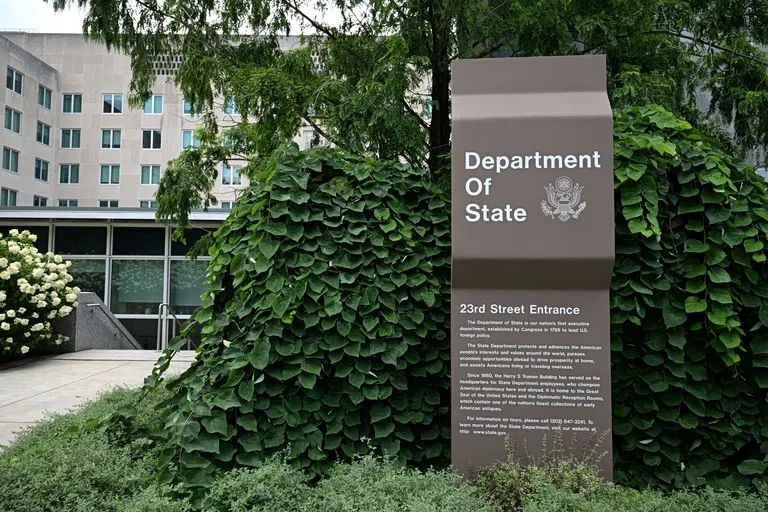
The revision of the US State Department's language marks a significant diplomatic correction intended to address the regional tensions caused by the ratification of the Turkey-Libya maritime memorandum. Initially, on October 21, 2026, the State Department issued a cautious statement encouraging East Mediterranean partners to resolve disputes through good-faith negotiations without explicitly condemning the memorandum itself. This initial stance was perceived by many diplomats as a retreat or a lack of clarity regarding the legality of the agreement.
However, the subsequent announcement on October 25, 2026, fundamentally altered the tone. The State Department explicitly stated that the ratification of the memorandum "has increased tensions in the region and constitutes an unconstructive and provocative development." Crucially, the US reaffirmed that its position on the matter had not changed, effectively reverting to the stronger diplomatic rhetoric used in 2019. This correction was not merely a matter of semantics; it was a strategic realignment to ensure that US interests in the Mediterranean are not sidelined by unilateral maritime claims.
The significance of diplomatic phrasing
In international relations, the omission or inclusion of specific adjectives can signal a shift in policy. The transition from a neutral encouragement of dialogue to a formal condemnation of the memorandum as "provocative" suggests that the US recognizes the potential for the agreement to destabilize the existing maritime order. By reinstating the language used in previous years, Washington has signaled to both Ankara and Athens that it does not view the Libyan ratification as a settled or legitimate legal fact.
How did Greek diplomacy influence the US response?
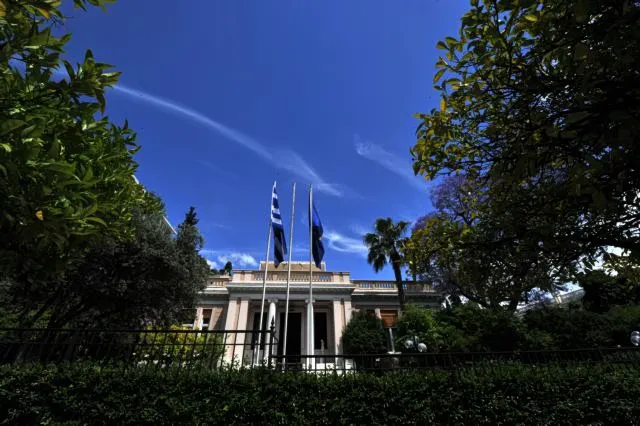
The shift in Washington's rhetoric is widely attributed to the coordinated efforts of Greek diplomatic missions in both Washington, D.C., and Athens. According to reports, the Greek Ambassador to the US, Antonis Alexandridis, worked in close cooperation with the US Embassy in Athens to highlight the strategic risks posed by the memorandum. This collaboration included the efforts of Chargé d'Affaires Josh Hack, who has been managing the US diplomatic mission in Athens following the departure of Kimberley Goldfoy.
The Greek diplomatic strategy focused on demonstrating how the memorandum threatens not only Greek sovereignty but also broader American strategic interests in the Eastern Mediterranean. This includes protecting the interests of major energy corporations such as Chevron and ExxonMobil, which hold significant exploration interests in areas south and southwest of Crete. By framing the issue as a threat to regional stability and energy security, Greek diplomats successfully moved the conversation from a bilateral dispute to a matter of US strategic necessity.
What are the strategic interests at stake for the United States?
The United States maintains a complex balancing act in the Mediterranean, viewing Turkey as a strategic partner while treating Greece as a vital ally. However, the Turkey-Libya memorandum threatens to complicate this equilibrium by creating legal uncertainties that could impede American energy and security objectives. The presence of American energy giants in the region means that any unilateral attempt to redraw maritime boundaries could jeopardize long-term investments and operational security.
Furthermore, the stability of the Mediterranean is essential for US naval movements and regional influence. A legal vacuum or a state of constant maritime friction would undermine the ability of the US to project power and maintain its presence in the region. The involvement of the Hellenic American Leadership Council (HALC), which communicated directly with US Secretary of State Marco Rubio, further underscores the high-level pressure applied to ensure that Washington remains aligned with the principles of international maritime law.
How is the international community responding to the memorandum?
The international response has been characterized by a multi-layered approach involving regional alliances and international legal bodies. Following the ratification by the Libyan House of Representatives, the Greek government mobilized a wide array of diplomatic tools. This included securing strong statements from the European Union and bringing the matter to the attention of the United Nations Security Council. A formal letter was also submitted to the UN to ensure that Greece's legal objections are officially recorded in the international registry.
A major milestone in this effort was the joint declaration issued by Greece, Cyprus, Egypt, the United Arab Emirates, Bahrain, and the European Union. This collective condemnation, presented by Greek Foreign Minister Giorgos Gerapetritis at the UN headquarters in New York, emphasized that the memorandum is a challenge to the international legal order. The declaration argues that arbitrary bilateral agreements cannot be allowed to undermine the established rules of international law or infringe upon the rights of third-party states.
The role of UNCLOS and International Law
The core of the legal argument against the memorandum rests on the United Nations Convention on the Law of the Sea (UNCLOS). Diplomats and legal experts argue that the Turkey-Libya agreement ignores the geographical reality of islands and their rights to maritime zones. By disregarding the rights of coastal states and islands as defined by UNCLOS, the memorandum creates a dangerous precedent that could lead to widespread instability if accepted as valid.
What are the next steps for Greece and Egypt in maritime delimitation?
In direct response to the developments in Libya, Greece and Egypt have moved to strengthen their own maritime cooperation. Both nations have announced the commencement of negotiations to expand the partial maritime delimitation agreement that they originally signed in 2020. This move is intended to solidify their respective Exclusive Economic Zones (EEZs) and provide a stable legal framework for future energy exploration in the Eastern Mediterranean.
This bilateral push serves two purposes: it reinforces the legal standing of the Greek and Egyptian positions against the Turkish-Libyan claims, and it provides a clear, lawful alternative to the unilateral actions taken by Ankara and Tripoli. By adhering to the principles of UNCLOS, Greece and Egypt are positioning themselves as the defenders of the rules-based international order, seeking to ensure that maritime boundaries are determined by established law rather than political maneuvering.
Frequently asked questions
Why is the Turkey-Libya memorandum considered "unconstructive"?
The memorandum is viewed as unconstructive because it attempts to establish maritime boundaries through a bilateral agreement that ignores the legal rights of other coastal states, such as Greece and Cyprus. This unilateral action increases regional tensions and undermines the stability required for energy exploration and international trade.
What role does UNCLOS play in this dispute?
UNCLOS provides the legal framework for defining maritime zones and resolving disputes. Critics of the memorandum argue that the agreement violates UNCLOS by failing to recognize the maritime rights of islands, which is a fundamental principle of the convention and essential for maintaining international legal order.
How has the US position changed regarding this issue?
The US initially issued a neutral statement encouraging dialogue, which was seen as a diplomatic retreat. However, following intense diplomatic pressure, the State Department revised its language to explicitly describe the memorandum as a provocative and unconstructive development, aligning more closely with previous US stances.
Which companies are involved in the Eastern Mediterranean energy sector?
Major American energy corporations, including Chevron and ExxonMobil, have significant interests in the Eastern Mediterranean. Their presence in areas near Crete means that any maritime instability or legal disputes regarding territorial waters directly impact American economic and strategic interests in the region.
What is the significance of the Greece-Egypt negotiations?
The negotiations between Greece and Egypt aim to expand their existing 2020 maritime delimitation agreement. This move is a strategic effort to create a legally sound and stable framework for maritime activities, countering the unilateral claims made by the Turkey-Libya memorandum.
Key takeaways
- The US State Department corrected its stance, labeling the Turkey-Libya memorandum as provocative and unconstructive.
- Greek diplomatic efforts in Washington and Athens were instrumental in securing this shift in US rhetoric.
- The memorandum is viewed as a challenge to UNCLOS and the established international legal order.
- US strategic interests, including those of Chevron and ExxonMobil, are tied to Mediterranean maritime stability.
- Greece and Egypt are negotiating to expand their 2020 maritime delimitation agreement to counter unilateral claims.
Conclusion
The diplomatic tug-of-war surrounding the Turkey-Libya maritime memorandum highlights the fragility of the Eastern Mediterranean's legal and security architecture. The shift in the US State Department's language, prompted by coordinated Greek diplomacy, demonstrates that the United States remains wary of unilateral actions that threaten the rules-based international order. As Greece and Egypt move to solidify their maritime boundaries through lawful negotiations, the tension between bilateral political agreements and established international law like UNCLOS remains the central conflict. The outcome will ultimately determine the stability of regional energy security and the future of maritime governance in the Mediterranean.