A Royal Family on the Brink
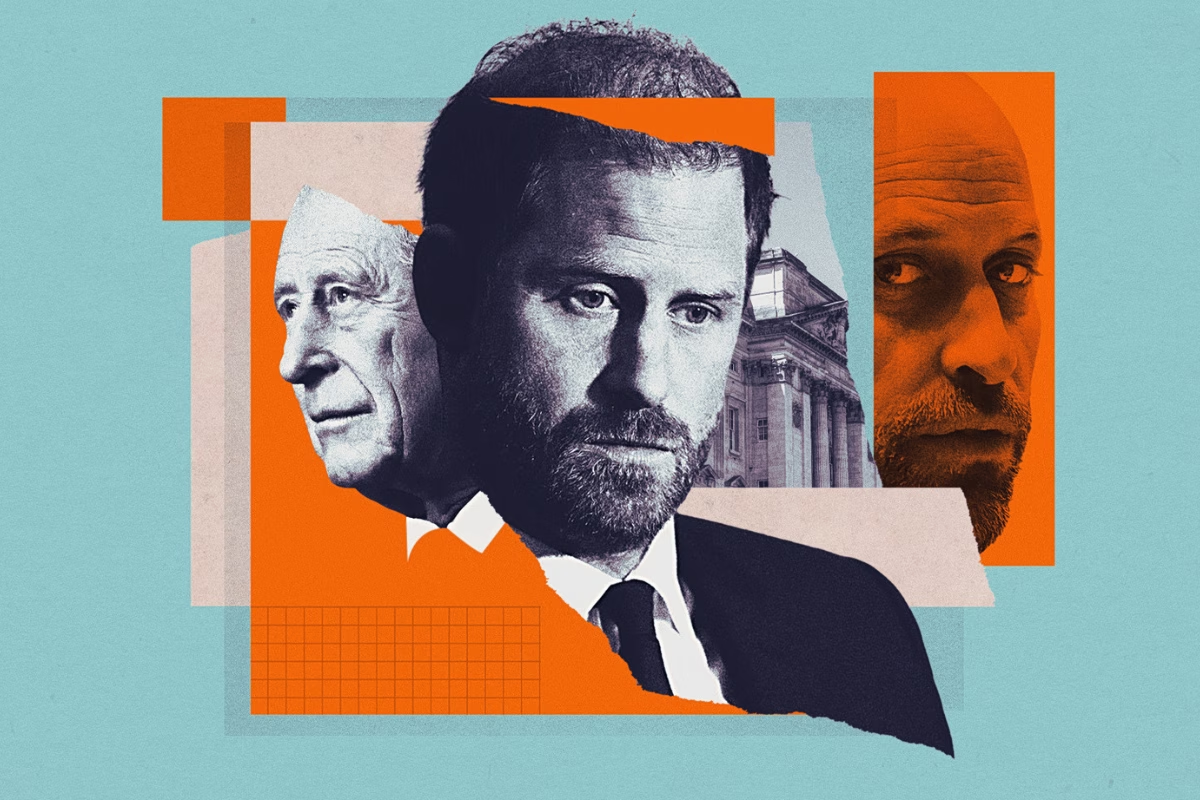
The British royal family has rarely been far from controversy in recent years, but according to veteran royal correspondent Tom Sykes, the situation may be on the verge of escalating dramatically. With speculation mounting over Prince Harry's potential return to the United Kingdom, insiders and observers alike are bracing for what could be one of the most turbulent chapters in the modern history of the monarchy.
Sykes, who has spent decades covering the inner workings of the House of Windsor, has not minced words in his assessment. Using the striking phrase that 'blood will be spilled,' he suggests that Harry's return — whether temporary or more permanent — will reignite tensions that have never truly been resolved since the Duke of Sussex stepped back from royal duties in early 2020.
The Rift Between Two Brothers
At the heart of the ongoing royal drama lies the fractured relationship between Prince Harry and his elder brother, Prince William, now the Prince of Wales. What was once a famously close bond between the two sons of King Charles III has deteriorated into what many are now calling an outright vendetta.
The breakdown between the brothers did not happen overnight. It has been the result of years of accumulated grievances, public revelations, and competing interests within an institution that prides itself on silence and discretion. Harry's decision to give explosive interviews, publish a candid memoir, and openly criticize the royal family from across the Atlantic has placed William in an increasingly uncomfortable position.
Sources close to the palace have suggested that William feels not only personally betrayed but also professionally undermined. As the future king, he has had to navigate public opinion while his brother continues to make headlines with deeply personal disclosures about life behind palace walls. Each new revelation, observers note, chips away at the carefully maintained image of unity that the monarchy depends upon.
Harry's Perspective
For his part, Harry has consistently maintained that his decisions — including relocating to the United States with his wife Meghan and stepping away from royal duties — were driven by a need to protect his family and his own mental health. He has spoken openly about feeling unsupported by the institution and has alleged that certain members of the royal family failed to intervene when he and Meghan faced what he described as relentless and damaging media scrutiny.
His memoir, published in early 2023, laid out many of these grievances in stark detail, including allegations of physical altercations with William and claims that palace staff and senior royals failed to take action to defend Meghan against press intrusion and racist coverage. The book was met with widespread public and media reaction on both sides of the Atlantic, and its fallout continues to reverberate through the institution.
King Charles and the Question of Betrayal
Perhaps even more striking than the brotherly feud is the allegation, examined by Sykes and other royal commentators, that King Charles himself may have contributed to Harry's sense of isolation and abandonment. While Charles has publicly expressed his love for both his sons, behind-the-scenes accounts paint a more complicated picture.
Harry has reportedly felt that his father did not do enough to shield him or his family during the most difficult periods of his time as a working royal. The accusation of betrayal, whether implicit or explicit, strikes at the core of the father-son relationship and raises difficult questions about the extent to which personal loyalty can exist within an institution as structurally complex and politically sensitive as the monarchy.
Sykes suggests that Charles now finds himself navigating an extraordinarily delicate situation: as king, he must protect the integrity and continuity of the Crown, but as a father, he is caught between two sons whose conflict shows no sign of resolution. Critics argue that Charles's attempts to remain neutral have satisfied neither party, while his supporters contend that he faces an almost impossible balancing act.
What a Return Could Mean
The prospect of Harry returning to the UK — even briefly — raises a host of questions about protocol, security, and family dynamics. One of the lingering disputes concerns the level of police protection Harry is entitled to when on British soil. After stepping back from royal duties, his publicly funded security detail was withdrawn, a decision Harry has contested legally. The matter remains unresolved and is widely seen as one of the key obstacles to any meaningful reconciliation.
Beyond logistics, there is the question of atmosphere. Can Harry and William be in the same country, let alone the same room, without old wounds resurfacing? Royal commentators are divided. Some believe that a face-to-face encounter, however uncomfortable, could serve as a starting point for dialogue. Others warn that without genuine institutional support for mediation, any meeting is more likely to deepen divisions than heal them.
Public Opinion and the Monarchy's Image
The ongoing saga has had a measurable impact on public attitudes toward the royal family, particularly among younger generations. Polling data in recent years has shown a gradual decline in support for the monarchy among younger British citizens, though the institution continues to command broad respect among older demographics.
Internationally, particularly in Commonwealth nations, the Harry and Meghan narrative has prompted renewed conversations about the relevance and role of the monarchy in the twenty-first century. Some republics within the Commonwealth have accelerated discussions about removing the British monarch as their head of state, a trend that predates the Sussex situation but has arguably been influenced by it.
- The dispute over Harry's security arrangements remains legally unresolved.
- William and Harry have not had a meaningful private conversation in an extended period, according to multiple sources.
- King Charles is said to be deeply pained by the rift but constrained in his ability to intervene directly.
- Meghan's role in the fallout continues to be a point of contention among royal commentators and the public alike.
An Uncertain Road Ahead
As the situation continues to evolve, one thing appears certain: the British royal family is unlikely to return to the kind of carefully managed public unity it once projected. The era of enforced silence and institutional loyalty above personal wellbeing has been fundamentally challenged by Harry's willingness to speak openly about his experiences.
Whether that openness ultimately leads to greater transparency and reform within the monarchy, or simply to further fragmentation, remains to be seen. Tom Sykes and other royal experts will undoubtedly continue to watch closely as the next chapter of this very public family drama unfolds. For now, all eyes remain on whether Prince Harry will indeed return — and what consequences that return may carry for everyone involved.