How did Turkey formally enter the race?
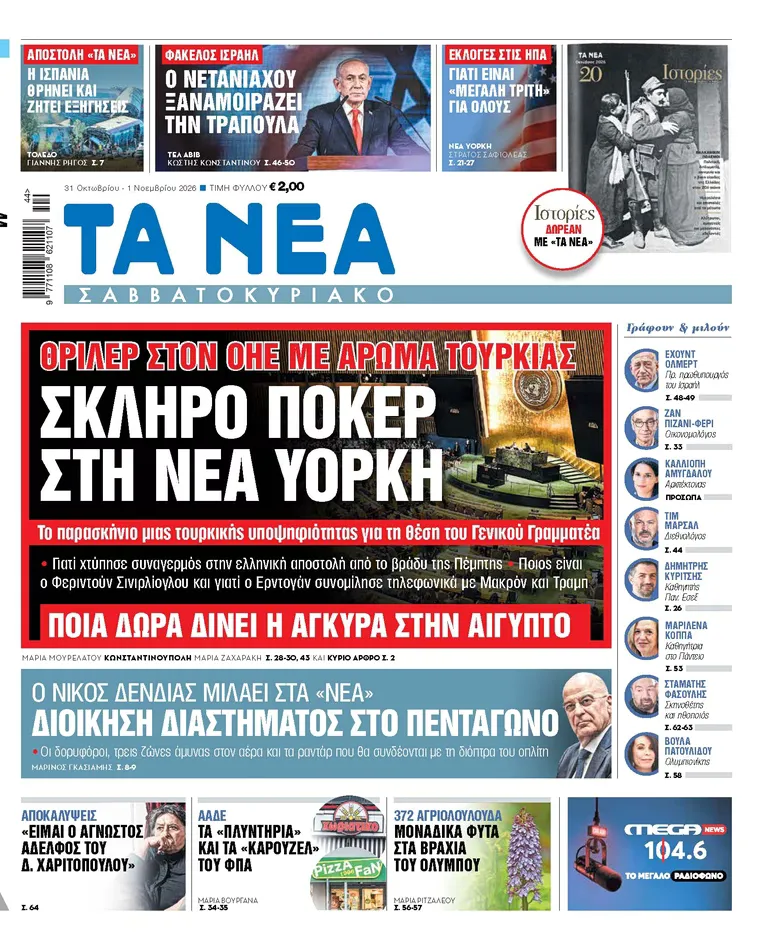
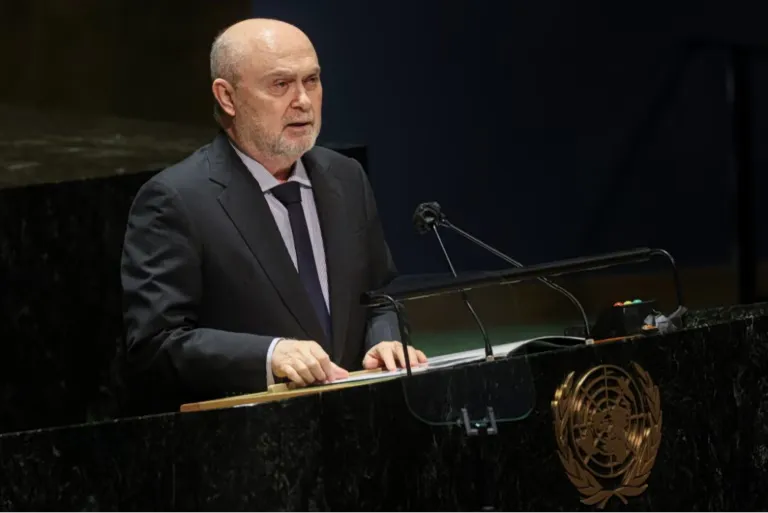
Turkey officially submitted the candidacy of Ambassador Feridun Sinirlioğlu for the position of United Nations Secretary-General through a formal diplomatic channel. Ahmet Yıldız, Turkey's Permanent Representative to the United Nations, announced that the nomination was executed via an official letter from President Recep Tayyip Erdoğan.
This submission marks a significant strategic move for Ankara in the high-stakes competition to lead the world's premier intergovernmental organization. By presenting Sinirlioğlu, a seasoned diplomat, Turkey aims to position itself as a central player in global governance during the upcoming transition of leadership.
What are the latest Security Council voting results?
The seventh informal round of voting within the UN Security Council indicates a competitive field with Rebecca Grinspaan currently leading the pack. The informal process provides a snapshot of the diplomatic climate, though it does not constitute a formal veto.
According to the latest voting data, the distribution of support and discouragement among the candidates is as follows:
| Candidate | Encouraging Votes | Discouraging Votes | No Opinion |
|---|---|---|---|
| Rebecca Grinspaan | 11 | 4 | 0 |
| Rafael Grossi | 9 | 4 | 2 |
| Caroline Rodrigues Birkett | 8 | 6 | 1 |
| Lana Nuseibeh | 7 | 6 | 2 |
| Olara Otunu | 4 | 11 | 0 |
| Maria Fernanda Espinosa | 2 | 10 | 3 |
| Yvonne A-Baké | 1 | 14 | 0 |
Understanding the weight of informal votes
It is crucial to distinguish between these informal "encouragement" and "discouragement" votes and the formal veto power held by the permanent members of the Security Council. While the discouraging votes signal resistance, they do not carry the legal weight of a veto. Furthermore, the current data does not specify the breakdown of votes by the five permanent members (P5), meaning it remains unclear if any of the discouraging votes originated from the United States, Russia, China, France, or the United Kingdom.
Who are the primary contenders in the election?
The field of candidates remains diverse, representing various geopolitical interests and diplomatic backgrounds. While some figures have gained momentum, others are struggling to secure the necessary consensus required for a successful recommendation to the General Assembly.
Rebecca Grinspaan currently holds the strongest position, having secured 11 encouraging votes. Rafael Grossi follows closely with nine, while Caroline Rodrigues Birkett has maintained a presence with eight votes. The United Arab Emirates' candidate, Lana Nuseibeh, is also a significant participant; she recently engaged in an informal dialogue with Security Council members on October 28 to present her vision for addressing UN challenges. This follows her formal candidacy submission on October 21.
Conversely, several candidates face significant hurdles. Olara Otunu, Maria Fernanda Espinosa, and Yvonne A-Baké have received substantially more discouraging votes than encouraging ones, placing their prospects in jeopardy. Notably, former Senegalese President Macky Sall has already withdrawn from the race, narrowing the field of active competitors.
What is the official UN selection process?
The appointment of the Secretary-General is a two-stage process governed by the UN Charter and specific procedural guidelines established by the General Assembly and the Security Council. The process is designed to ensure transparency and allow the successor sufficient time to prepare for the role.
The procedure follows these core requirements:
- Security Council Recommendation: The Security Council must first reach a consensus and issue a formal recommendation to the General Assembly.
- The Nine-Vote Rule: For a recommendation to be valid, it requires at least nine affirmative votes from the Council members.
- The Veto Constraint: Crucially, the recommendation cannot pass if any of the five permanent members (P5)—the USA, Russia, China, France, and the UK—exercise their veto power.
- General Assembly Appointment: Upon receiving the recommendation, the General Assembly officially appoints the Secretary-General.
The current cycle is being conducted under the principles of transparency and inclusion, as outlined in the joint letter from the Presidents of the General Assembly and the Security Council dated November 25, 2025. The Council aims to finalize its recommendation in a timely manner to ensure a smooth transition of power.
Frequently asked questions
How does an informal vote differ from a formal veto?
An informal vote in the Security Council uses "encouragement" and "discouragement" to gauge candidate viability. Unlike a formal veto, which is a legal mechanism used by the five permanent members to block a resolution, these informal votes are non-binding and serve as a diplomatic temperature check.
What are the requirements for a candidate to win?
To be recommended by the Security Council, a candidate must secure at least nine affirmative votes. Most importantly, the candidate must avoid a veto from any of the five permanent members: the United States, China, Russia, France, and the United Kingdom.
Who is the current frontrunner in the race?
Rebecca Grinspaan is currently the leading candidate according to the seventh round of informal voting. She has accumulated 11 encouraging votes and four discouraging votes, placing her ahead of other contenders like Rafael Grossi and Caroline Rodrigues Birkett.
Has any candidate withdrawn from the process?
Yes, former Senegalese President Macky Sall has officially withdrawn from the UN Secretary-General candidacy race. His departure reduces the total number of active candidates competing for the position during this election cycle.
How does the UAE candidate participate in the process?
Lana Nuseibeh, the UAE candidate, participated in an informal dialogue with Security Council members on October 28. During this session, she presented her strategic views on the challenges and opportunities facing the United Nations to facilitate the selection process.
Key takeaways
- Turkey has officially entered the race by nominating Ambassador Feridun Sinirlioğlu.
- Rebecca Grinspaan leads the informal voting with 11 encouraging votes.
- A successful candidate requires nine affirmative votes and no P5 vetoes.
- Macky Sall has officially withdrawn from the Secretary-General competition.
The path to global leadership
The entry of Turkey into the race via Feridun Sinirlioğlu adds a new layer of diplomatic complexity to an already crowded field. As the Security Council moves from informal discussions to formal recommendations, the focus will shift from mere encouragement to the critical hurdle of avoiding a P5 veto. With candidates like Grinspaan and Nuseibeh demonstrating varying levels of momentum, the coming months will be defined by intense diplomatic maneuvering. The ultimate goal remains a seamless transition that provides the next Secretary-General with the necessary mandate to lead the United Nations through an increasingly fragmented global landscape.