Why is the Turkey-Israel rift considered structural?
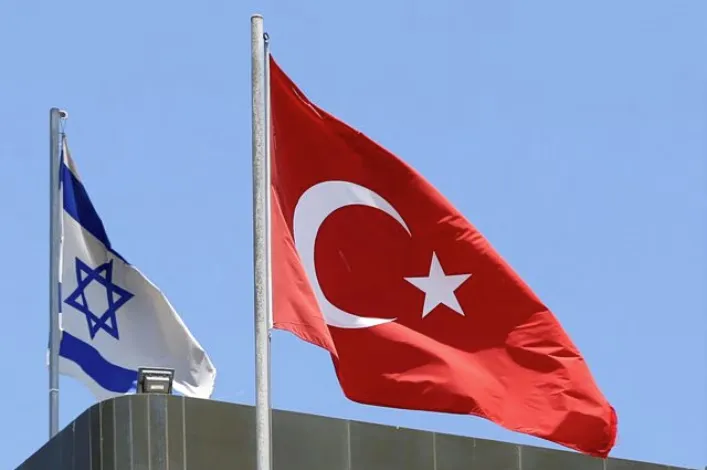
The confrontation between Turkey and Israel has evolved far beyond a personal clash between President Recep Tayyip Erdoğan and Prime Minister Benjamin Netanyahu. According to an analysis by Mustafa Enes Esen, published by the InstituDE institute on October 29, 2026, the relationship is defined by long-term geopolitical competition that transcends individual political figures.
A report from the Turkish National Intelligence Academy (MİA), which operates under the Turkish Intelligence Agency (MİT), characterizes this friction as a fundamental misalignment of regional visions. The MİA report, titled "The Anatomy of Israeli Expansionism," suggests that the shift toward right-wing policies in Israel is not solely dependent on Netanyahu’s leadership. Consequently, a change in the Israeli government is unlikely to smooth over relations with Ankara.
The core of this structural divide lies in how each nation perceives the stability of its neighbors. The Turkish perspective, as detailed in the MİA report, posits that Ankara seeks to strengthen the state structures of neighboring countries to ensure regional stability. In contrast, the report alleges that Israel pursues a strategy of maintaining weak and fragmented states to preserve its own security interests. This fundamental disagreement on the nature of regional sovereignty creates a persistent barrier to diplomatic rapprochement.
The impact of Israeli leadership changes
Despite the Israeli elections held on October 27, 2026, analysts suggest that significant shifts in bilateral relations are improbable. While political figures like Gadi Eisenkot may differ from Netanyahu, the strategic directions regarding Lebanon, Syria, and Iran remain consistent across the Israeli political spectrum. This continuity ensures that the core points of contention with Turkey remain active regardless of who holds office in Tel Aviv.
How does the Eastern Mediterranean drive this competition?
The Eastern Mediterranean serves as a primary theater for the Turkey-Israel rivalry, particularly concerning energy security and regional alliances. The competition is not merely about maritime borders but involves the broader shaping of regional power blocs and energy architecture.
The struggle for influence in these waters is inextricably linked to how energy resources are managed and how regional alliances are formed. For stakeholders in Cyprus and the wider Mediterranean, the Turkey-Israel friction acts as a decisive factor in determining the future of energy transit and maritime security. The diverging interests of Ankara and Tel Aviv influence the very fabric of regional cooperation, often forcing third-party nations to navigate a complex web of competing claims.
What is the impact of competing trade corridors?
Global trade connectivity has become a new frontline in the Turkey-Israel confrontation, specifically through the competition between different economic corridors. The rise of new transit routes threatens to reshape the economic landscape of the Middle East and Europe, placing Turkey and Israel on opposing sides of strategic planning.
A major point of contention is the India-Middle East-Europe Economic Corridor (IMEC). Turkey views this corridor as a direct competitor to its own connectivity projects. To avoid being sidelined by these emerging networks, Ankara is actively promoting alternative routes designed to maintain its central role in global trade.
- The Development Road via Iraq: A strategic project aimed at connecting the Persian Gulf to Europe through terrestrial routes.
- The Middle Corridor: A route connecting Central Asia to Europe, designed to bypass traditional bottlenecks.
By investing in these alternatives, Turkey seeks to ensure that it remains an indispensable hub in the new regional networks of trade and energy, countering the influence that corridors like IMEC might bring to Israel and its partners.
Why is Syria the most dangerous flashpoint?
Syria represents the most volatile arena for potential escalation between Turkey and Israel due to the diametrically opposed political objectives of both nations. The conflict in Syria is not just a local issue but a proxy for the broader strategic struggle between Ankara and Tel Aviv.
According to Esen, the two nations hold incompatible visions for the future of the Syrian state. Turkey’s primary objective is the establishment of a strong, centralized Syrian government that can provide regional stability and secure Turkey's borders. Conversely, the Turkish intelligence assessment suggests that Israeli strategy is better served by the continued fragmentation and weakness of the Syrian state.
This divergence creates a high-risk environment where any shift in the Syrian theater could lead to direct or indirect confrontation. The inability to find common ground on the status of the Syrian state means that Syria will likely remain a persistent source of tension, capable of triggering sudden escalations in the regional security landscape.
What role will international actors play in this rift?
The depth of the Turkey-Israel confrontation suggests that bilateral diplomacy alone may be insufficient to prevent escalation, necessitating a more active role from global powers. The strategic nature of the dispute means that it carries implications for wider international stability.
Analysts suggest that Washington will need to adopt a more proactive mediatory role. Treating the friction as a mere matter of rhetorical conflict between Erdoğan and Netanyahu underestimates the profound strategic differences at play. Because the rift is rooted in structural interests—ranging from energy in the Mediterranean to trade routes through Asia—international intervention may be required to manage the competition and prevent localized disputes from expanding into broader regional conflicts.
Frequently asked questions
Will a change in Israeli leadership end the tension with Turkey?
No, the tension is unlikely to end with a change in leadership. The Turkey-Israel rift is considered structural and based on long-term geopolitical competition rather than the personal relationship between current leaders. Strategic interests in Syria and the Mediterranean remain consistent across different Israeli administrations.
What are the main economic drivers of the conflict?
The primary economic drivers are competition over trade corridors and energy resources. Turkey views the India-Middle East-Europe Economic Corridor (IMEC) as a competitor and is instead promoting the Development Road via Iraq and the Middle Corridor to maintain its regional connectivity and influence.
Why is Syria a critical issue for both countries?
Syria is a critical issue because Turkey and Israel have opposing visions for the country. Turkey seeks a strong, centralized Syrian government to ensure stability, while the Turkish intelligence perspective suggests that Israel benefits from a fragmented and weak Syrian state.
How does the Eastern Mediterranean affect this rivalry?
The Eastern Mediterranean is a central arena for competition over energy resources and the formation of regional alliances. The rivalry influences how energy is distributed and how maritime security is managed, impacting countries like Cyprus and the broader regional power balance.
Is the conflict purely about the leaders Erdoğan and Netanyahu?
No, the conflict has moved beyond the personal rivalry of the two leaders. While their personal friction is visible, the underlying causes are deep-seated strategic disagreements regarding regional security, state sovereignty, and global trade routes that will persist regardless of individual leadership.
Key takeaways
- The Turkey-Israel rift is a structural geopolitical competition, not a temporary diplomatic dispute.
- Changes in Israeli leadership are unlikely to resolve the fundamental strategic disagreements with Ankara.
- Turkey is actively promoting alternative trade routes like the Middle Corridor to counter the IMEC.
- Syria remains the most significant flashpoint due to opposing visions for Syrian statehood.
- The Eastern Mediterranean is a vital arena for competition over energy and regional alliances.
Conclusion
The relationship between Turkey and Israel has transitioned from a personal political dispute into a profound structural rivalry. Driven by competing visions for the Middle East, the two nations are locked in a struggle over the future of Syrian sovereignty, the control of Eastern Mediterranean energy, and the dominance of global trade corridors. As Turkey pursues alternative connectivity routes to counter projects like IMEC, and as the situation in Syria remains volatile, the friction is set to persist. Ultimately, the depth of these strategic differences suggests that only significant international mediation may be able to manage the inherent risks of this ongoing geopolitical competition.