Why are young people protesting across Germany?
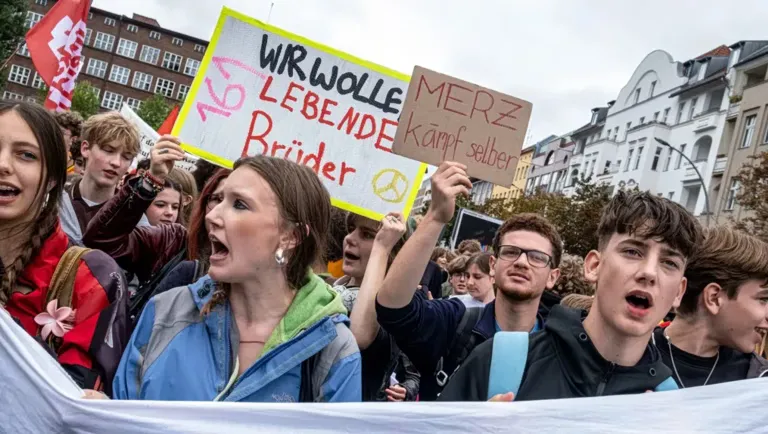
The primary driver for the upcoming demonstrations is a multifaceted dissatisfaction with current government policies regarding both national security and economic stability. Organised under the banner 'Gen Z regelt' (meaning 'Gen Z takes action'), the movement seeks to address the perceived neglect of the younger generation's needs in Europe's largest economy.
According to organisers, the movement is inspired by recent successful student mobilisations in other European nations, such as Serbia, where student activism played a role in political shifts. In Germany, the focus is dual-pronged: opposing the reintroduction or maintenance of compulsory military service and demanding relief from the rising cost of living. Protesters argue that while the state focuses on military readiness, it is failing to provide the basic economic security required for young adults to thrive.
Core Grievances of the 'Gen Z regelt' Movement
The movement's demands are concentrated on three critical pillars: military policy, economic pressure, and educational standards. Participants express frustration that the government is placing an undue burden on the youth through potential conscription while simultaneously failing to curb inflation and rising living costs. This sense of being 'ignored' by the political establishment is a recurring theme among the activists.
What is the impact of the cost of living on German students?
Economic pressure is a central theme of the protests, as many young Germans struggle to navigate an increasingly expensive social landscape. The movement highlights a growing gap between the economic realities of the youth and the legislative priorities of the federal government.
For many students, the struggle is not just about macro-economic figures but the tangible decay of the institutions they rely on. Sean Baker, a student at the Technical University of Berlin, noted the poor condition of campus facilities, describing lecture halls as looking like abandoned buildings. This physical deterioration of educational spaces serves as a visual metaphor for the perceived lack of investment in the future of the country. The protesters argue that the government is focusing on austerity and service cuts rather than providing the necessary resources for a modern education system.
How are German authorities responding to the potential unrest?
German authorities are preparing for large-scale demonstrations in 34 cities, including major hubs like Berlin, Frankfurt, and Munich. While officials expect the gatherings to remain largely peaceful, there is significant concern regarding the potential for infiltration by extremist elements.
The Federal Ministry of Interior has raised alarms about the involvement of far-left extremist groups and entities linked to foreign extremist movements. This has led to a heightened state of vigilance among law enforcement agencies. In Frankfurt, the state's Interior Minister, Roman Poseck, has specifically warned against the potential for violence, citing the recent unrest in France as a cautionary tale. Poseck emphasized that the chaos seen in France—including property damage and attacks on police—must not become a template for German demonstrations.
Security Measures and Business Precautions
In response to the threat of unrest, some commercial sectors are taking preemptive steps to protect their assets. In Berlin, businesses located along the high-end shopping avenue of Kurfürstendamm have begun boarding up windows with wooden planks and planning early closures. These measures reflect a high level of anxiety regarding potential looting or vandalism, even if the majority of the 160,000 expected participants intend to protest peacefully.
What is the broader socio-economic context in Germany?
These protests are occurring at a critical juncture for the German economy, which is currently struggling to revitalise growth amid significant demographic shifts. The nation is facing a complex transition period that affects both the workforce and the social safety net.
Germany is currently grappling with the dual challenges of an aging population and a shrinking working-age demographic. As the 'baby boom' generation enters retirement, the pressure on the pension system and public services is intensifying. This demographic squeeze makes the government's budgetary decisions even more contentious, as they must balance the needs of an aging population with the necessity of investing in the younger generation to ensure future economic viability. The 'Gen Z regelt' movement argues that the current trajectory disproportionately burdens the youth with the costs of this transition.
Institutional Divergence and Political Skepticism
The protests also reveal a fragmentation within youth activism itself. For instance, the BSK, Germany's national umbrella organisation for students, has explicitly distanced itself from the 'Gen Z regelt' initiative, although it supports the underlying concerns of the students. The BSK has scheduled its own separate day of protest for November 20, indicating that while the grievances are widespread, the methods and political affiliations of different youth groups vary significantly.
This divergence raises questions about the true leadership of the movement. Observers are questioning whether the campaign is a purely grassroots youth movement or if it is being steered by a broader spectrum of civil society organisations and political groups. This ambiguity adds a layer of complexity to how the government perceives and responds to the legitimacy of the demands being made.
FAQ: Youth protests in Germany
How many people are expected to participate in the protests?
Organisers estimate that more than 160,000 people will participate in the demonstrations across 34 German cities. The movement is primarily driven by young people seeking to address economic and military concerns.
What are the main demands of the 'Gen Z regelt' group?
The group is primarily protesting against compulsory military service and the rising cost of living. Additionally, they are demanding increased government investment in the education sector to improve student living and learning conditions.
Is there a risk of violence during the demonstrations?
While authorities expect the protests to be mostly peaceful, there are concerns about extremist groups attempting to exploit the movement. Officials have warned of potential unrest, citing recent patterns of violence seen in France.
How have businesses responded to the planned protests?
Some businesses, particularly in high-traffic areas like Berlin's Kurfürstendamm, have taken precautions such as boarding up storefronts and planning early closures to mitigate the risk of property damage or looting.
What is the difference between 'Gen Z regelt' and the BSK?
The BSK is a national student umbrella organisation that has chosen to distance itself from the 'Gen Z regelt' movement. While the BSK supports the students' concerns, it is organising its own separate protest for November 20.
Key takeaways
- Over 160,000 protesters are expected across 34 German cities this Saturday.
- The 'Gen Z regelt' movement opposes compulsory military service and high living costs.
- Authorities warn of potential infiltration by extremist groups during the demonstrations.
- Protesters are demanding increased investment in Germany's deteriorating educational infrastructure.
- The movement occurs amid Germany's struggle with an aging population and economic stagnation.
The future of youth activism in Germany
The scale of the upcoming demonstrations suggests that youth dissatisfaction in Germany has reached a tipping point. Whether the government responds with policy shifts regarding military service or economic relief remains to be seen. However, the divergence between grassroots movements like 'Gen Z regelt' and established organisations like the BSK indicates a complex and evolving landscape of youth political engagement. As Germany navigates its demographic and economic transitions, the voice of its youngest citizens will likely play an increasingly decisive role in shaping national policy.