Why the US midterm elections are not a panacea for Europe
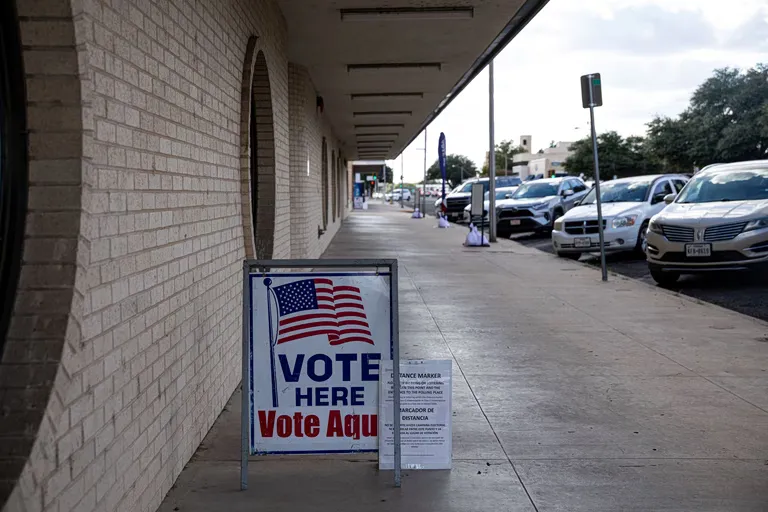
The upcoming US midterm elections are being closely monitored by Brussels and European national governments, but a Democratic win is not a guaranteed return to the previous transatlantic status quo. While there is hope that Democratic control of Congress could foster more collaborative and allied-based relationships, the underlying tensions in the relationship between the US and Europe are structural and long-lasting.
According to the European Policy Centre, Europe must resist the temptation to view a potential Democratic victory as a simple stepping stone back to stability. The core drivers of the shifting US-EU dynamic—including strategic competition, defense requirements, trade disputes, climate policy, technological supremacy, and global governance—are deeper than any single electoral cycle. Europe's primary challenge remains building the unity and institutional strength necessary to protect its citizens within an increasingly fragmented international order.
What are the risks of a Democratic victory in Congress?
A Democratic "blue wave" in the midterms would likely bring changes to US domestic policy, but these changes may be limited in their ability to counter the executive branch. Amanda Slout, a professor at IE University in Madrid, suggests that while a Democratic Congress would have more influence over the legislative process and appropriations, it would face significant hurdles in checking a Trump administration.
A Democratic-led House of Representatives might attempt to initiate impeachment proceedings, though the outcomes remain uncertain. Furthermore, the executive branch has demonstrated the ability to bypass Congress on major issues, such as military actions in Iran. On the international stage, even with Democratic control, the US may struggle to impose stricter sanctions on Russia or manage trade tariffs effectively. Europe should therefore prepare for continued commercial volatility, as the use of tariffs remains a central tool in US trade policy.
The limitations of Congressional oversight
The effectiveness of a Democratic Congress is heavily dependent on its ability to manage the budget and oversee government spending. However, if the executive branch maintains strong control over foreign policy and trade, the legislative branch's ability to dictate terms to global partners like the EU could be significantly diminished. This creates a landscape where Europe must remain agile, regardless of which party holds the gavel in Washington.
How could a Republican victory impact the global economy and AI?
A Republican victory would likely be viewed by the Trump administration as a validation of its existing policies, potentially leading to an intensification of its protectionist and nationalist approaches. Economists Moreno Bertoldi of the Italian Institute for International Political Studies (ISPI) and Marco Butti of the Robert Schuman Centre warn that the economic implications of this scenario are often under-discussed in European policy circles.
One significant concern involves the intersection of fiscal policy and the artificial intelligence sector. If the administration pursues policies that lead to higher interest rates, the high levels of debt held by AI companies could become unsustainable. A combination of high borrowing costs and the difficulty of generating immediate, massive profits could trigger a collapse or a deflationary correction of the current AI financial bubble. This would have profound consequences for the real economy.
To mitigate such a bubble burst, the administration might use US economic leverage in unconventional ways. This could include pressuring trade partners to purchase large quantities of US Treasury bonds to artificially lower interest rates. Such a move would effectively shift the cost of maintaining economic stability onto savers and highly indebted governments globally, potentially delaying but not preventing a broader market correction.
What role will regulation play in the AI sector?
The regulatory landscape for artificial intelligence is expected to remain fragmented following the midterms. While federal legislation in the US may struggle to pass due to partisan gridlock, state-level actions are likely to increase. Under a Republican-leaning environment, some states might even introduce measures to slow the construction of new data centers, often in alignment with specific political interests.
Why must Europe pursue independent strategic reforms?
The results of the US midterm elections should not serve as a reason for Europe to delay its own essential reforms. To ensure long-term resilience, the European Union must focus on strengthening its defense capabilities, enhancing the Single Market, expanding technological sovereignty, and addressing the rise of internal populism. Relying on Washington for security or economic stability is no longer a viable long-term strategy.
By focusing on internal strength, Europe can position itself more effectively for any future US administration. This approach makes the EU a more capable partner for those who value the transatlantic alliance, while simultaneously making it less vulnerable to unilateral pressures from a more isolationist US government. The goal is to move from a reactive posture to one of strategic autonomy.
FAQ: US Midterm Elections and Europe
Will a Democratic win restore transatlantic relations?
A Democratic victory may improve cooperation and foster more allied-based relationships, but it is unlikely to return the relationship to a pre-Trump status quo. Structural issues regarding trade, defense, and strategic competition will persist regardless of which party controls the US Congress.
How do the US elections affect the AI industry?
The elections could impact the AI sector through interest rate fluctuations. If US fiscal policies lead to higher rates, the high debt loads of AI companies could trigger a financial bubble burst, impacting the broader global economy and technological investment cycles.
What is the risk of a Republican victory for the EU?
A Republican victory might lead to more aggressive use of tariffs and protectionist policies. It could also result in the US pressuring international partners to buy US debt to manage interest rates, which could increase the economic burden on highly indebted nations.
Can the US Congress effectively check the President's power?
While a Democratic Congress would have more control over spending and could attempt oversight or impeachment, the executive branch has shown a capacity to bypass legislative hurdles. This makes significant policy shifts difficult to guarantee even with a change in Congressional control.
What should Europe do in response to these election results?
Europe should focus on its own strategic autonomy by reforming its defense, technology, and Single Market sectors. Rather than waiting for Washington's direction, the EU must build the internal strength required to navigate a fragmented international order and reduce its vulnerability to US political shifts.
Key takeaways
- European stability depends on strategic autonomy rather than US election outcomes.
- A Democratic victory offers improved cooperation but limited structural change.
- Republican dominance could intensify trade volatility and protectionist policies.
- High interest rates pose a significant risk to the global AI financial bubble.
- Europe must prioritize defense and technological reforms to ensure resilience.
Conclusion
The US midterm elections serve as a reminder that the era of predictable transatlantic relations has passed. Whether the outcome favors the Democrats or the Republicans, the underlying shifts in global power, technology, and trade are permanent. Europe cannot afford to treat these elections as a temporary weather pattern. Instead, the continent must use this period to accelerate its own reforms in defense, economic integration, and technological sovereignty. By building internal strength and reducing dependency on Washington, Europe can better navigate the uncertainties of a fragmented global landscape and protect its long-term interests.