The End of an Era for One of Athens' Oldest Neighborhood Cinemas
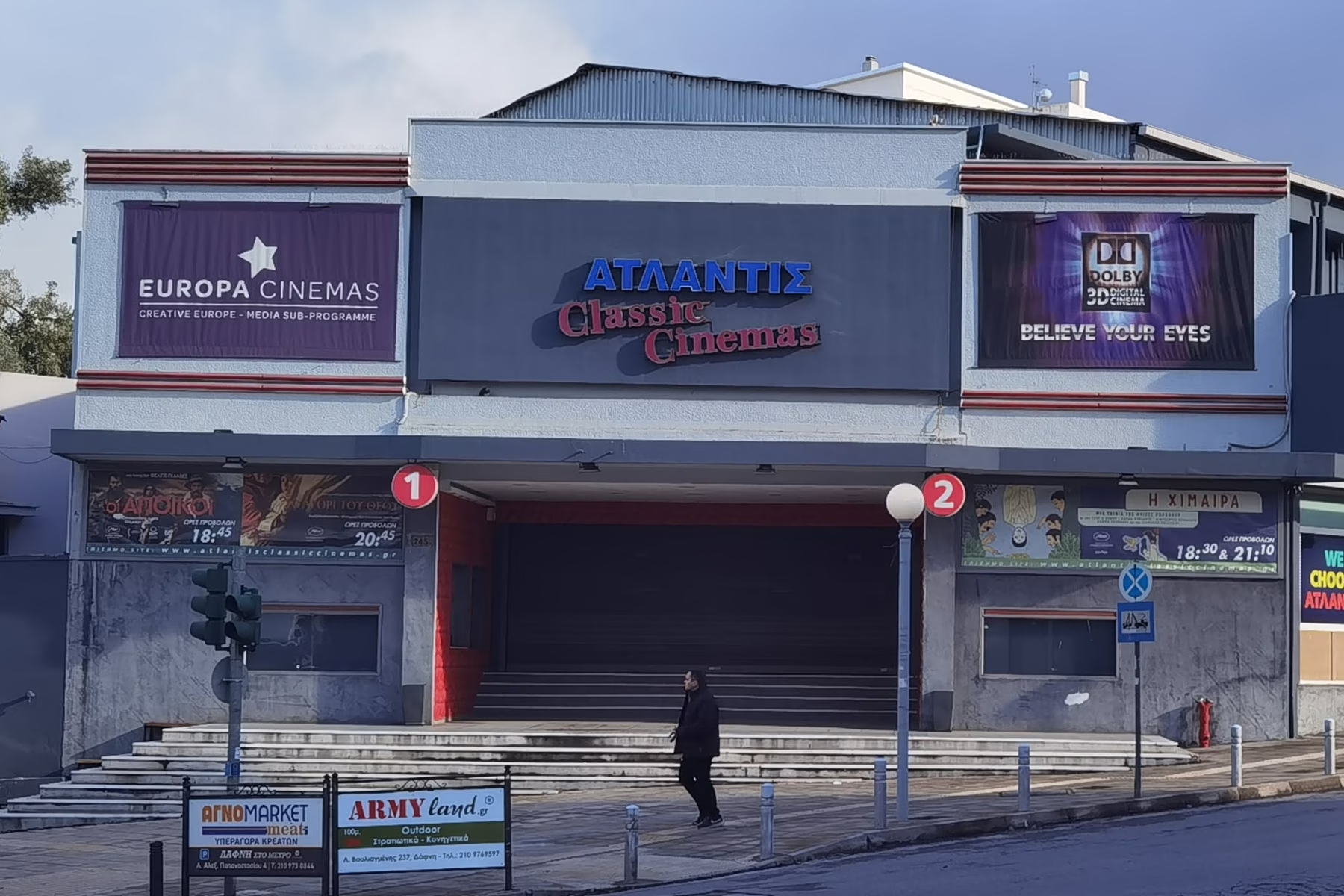
Athens has bid farewell to yet another piece of its cinematic heritage. The Atlantis cinema, a beloved fixture in the Dafni neighborhood, has permanently closed its doors after more than seven decades of welcoming film lovers through its entrance. The closure marks a significant cultural loss for the local community and for those who cherish the tradition of neighborhood movie houses across Greece's capital.
From Open-Air Summer Screenings to a Year-Round Destination
The Atlantis cinema first opened its doors in the 1950s, initially operating as a summer outdoor cinema — a format that has long been deeply embedded in Greek culture and social life. These open-air venues, known locally as therino sinema, became gathering places for families and neighbors during the warm Mediterranean evenings, offering an affordable and communal form of entertainment at a time when television had yet to become widespread in Greek households.
By the 1960s, the Atlantis had expanded its operations, transitioning into a year-round venue that also screened films during the winter months. This evolution allowed the cinema to serve its community across all seasons, cementing its place as a central social hub in the Dafni area. The addition of an indoor facility represented a significant investment in the cinema's future and demonstrated the confidence its operators had in the demand for local film culture.
A Reflection of Greece's Neighborhood Cinema Tradition
The story of the Atlantis is not an isolated one. Across Athens and throughout Greece, neighborhood cinemas — sometimes referred to as laiki sinema or people's cinemas — flourished in the postwar decades, providing accessible entertainment for working-class and middle-class communities alike. These venues were more than just places to watch films; they served as social institutions where residents could meet, share experiences, and engage with popular culture together.
During the golden era of Greek cinema in the 1960s and 1970s, such local theaters played a crucial role in bringing both domestic and international productions to audiences who might not have had easy access to larger, more central venues. They screened everything from Hollywood blockbusters and European art films to the beloved Greek comedies and melodramas that defined popular taste during that period.
The Broader Decline of Independent and Neighborhood Cinemas
The closure of the Atlantis reflects a broader and well-documented trend affecting independent and neighborhood cinemas not only in Greece but across Europe and beyond. Over the past several decades, a combination of factors has steadily eroded the viability of small, locally operated theaters.
The rise of home video in the 1980s, followed by the proliferation of cable and satellite television in the 1990s, fundamentally altered viewing habits. More recently, the growth of streaming platforms has further shifted audiences away from physical cinema spaces. Major multiplex complexes, which can offer multiple screens, advanced projection technology, and premium amenities, have also drawn audiences away from traditional single-screen neighborhood venues.
Economic pressures compound these challenges. Rising operational costs, including rent, staffing, licensing fees, and the significant expense of upgrading to digital projection systems, have placed enormous strain on smaller cinema operators. For many historic venues, the financial burden of modernization simply proved too great to overcome.
Community Response and Cultural Memory
The announcement of the Atlantis cinema's closure drew expressions of nostalgia and sadness from residents of Dafni and film enthusiasts across Athens. For many locals, the theater was not simply a place of entertainment but a repository of personal memories — first dates, childhood outings, and countless evenings spent immersed in the world of cinema.
Such reactions are common when historic neighborhood cinemas close. These venues often carry deep emotional significance for the communities they have served across multiple generations. Their disappearance can feel like the loss of a shared cultural space that cannot easily be replaced by digital alternatives or large commercial multiplexes.
Cultural heritage advocates and cinema preservation groups in Greece have long argued for greater institutional support for independent and historic cinema venues, warning that without intervention, many such landmarks will continue to disappear. The closure of the Atlantis adds further weight to these calls for action.
The Future of the Site and What May Come Next
As of the time of reporting, the future use of the Atlantis cinema's physical site in Dafni remains uncertain. In many similar cases across Athens and other Greek cities, former cinema buildings have been converted into commercial spaces, apartments, or other uses — a transformation that permanently erases their identity as cultural venues.
Whether the Atlantis building will be preserved in some form, repurposed, or redeveloped remains to be seen. Local residents and cultural organizations may yet advocate for some form of recognition or commemoration of the site's long history, though the practical and economic realities of such efforts often prove difficult to navigate.
A Farewell to Dafni's Cinematic Icon
The closure of the Atlantis cinema after more than 70 years of operation serves as a reminder of how rapidly the cultural landscape of urban neighborhoods can change. What began as a summer open-air screening space in postwar Athens grew into a cherished community institution, only to succumb to the pressures that have challenged similar venues around the world.
Its story is emblematic of a wider transformation in how people consume film and entertainment, and of the ongoing tension between the economics of cultural spaces and their value to the communities they serve. As Athens continues to evolve, the memory of venues like the Atlantis cinema represents an important thread in the city's social and cultural fabric — one that, once lost, is difficult to recover or replicate.
For the residents of Dafni who grew up attending screenings at the Atlantis, its closure marks the end of a chapter that stretched across generations, leaving behind a legacy that lives on in the memories of all those who passed through its doors.