What does the University of Cyprus research reveal about political preferences?
The preference for a bi-zonal, bi-communal federation (BBF) among the Greek Cypriot community has reached a historic high of 75.3%. This finding, presented at the University of Cyprus on October 28, 2026, represents a fundamental shift in public sentiment, as it officially overtakes the level of support previously held for a unitary state model. The data stems from a comprehensive public opinion survey conducted in July 2026.
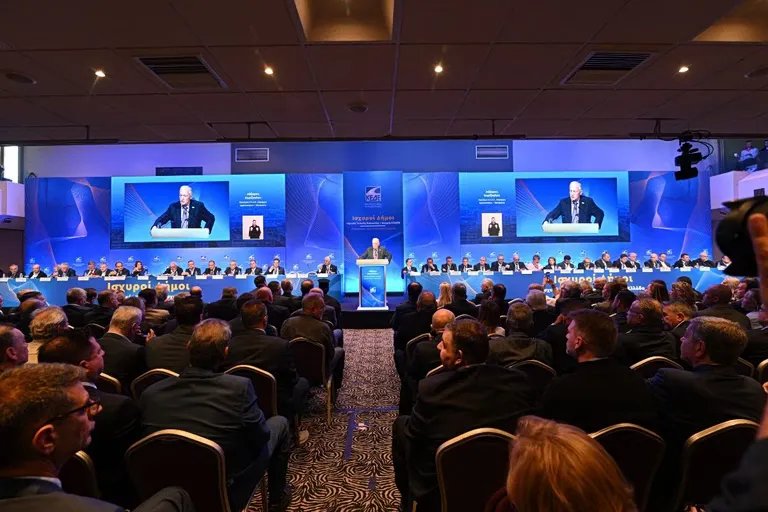
The study was presented by professors Harry Psaltis and Neophytos Loizides during a public discussion focused on the substance, process, and confidence-building measures necessary for a Cyprus solution. The research aimed to dissect not just the broad preference for a specific model, but also the specific regulatory arrangements that might garner support from both the Greek Cypriot and Turkish Cypriot communities.
The shift from a unitary state model
Historically, the debate over the form of the Cypriot state has been polarized between those advocating for a unitary state and those supporting a federal structure. The July 2026 data suggests a significant movement toward the latter. By reaching a 75.3% approval rating for the BBF model, the Greek Cypriot community has demonstrated a growing pragmatic consensus regarding the structural requirements of a potential settlement. This shift is crucial for diplomats, as it indicates a widening window for negotiating a federal framework that aligns with the majority view of the population.
How many variations of the Guterres framework are viable?
Researchers identified 118 different variations of the Guterres framework that could potentially secure at least 55% support from both Greek Cypriot and Turkish Cypriot citizens. This finding resulted from the application of research models and combinatorial choice experiments designed to simulate various settlement packages. These models sought to find the 'sweet spot'—the specific set of regulations that could bridge the gap between the two communities.
It is essential to clarify that these findings are mathematical estimates based on representative sampling and do not constitute a formal prediction for the outcome of a future referendum. Instead, they serve as a roadmap for negotiators to understand which combinations of political and administrative arrangements are most likely to be acceptable to the electorate on both sides of the divide.
The role of combinatorial modeling in diplomacy
The use of complex modeling to test 118 different iterations of the Guterres framework represents a sophisticated approach to conflict resolution. By simulating how different policy combinations impact public acceptance, the University of Cyprus researchers have provided a tool that moves beyond binary 'yes/no' debates. This method allows for a nuanced exploration of how specific issues—such as property rights, governance, and security—interact to influence the overall feasibility of a settlement.
What new mechanisms are being introduced for citizen participation?
A new initiative involving Advisory Citizen Assemblies is being introduced to foster direct participation in the dialogue process. This initiative proposes the creation of a new bi-communal committee to oversee assemblies where randomly selected citizens from both communities can engage in discussions. These participants will have the opportunity to deliberate on matters of common interest and submit formal proposals to the leaders of both communities.
During the discussions at the University of Cyprus, several speakers characterized this initiative as highly promising. The primary goal is to introduce a more direct form of civic engagement, ensuring that the peace process is not merely a top-down negotiation between political elites but a bottom-up movement supported by the people. This approach aims to build trust and legitimacy for any eventual agreement.
The impact of random selection in assemblies
The use of randomly selected citizens is intended to mitigate the influence of political polarization often found in traditional representative bodies. By bringing together individuals who are not necessarily professional politicians, the Advisory Citizen Assemblies seek to uncover more pragmatic, common-sense solutions to long-standing grievances. This method of 'deliberative democracy' is designed to create a sense of shared ownership over the peace process, which is vital for the long-term stability of any proposed federation.
How can stakeholders interact with these findings?
The University of Cyprus has made an interactive tool available to the public, allowing stakeholders to model different settlement packages and estimate their potential acceptance among both communities. This tool, alongside the detailed findings of the July 2026 survey, is intended to promote transparency and informed public debate. The research was organized by the University of Cyprus Field Research Center (PAKΕPE) in collaboration with 'Decision for Peace' and the Cyprus Center for Peace and Dialogue (CPDC).
| Key Research Metric | Value / Detail |
|---|---|
| Greek Cypriot BBF Support | 75.3% |
| Survey Conducted | July 2026 |
| Viable Framework Variations | 118 (targeting >55% support) |
| Primary Model | Guterres Framework |
| Participant Method | Randomly selected citizens (Assemblies) |
FAQ: Cyprus Settlement Research
What is the main finding of the July 2026 survey?
The primary finding is that 75.3% of the Greek Cypriot community now supports a bi-zonal, bi-communal federation. This is a significant milestone because it marks the first time this figure has exceeded the level of support for a unitary state model in the community.
Are these results a guarantee for a future referendum?
No, the research findings are not a prediction for a referendum outcome. The study uses representative sampling and mathematical models to estimate potential acceptance of various settlement packages, providing a guide for negotiations rather than a definitive forecast of a popular vote.
What is the purpose of the Advisory Citizen Assemblies?
The assemblies are designed to allow randomly selected citizens from both the Greek Cypriot and Turkish Cypriot communities to participate directly in the peace process. They provide a platform to discuss common interests and submit recommendations directly to the political leadership of both sides.
How many settlement variations were tested?
Researchers used combinatorial models to identify 118 different variations of the Guterres framework. The goal was to find specific configurations of rules and regulations that could achieve a minimum of 55% support from both communities simultaneously.
Who organized the research presentation?
The presentation was organized by the University of Cyprus Field Research Center (PAKΕPE) in partnership with the 'Decision for Peace' initiative and the Cyprus Center for Peace and Dialogue (CPDC) during an event held on October 28, 2026.
Key takeaways
- Support for a bi-zonal, bi-communal federation reached 75.3% among Greek Cypriots in July 2026.
- For the first time, federation support has surpassed the preference for a unitary state.
- Researchers identified 118 framework variations capable of securing 55% support from both communities.
- New Advisory Citizen Assemblies will allow randomly selected citizens to participate in the peace dialogue.
The evolution of the Cyprus peace process
The transition in public opinion toward a bi-zonal, bi-communal federation represents a pivotal moment in the Cyprus problem. The 75.3% support level suggests that the Greek Cypriot community is increasingly looking toward federalism as the most viable path forward. Furthermore, the identification of 118 viable variations of the Guterres framework provides negotiators with a technical foundation to explore compromise. When combined with the introduction of direct citizen participation through Advisory Assemblies, these developments suggest a move toward a more inclusive and pragmatically grounded peace process.