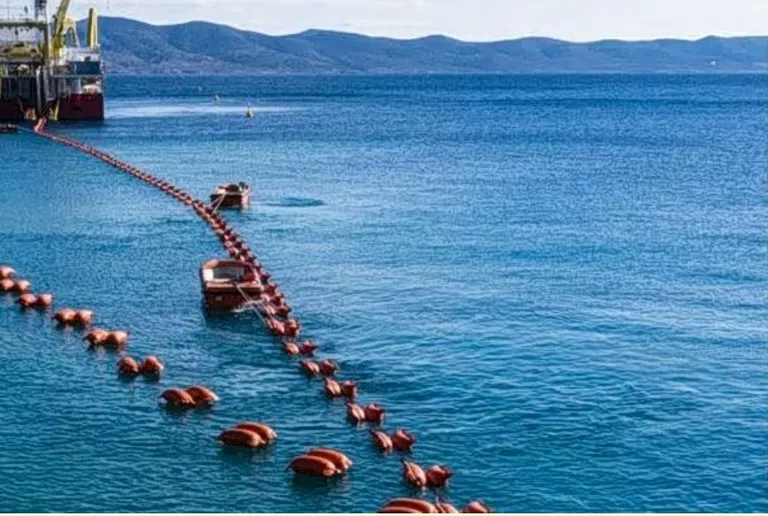
How will the Abeille Marengo vessel conduct the GSI surveys?
The Abeille Marengo, a specialized research vessel flying the French flag, is currently executing a technical mission to map the seabed for the Great Sea Interconnector. Following the issuance of the NAVTEX (Navigational Telex), the vessel departed Heraklion at 9:00 AM on November 7, 2026, to begin its route in the South Cretan Sea. The ship has been stationed in Crete since October 27, 2026, and its current operations are scheduled to continue until March 6, 2027.
The initial phase of the voyage focuses on the calibration of highly sensitive scientific equipment. This process is essential to ensure the accuracy of the vessel's sonar and echo-sounding systems. By performing these tests at specific depths, the crew can verify that the instruments are correctly tuned to detect the seafloor topography with precision. This "final check" is a prerequisite for the main research task: identifying the most efficient and safest underwater path for the high-voltage cable.
Technical calibration and sonar accuracy
The success of the GSI depends on the precision of the bathymetric data collected during this period. The Abeille Marengo, chartered by Nexans, utilizes advanced sonar technology to create a detailed digital map of the seabed. Because the cable will be laid at extreme depths, even minor errors in measurement could lead to significant installation risks. The calibration phase allows the technical team to account for environmental variables such as water density and temperature, which can affect sound wave propagation. Once the instruments are verified, the vessel will move toward the southeast of Karpathos, eventually reaching the maritime zone 12 nautical miles from Cyprus.
What are the financial and regulatory milestones for the GSI?
The implementation of the Great Sea Interconnector is moving into a decisive phase involving significant capital commitments and intergovernmental agreements. A primary regulatory milestone involves the release of €25 million from the Republic of Cyprus. According to recent statements, Cypriot President Nikos Christodoulidis has committed to these funds being released upon the issuance of the NAVTEX, marking a formal step in the bilateral agreement between Athens and Nicosia.
Beyond the initial bilateral funding, the project is positioned to secure large-scale institutional investment. The completion of the subsea surveys by the Abeille Marengo is expected to unlock further financing from the European Investment Bank (EIB). Reports indicate that the EIB is currently evaluating the technical and economic viability of the interconnection, with potential funding reaching approximately €1 billion. This influx of capital is necessary to support the massive infrastructure requirements of the project.
Project ownership and consortium structure
The GSI is managed through a complex consortium that combines private infrastructure expertise with state-led oversight. The ownership structure is currently divided as follows:
- Infrastructure Consortium: Holds 66% of the project. This group includes the French giant Meridiam, which joined the consortium in August 2025, significantly boosting the project's geopolitical and financial weight.
- ADMIE (Independent Power Transmission Operator): Holds 34% of the project.
This blend of private and public interests ensures that the project adheres to both commercial efficiency and European energy integration standards.
What are the technical specifications of the GSI cable?
The Great Sea Interconnector is a massive engineering undertaking designed to transport significant amounts of electricity across vast maritime distances. The total length of the interconnection, which includes both subsea and terrestrial cable segments, is 1,208 kilometers. The specific segment connecting Crete to Cyprus accounts for 898 kilometers of this total length.
The technical requirements for such a project are extreme due to the depth of the Mediterranean seabed. The cable must be capable of operating at a voltage of 500 kV to ensure efficient power transmission. Furthermore, the installation must account for seabed depths reaching up to 3,000 meters. The project is designed to provide a transmission capacity of 1,000 MW, which will be instrumental in stabilizing the regional energy grid.
Future expansion and regional connectivity
While the primary focus remains the link between Greece and Cyprus, the technical design of the GSI is inherently scalable. Plans are already being matured to extend the interconnection to Israel. This expansion would transform the GSI from a bilateral link into a regional energy hub, potentially connecting the renewable energy resources of the Levant with the European mainland through the Greek grid.
Why is the GSI vital for European energy security?
The Great Sea Interconnector serves a strategic purpose by addressing the energy isolation of Cyprus and enhancing the overall resilience of the European Union's power grid. For years, Cyprus has remained one of the few European territories effectively isolated from the continent's interconnected electricity market. The GSI aims to rectify this by integrating the island into the single market.
By establishing this link, the EU achieves two major goals: increased energy security and better integration of renewable energy sources. The ability to move large quantities of electricity between regions allows for a more flexible response to supply fluctuations. Furthermore, the project supports the EU's decarbonization goals by providing the infrastructure necessary to transport clean energy across borders, reducing the reliance on isolated, fossil-fuel-based island grids.
Frequently asked questions
What is the role of the Abeille Marengo in the GSI project?
The Abeille Marengo is a French research vessel tasked with conducting subsea surveys to find the optimal route for the GSI cable. It performs sonar calibrations and bathymetric measurements to ensure the cable can be safely laid at depths of up to 3,000 meters.
How much will the Great Sea Interconnector cost?
The total estimated budget for the Great Sea Interconnector project is approximately €1.9 billion. This includes the costs for the 1,208 km of subsea and terrestrial cables, as well as the necessary technical and regulatory implementation processes.
When is the GSI project expected to be completed?
While a final completion date for the entire interconnection is not specified, the current survey phase involving the Abeille Marengo is scheduled to run until March 6, 2027. The project has been in development for 15 years as it moves toward operational reality.
How does the GSI impact Cyprus's energy status?
The GSI will end Cyprus's energy isolation by connecting the island to the European mainland via the Greek grid. This integration provides greater energy security and allows Cyprus to participate more effectively in the European single energy market.
Who are the main stakeholders in the GSI?
The project is a collaboration between the Greek and Cypriot governments and a private consortium. The consortium holds 66% ownership and includes Meridiam, while the Greek transmission operator ADMIE holds 34%. The EIB is also expected to be a major financier.
Key takeaways
- The Abeille Marengo vessel began its GSI subsea survey mission from Heraklion on November 7, 2026.
- The total project budget for the Great Sea Interconnector is estimated at €1.9 billion.
- The subsea cable will span 898 km between Crete and Cyprus at depths of 3,000 meters.
- Cyprus has committed €25 million to the project following the issuance of the NAVTEX.
- The interconnection aims to provide a transmission capacity of 1,000 MW.
The path toward a connected Mediterranean
The deployment of the Abeille Marengo marks the transition of the Great Sea Interconnector from a long-term strategic vision into a tangible infrastructure project. By overcoming the technical challenges of the deep Mediterranean seabed and securing the necessary multi-billion euro financing, the GSI is set to redefine the energy landscape of the Eastern Mediterranean. As the project progresses through its survey and regulatory milestones, it brings the European Union closer to a fully integrated and resilient energy network, finally bridging the gap for the island of Cyprus.