Most of Greece Under High Wildfire Risk Warning
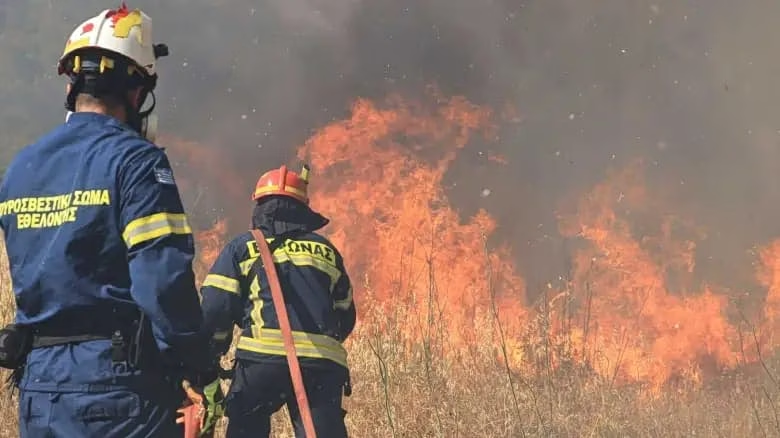
Greek civil protection authorities have placed the vast majority of the country under an elevated wildfire danger alert for Sunday, August 23, 2026, designating most regions at Category 3 — the high-risk level — on the national fire danger forecast map. The warning, issued by the General Secretariat of Civil Protection, signals that conditions across a wide geographic range are considered particularly conducive to the ignition and rapid spread of forest fires.
The alert, color-coded yellow to indicate Category 3 risk, covers an extensive portion of both mainland and island Greece. Among the areas flagged at this level are Attica, the Peloponnese, Central Greece, significant portions of Macedonia and Thrace, as well as numerous island groups across the Aegean and Ionian seas. Authorities emphasize that the combination of dry vegetation, wind patterns, and late-summer heat creates a dangerous environment that demands heightened vigilance from both residents and visitors.
Full Breakdown of High-Risk Zones
The General Secretariat's forecast map outlines the affected regions in considerable detail, encompassing a broad cross-section of Greek territory. The following areas fall under the Category 3 high-risk designation:
Attica and Central Greece
- Attica
- Boeotia
- Euboea
- Skyros
- Kythira
- Phthiotis
- Phocis
- Aetolia-Acarnania
Peloponnese
- Argolis
- Corinthia
- Achaea
- Elis
- Messenia
- Laconia
- Arcadia
Northern and Northwestern Greece
- Evros
- Rodopi
- Kilkis
- Thessaloniki
- Chalkidiki
- Mount Athos
- Thesprotia
- Preveza
- Arta
- Parts of Ioannina and Serres
Thessaly
- Trikala
- Larissa
- Magnesia
- Karditsa
Island Regions
- Sporades
- All Ionian Islands
- North Aegean Islands
- Cyclades
- Dodecanese
- Crete
The remaining regions of Greece, primarily located in parts of the northern and northwestern mainland, are classified at Category 2 — a moderate risk level represented by blue on the forecast map. While the danger is comparatively lower in these zones, authorities note that no area should be considered entirely free from fire risk during the summer period.
Official Safety Recommendations for Citizens
In light of the widespread risk, the General Secretariat of Civil Protection has issued a series of specific recommendations aimed at preventing human-caused ignitions, which remain the primary cause of wildfires in Greece during the summer months.
Residents and visitors are strongly advised to refrain from any outdoor activities that could accidentally start a fire. These include:
- Burning dry grass, branches, or agricultural debris
- Using spark-generating machinery such as angle grinders or welding equipment
- Lighting outdoor barbecues or open fires in natural or semi-natural areas
- Discarding lit cigarettes in or near vegetation
Civil protection officials stress that even seemingly minor actions can have catastrophic consequences under high-risk conditions, particularly when accompanied by strong winds or extended dry spells. The public is urged to treat forested and rural areas with particular care throughout the warning period.
Emergency Contact Procedures
Should anyone observe the outbreak of a fire or signs of smoke in a natural area, authorities request that they immediately contact the relevant emergency services without delay. Two primary emergency lines are available for this purpose:
- Fire Service Emergency Line: 199
- European Emergency Number: 112
Early reporting of a fire can make the critical difference between a contained incident and a large-scale disaster. Citizens are urged not to hesitate and to call immediately upon detecting any signs of fire.
Greece has faced recurring and severe wildfire seasons in recent years, driven by a combination of prolonged heatwaves, drought conditions, and strong seasonal winds. The late-August period is historically among the most fire-prone stretches of the year, as vegetation reaches its driest state following months of high temperatures and minimal rainfall.
Authorities on Standby
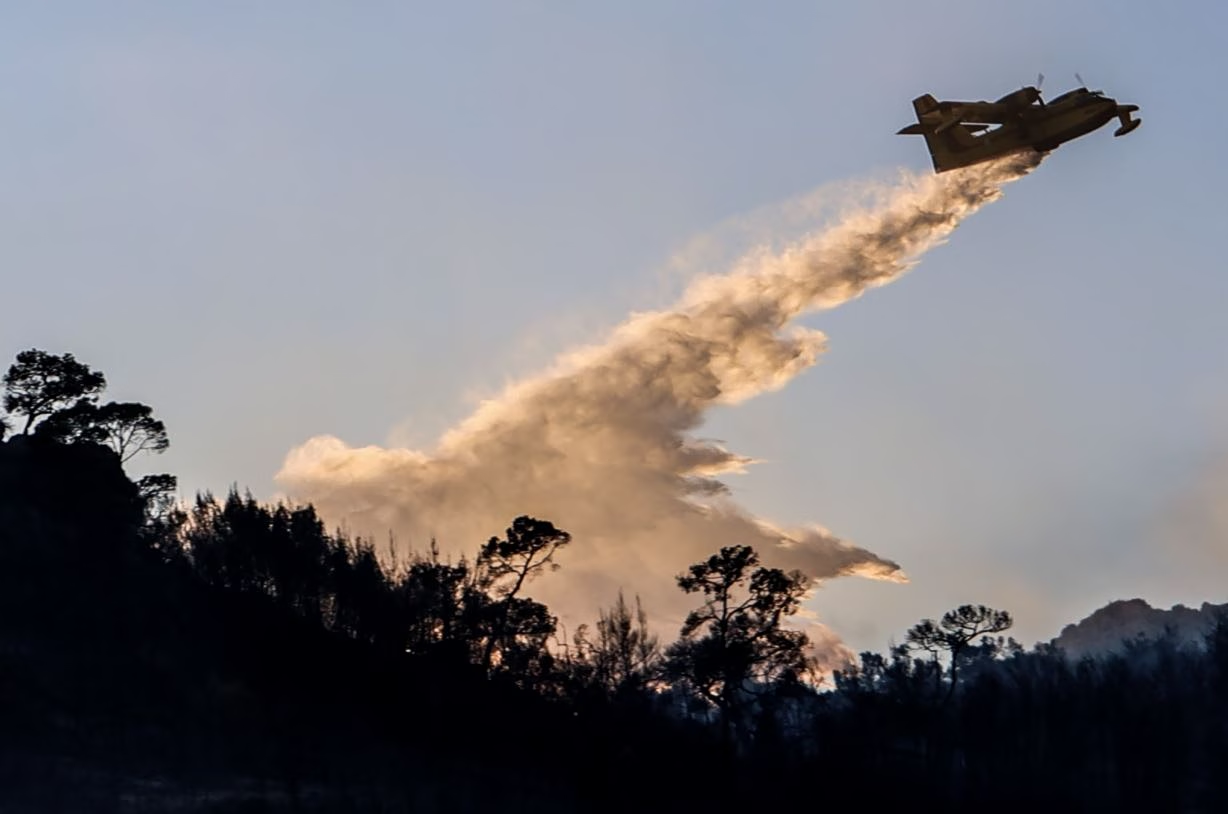
Emergency response teams, including fire brigades and civil protection units, have been placed on heightened readiness across the affected regions ahead of the forecast period. Aerial firefighting assets and ground crews are positioned strategically to allow for the fastest possible deployment in the event that fires break out in high-risk zones.
The General Secretariat of Civil Protection continues to monitor evolving weather conditions and may update risk classifications if meteorological data changes. Citizens are encouraged to check official communication channels regularly for the latest information during the elevated danger period.
As Greece enters the final weeks of summer, public cooperation remains a cornerstone of wildfire prevention efforts. Officials continue to underscore that the majority of fires in the country are the result of human activity — whether accidental or deliberate — making individual responsibility a key factor in protecting the nation's forests, communities, and ecosystems.