Solar Park Owner Taken Into Custody Following Electrical Fire
Authorities in Greece have arrested a 58-year-old man believed to be the owner of a photovoltaic park in Xylokastro, following an investigation into a fire that erupted at the facility. According to officials, the blaze was triggered by a short circuit in the installation's cabling, and the arrest was made on grounds of negligence.
The incident has drawn attention to the maintenance responsibilities that come with operating large-scale renewable energy infrastructure, particularly as Greece continues to expand its solar energy capacity across the country. Investigators determined that the fire was not intentional but resulted from a failure to adequately maintain or monitor the electrical systems within the park.
What Happened at the Xylokastro Solar Installation
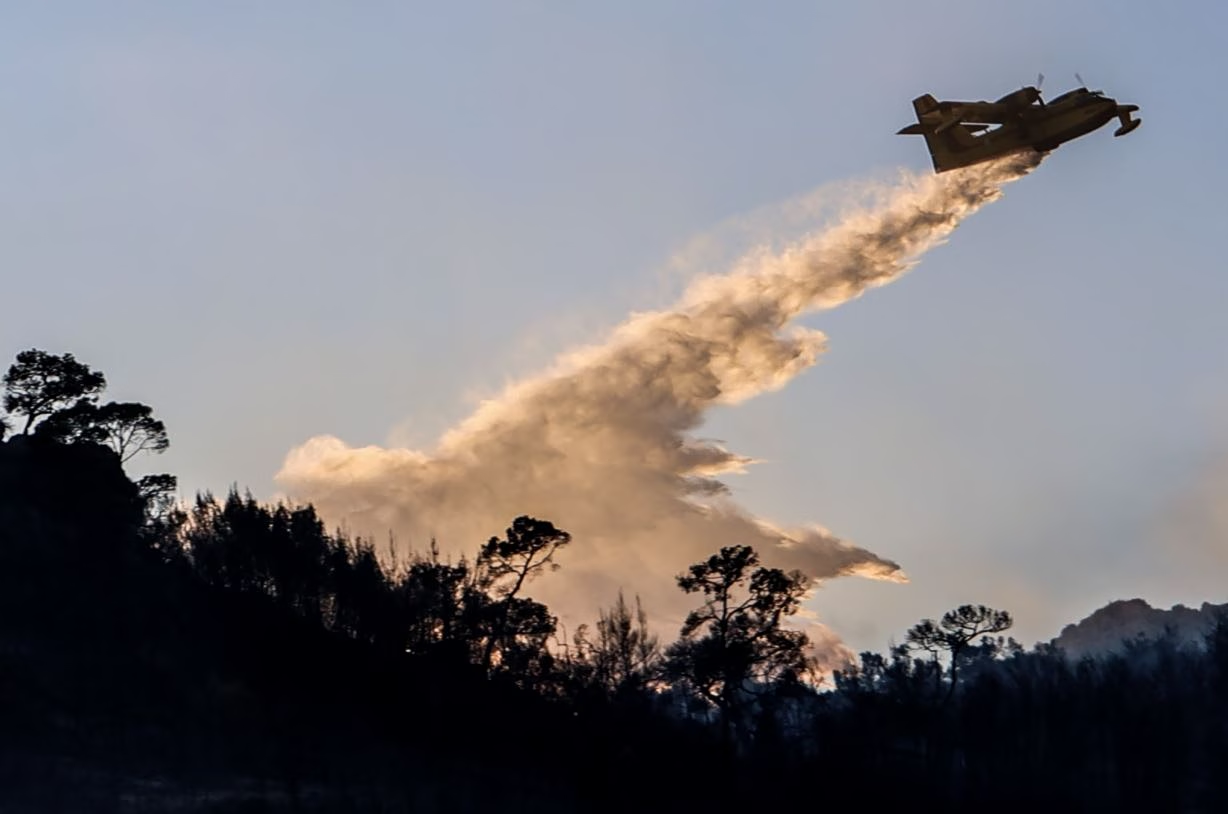
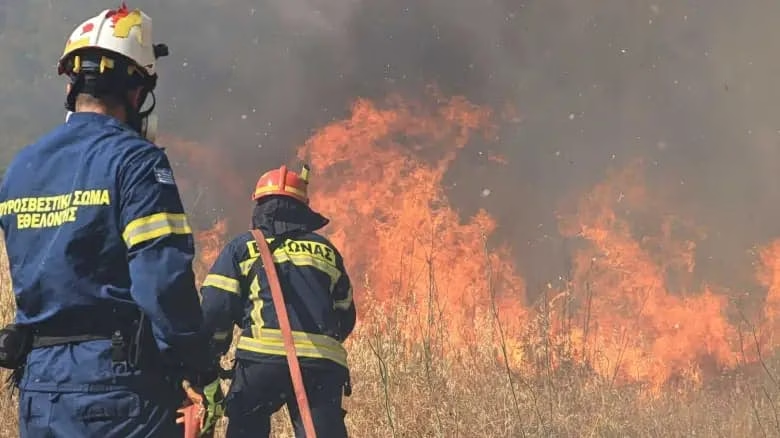
The fire broke out at the photovoltaic facility located in the Xylokastro area, a coastal town situated in the Corinthia regional unit in the Peloponnese. Firefighting crews were dispatched to the scene to bring the blaze under control and prevent it from spreading to surrounding areas.
Following an investigation into the cause of the fire, authorities concluded that a short circuit in the cables of the solar installation was responsible for igniting the blaze. Based on these findings, law enforcement moved to arrest the park's owner, citing negligence as the basis for the charge.
The 58-year-old was taken into custody and is expected to face legal proceedings related to the incident. Under Greek law, causing a fire through negligence carries significant legal consequences, particularly when such fires pose a risk to public safety or result in damage to property and the natural environment.
Growing Scrutiny Over Solar Energy Safety Standards
This incident comes at a time when solar energy installations are proliferating rapidly across Greece, driven by both national energy transition goals and European Union climate commitments. While photovoltaic parks are considered a cleaner alternative to fossil fuel-based power generation, they are not without their own risks, particularly when it comes to electrical safety and fire hazards.
Experts have long noted that solar panels and the associated wiring systems require regular inspection and maintenance to ensure they remain safe and operational. Wiring faults, overheating components, and inadequate grounding are among the most commonly cited causes of fires at photovoltaic installations worldwide.
- Short circuits in photovoltaic cabling can generate intense heat, leading to ignition if surrounding materials are flammable.
- Regular inspection schedules are considered essential for identifying potential electrical faults before they escalate into hazards.
- Owners and operators of renewable energy installations bear legal responsibility for ensuring their facilities meet safety standards.
- In dry, fire-prone regions like much of Greece, the risk of a localized electrical fire spreading to the broader landscape is a significant concern.
Greece has experienced increasingly severe wildfire seasons in recent years, partly attributed to rising temperatures and prolonged droughts linked to climate change. In this context, any fire-causing incident — regardless of its origin — is treated with considerable seriousness by both authorities and the public.
Legal Implications of Fire Caused by Negligence
The charge of negligent arson, or causing a fire through reckless inaction or failure to take appropriate precautions, is a well-established legal concept under Greek criminal law. Unlike deliberate arson, negligence-based fire charges do not require prosecutors to prove intent. Instead, they must demonstrate that the responsible party failed to exercise a reasonable standard of care, and that this failure led directly to the fire.
In cases where a fire damages property, threatens human life, or results in environmental destruction, penalties can be substantial. Legal observers note that arrests in such cases serve both a punitive and a deterrent function, signaling to other owners of similar installations that negligence in maintaining electrical infrastructure will not be treated lightly.
The arrest of the solar park owner underscores the legal obligations that accompany the operation of energy infrastructure, particularly in regions where fire risk is elevated.
It remains to be seen what specific charges will be formally brought against the 58-year-old and what the outcome of any subsequent legal proceedings will be. The investigation is ongoing, and further details may emerge as the case progresses through the judicial system.
Broader Context: Renewable Energy and Infrastructure Safety in Greece
Greece has set ambitious targets for renewable energy as part of its broader strategy to reduce dependence on fossil fuels and meet European climate objectives. Solar energy plays a central role in this transition, with photovoltaic installations appearing across both urban and rural areas of the country.
However, the rapid expansion of this infrastructure has raised questions about whether regulatory oversight and safety enforcement are keeping pace with deployment. Critics argue that more rigorous inspection regimes and clearer accountability frameworks are needed to ensure that the growth of the renewable sector does not come at the cost of public safety.
Supporters of solar energy development, meanwhile, point out that isolated incidents should not overshadow the broader environmental and economic benefits of transitioning away from carbon-intensive energy sources. They argue that strengthening safety protocols and training for operators is the appropriate response, rather than slowing the pace of renewable energy expansion.
The case in Xylokastro is likely to contribute to ongoing policy discussions about how Greece regulates and monitors its growing fleet of photovoltaic installations, and what obligations owners and operators must fulfill to ensure the safety of their facilities and the communities around them.
As the investigation continues, local authorities and fire services remain vigilant given the ongoing fire season, monitoring conditions across the region to respond swiftly to any further incidents.