Emergency Response Mobilized on Greece's Highest Peak
A significant rescue operation is currently underway on Mount Olympus, Greece's tallest and most iconic mountain, after a climber fell into a ravine under circumstances that are still being clarified. Rescue teams have been rapidly deployed to the area in an effort to locate the individual and bring them to safety.
Mount Olympus, which rises to nearly 2,918 meters above sea level and holds deep mythological significance as the legendary home of the ancient Greek gods, is a popular destination for hikers and mountaineers throughout the warmer months. However, its rugged terrain and unpredictable weather conditions make it one of the more demanding and potentially hazardous climbing environments in southeastern Europe.
Specialized Units Deployed to the Scene
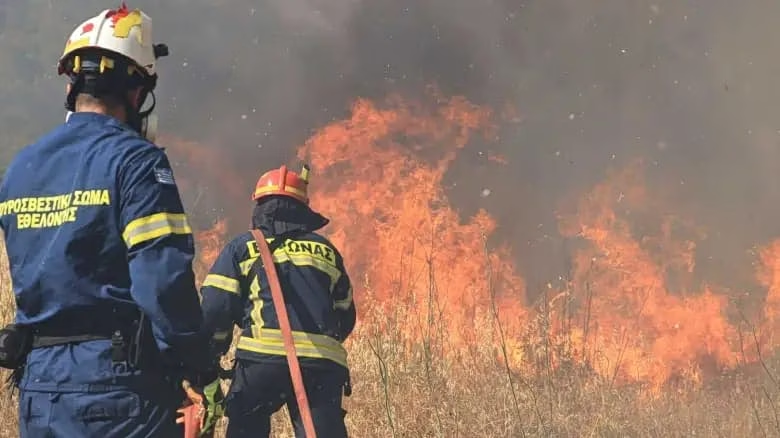
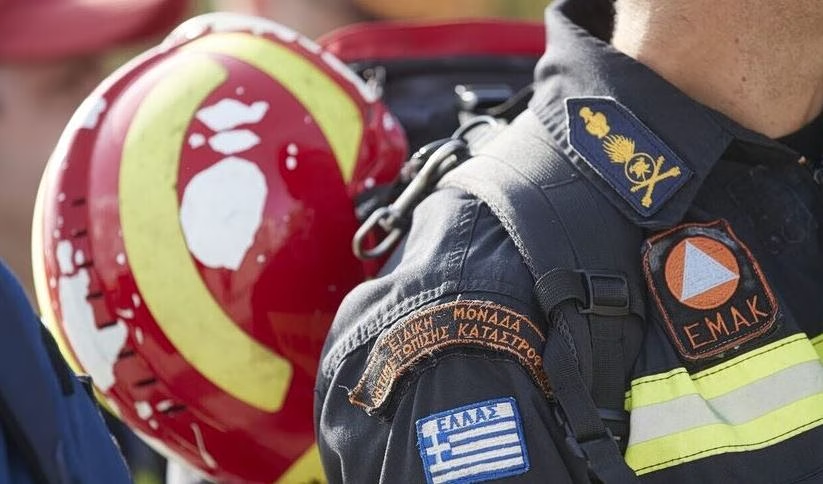
According to available information, forces from the 2nd and 8th EMAK — Greece's specialized mountain rescue units operating under the Fire Service — have been mobilized and dispatched to the scene. EMAK, which stands for Eidiki Monada Antimetopisis Katastrофоn (Special Disaster Response Unit), is specifically trained for complex rescue missions in difficult terrain, including high-altitude and mountainous environments.
The deployment of two separate EMAK units underscores the seriousness of the situation and the challenges posed by the location where the climber is believed to have fallen. Ravines and steep gorges on Mount Olympus can be extremely difficult to access, often requiring technical climbing equipment and specialized knowledge of the mountain's geography.
Challenges of Mountain Rescue Operations
Rescue operations in mountainous terrain such as that found on Mount Olympus present a range of logistical and safety challenges for emergency responders. Among the key difficulties faced by teams in such missions are:
- Limited accessibility due to steep, rocky, and uneven surfaces
- Rapidly changing weather conditions at high altitudes
- The need for specialized equipment including ropes, harnesses, and stretchers designed for vertical or near-vertical extraction
- Communication difficulties in remote areas with limited signal coverage
- The physical strain placed on rescue personnel operating at altitude
These factors often mean that rescue operations on high mountains can take many hours or even days to complete successfully, depending on the specific location and condition of the individual being rescued.
Mount Olympus: A Beloved Yet Demanding Destination
Mount Olympus attracts tens of thousands of visitors each year, ranging from casual hikers exploring its lower forested slopes to experienced mountaineers attempting to summit its highest peaks, including Mytikas, which is the tallest point in Greece. The mountain is also a designated national park and UNESCO Biosphere Reserve, recognized for its exceptional biodiversity and natural beauty.
Despite its popularity, Mount Olympus demands respect and careful preparation from all who attempt to climb it. Accidents on the mountain, while not an everyday occurrence, do happen periodically, and Greek authorities have long emphasized the importance of proper equipment, physical fitness, and ideally the guidance of experienced local mountaineering clubs or guides when undertaking more challenging routes.
The Greek Mountain Rescue Service and EMAK units are regularly called upon during the summer climbing season to respond to incidents involving injured, lost, or stranded climbers. In many cases, helicopter support is also utilized when ground-based access proves too difficult or time-consuming.
Ongoing Operation and Updates
At the time of reporting, the rescue operation remains active. Authorities have not yet released detailed information regarding the identity of the climber, their nationality, or the precise location on the mountain where the fall occurred. It is also not yet known whether the individual sustained injuries as a result of the fall, or the severity of any such injuries.
Emergency services are continuing their efforts to pinpoint the exact position of the climber within the ravine, a process that can be complicated by the depth and width of such geographical features on the mountain. Once located, the extraction process will require careful coordination between ground-based rescue personnel and potentially aerial support.
Local authorities and mountain rescue coordinators are expected to provide further updates as the operation progresses. In the meantime, other climbers and hikers in the area have likely been advised to exercise additional caution and to avoid routes near the area where the incident occurred, in order to keep access clear for rescue teams and to prevent further accidents.
Safety Reminders for Mountain Climbers
Incidents such as this one serve as a timely reminder of the importance of mountain safety for all individuals who choose to explore high-altitude environments. Experts and rescue professionals consistently advise climbers and hikers to adhere to a number of core safety principles whenever venturing into mountainous terrain:
- Always inform someone of your planned route and expected return time before setting out
- Carry appropriate navigation tools, including maps and a compass or GPS device
- Wear suitable footwear and clothing for the conditions and altitude
- Monitor weather forecasts closely and be prepared to turn back if conditions deteriorate
- Carry a fully charged mobile phone and, where possible, a satellite communication device
- Never attempt advanced routes without adequate experience or professional guidance
Mountain rescue services across Greece and Europe operate tirelessly to assist those who find themselves in difficulty in remote and challenging environments. However, prevention through careful planning and responsible behavior remains the most effective way to reduce the risk of accidents in the mountains.
The outcome of the current rescue operation on Mount Olympus is being closely monitored, and further details are expected to emerge in the coming hours as rescue teams work to bring the situation to a safe resolution.