A Rocky Start for Greek Football Officials
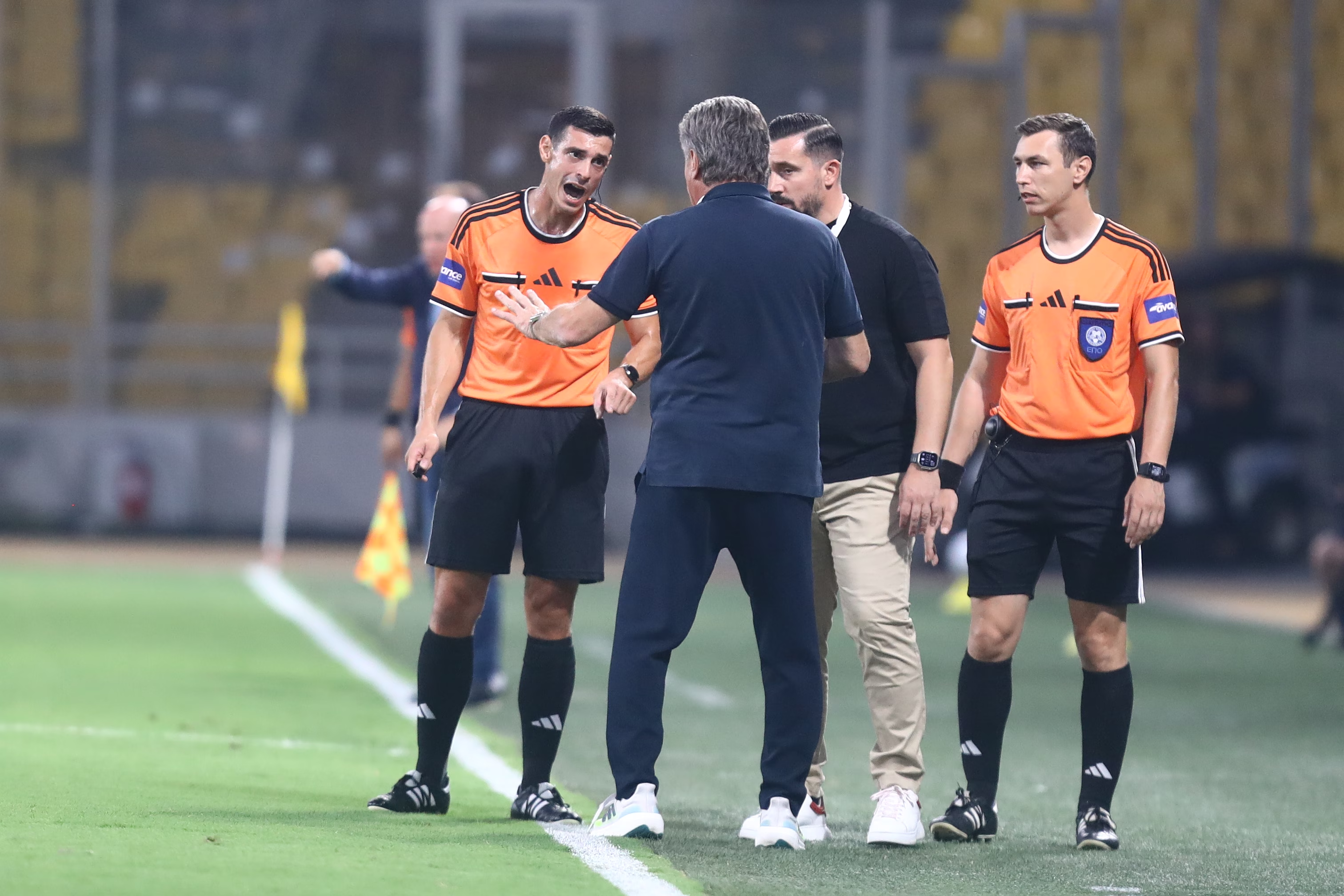
The opening weekend of the Stoiximan Super League season has cast an uncomfortable spotlight on the standard of refereeing in Greek football. Across the three matches that marked the competition's premiere, the performances delivered by the officials on the pitch were widely considered to fall short of the expected level, raising immediate questions about the readiness and consistency of the refereeing corps heading into a demanding campaign.
The Central Refereeing Committee, known by its Greek acronym KED, now faces a significant challenge as it reviews the decisions made during those opening fixtures and attempts to chart a course correction before more matchdays pile up on the calendar.
Predictability and Poor Decision-Making
Among the criticisms leveled at the referees, two themes emerged most prominently: predictability in their positioning and movement patterns, and a troubling frequency of questionable or outright incorrect decisions. Predictability in officiating is a concern that goes beyond simple mistakes — when referees become readable, players and coaches can anticipate their blind spots and exploit them, which ultimately undermines the integrity of the game.
Poor decision-making, on the other hand, directly affects match outcomes and team standings. Even at the very start of the season, when every point carries equal weight in the final standings, controversial calls can set a damaging tone that lingers through an entire campaign. Supporters, club officials, and football analysts were quick to point out moments from the opening round that they felt were handled poorly by the men in charge of enforcing the rules.
Pressure Mounts on the KED
The Central Refereeing Committee finds itself in a difficult position. Its mandate is to develop, supervise, and improve the standard of officiating across Greek football, and the debut weekend of the new season has provided little in the way of encouraging signs. The committee will need to conduct a thorough review of the footage from those three matches, identify the specific areas where its referees underperformed, and implement corrective measures in a timely fashion.
This is not merely an administrative exercise. The credibility of competitive football depends heavily on the perception that matches are governed fairly and competently. When that perception is damaged — especially this early in a new season — restoring confidence among clubs, players, and the wider public becomes an urgent priority.
A Systemic Challenge in Greek Football
Refereeing standards have long been a contentious topic in Greek football, with debates about the quality and consistency of officiating surfacing repeatedly across different seasons and competitions. The concerns raised after the Super League's opening round are therefore not entirely new, but they are nonetheless significant given the context of a fresh start that most stakeholders had hoped would signal progress.
Efforts to improve referee development in Greece have included increased training programs, closer scrutiny of individual performances, and greater use of video review tools in post-match assessments. Despite these measures, results have been mixed, and the gap between the standard expected at a top-flight domestic level and what is regularly delivered on the pitch remains a source of frustration for many involved in the sport.
Part of the challenge lies in the relatively small pool of high-quality referees available at the elite level in Greece. Unlike larger football nations where a deep bench of experienced officials can be rotated throughout the season, Greek football must make do with a more limited selection. This places added pressure on individual referees and leaves less room for error when officiating high-profile matches.
What Needs to Change
For the situation to improve, several interconnected changes may be necessary. First and foremost, there is a need for more rigorous pre-season preparation for referees, including physical conditioning, rules interpretation workshops, and simulated match scenarios that expose officials to high-pressure situations before the real competitive action begins.
Beyond preparation, there is also a case to be made for more transparent accountability. When referees make significant errors that affect match results, clear communication from the KED about what went wrong — and what consequences, if any, follow — can help rebuild trust with clubs and supporters. Opacity in how officiating mistakes are handled has historically fueled suspicion and resentment within the Greek football community.
Additionally, investing in the grassroots pipeline for referee development could yield long-term dividends. By identifying and nurturing talented young officials earlier in their careers, Greek football can gradually expand its pool of capable referees and reduce reliance on a handful of experienced names who are cycled through matches week after week.
Looking Ahead to the Rest of the Season
With the Super League season now underway, there is little time for the KED and the refereeing community to dwell on the missteps of the opening weekend. The fixture schedule moves quickly, and each new round of matches brings fresh opportunities — and fresh risks — for the officials involved.
Clubs will be watching closely. After a debut round that failed to inspire confidence, the pressure is firmly on Greek referees to demonstrate that the early problems were anomalies rather than indicators of a deeper, more persistent issue. Whether the necessary corrections can be made swiftly enough to prevent further controversy remains to be seen, but the urgency of the situation is not lost on those responsible for overseeing the standard of officiating in the country's top football division.
For now, the conversation around referees — rarely far from the surface in Greek football — has moved to the very top of the agenda just days into the new competitive year.