How does 'East of Eden' portray Cathy Ames?
In John Steinbeck's seminal work 'East of Eden', Cathy Ames is depicted as the ultimate personification of evil. The original text presents her as a character born with a profound lack of emotion, guilt, and morality. Her actions are nothing short of heinous: she kills her parents, abandons her children, and rises through the ranks of a sex-work industry by killing her madam to take her place. She eventually builds a sadomasochistic empire fueled by blackmail, and her final act is a calculated suicide that leaves a massive fortune to her son, Aron—a character meant to be the embodiment of pure Good—in a desperate, final attempt to corrupt him.
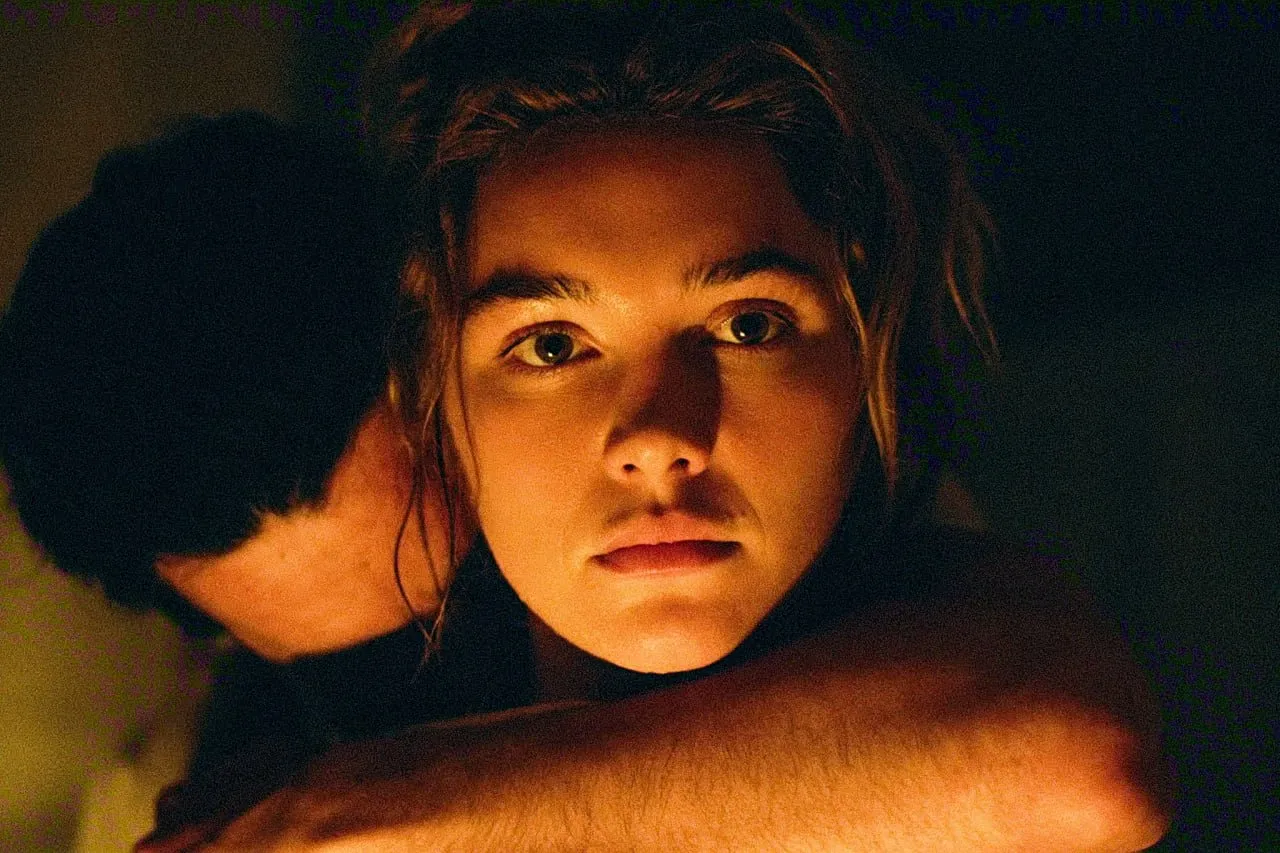
Steinbeck’s original description is almost supernatural, portraying her with feet like claws and a tongue like a serpent. However, the recent Netflix adaptation by Zoe Kazan offers a different perspective. While the original Cathy is a biblical force of pure malice, Kazan’s interpretation focuses on the construction of this 'evil.' By examining the systematic abuse, trauma, and deprivation of freedom that shaped her, the adaptation moves toward a more modern psychological analysis of sociopathy. It seeks to understand the woman behind the monster, suggesting that her character is a product of her circumstances rather than an innate, unchangeable nature.
What is the significance of Ma Joad in 'The Grapes of Wrath'?
Standing in stark contrast to the darkness of Cathy Ames is Ma Joad, one of Steinbeck's most complete and iconic creations from 'The Grapes of Wrath'. Ma Joad represents the ideal matriarchic figure within a patriarchal framework. Living through the Great Depression and the Dust Bowl in California, she navigates a world where extreme hunger and environmental collapse threaten to destroy human relationships. As the world around her falls into chaos, Ma Joad becomes the anchor that prevents her family from dissolving.
Initially, Ma Joad exists under the patriarchal authority of her husband and the family patriarch, the Grandfather. However, as male egos begin to fray and threaten the family's survival, she steps into the role of leader. She does not do this by overthrowing the men, but by managing the household, ensuring food is available, and keeping the family unit intact. She even uses force to prevent her husband from separating, ensuring the family stays together. Crucially, she performs this leadership without emasculating her husband; she carefully maintains his image as the head of the family in public and in his own mind. In a world where the men are often broken by their circumstances, Ma Joad provides the necessary emotional and practical strength to save both her family and, metaphorically, the spirit of California itself.
How does the portrayal of women differ between Cathy Ames and Ma Joad?
The divergence between Cathy Ames and Ma Joad is defined almost entirely by the concept of ambition and the adherence to traditional roles. Ma Joad is the 'Ideal Woman' of the patriarchal imagination: she possesses patience, grit, and intelligence, but she directs these virtues entirely toward the service of others. She has no personal ambition, no life outside her family, and no sexual identity described in the text; she is a selfless provider of love and unpaid labor. Her strength is validated because it serves the patriarchal structure, helping her sons become heroes and her daughter become another selfless mother.
Cathy Ames, conversely, is viewed as the 'Ultimate Evil' because she rejects these very roles. She has no desire to be a daughter, a wife, or a mother. Her primary drive is independence, and she recognizes the harsh reality that in her society, a woman can only achieve true independence through either a massive inheritance or through sex work. Because she refuses to find fulfillment in domesticity or self-sacrifice, she is stripped of her humanity in the narrative. While Ma Joad is a 'Madonna'—a saintly figure of endless forgiveness and education—Cathy is a predator who uses her body and her intellect for her own ends, refusing to be the vessel for the next generation's growth.
What role does matriarchy play in literature and society?
[TO VERIFY: The source text does not explicitly discuss Ursula Buendía or the specific mechanics of matriarchal societies in 'One Hundred Years of Solitude'; it focuses on the contrast between Steinbeck's characters and the patriarchal ideal.]
The tension between these two archetypes reveals how society categorizes female power. When a woman's strength is used to bolster the existing social order and the family unit, it is celebrated as 'matriarchy' or 'motherhood.' When that same strength is used to seek autonomy or to reject the burdens of caretaking, it is often pathologized as sociopathy or villainy. The characters of Steinbeck serve as a mirror to these societal expectations, showing that the distinction between a saint and a monster often rests on whether a woman's power is used to serve or to self-actualize.
FAQ: Patriarchy and Strong Women in Literature
What is the main theme of 'East of Eden'?
The central theme is the eternal struggle between good and evil, illustrated through the lives and choices of characters like Cathy Ames and her impact on those around her.
How does Ma Joad challenge patriarchal norms?
Ma Joad challenges these norms by assuming practical and emotional leadership of her family during times of crisis, effectively stepping in when the traditional male authority figures are unable to cope.
How does Zoe Kazan's adaptation of Cathy Ames differ from the original?
Kazan's adaptation moves away from the purely biblical, 'born evil' depiction of Cathy Ames, instead exploring the psychological roots of her behavior, such as trauma and systematic abuse.
Why is Ma Joad considered an ideal matriarch?
She is considered ideal because she possesses strength and intelligence but uses them exclusively to maintain the family unit and support the men within it, without seeking personal recognition or autonomy.
Key takeaways
- Cathy Ames is portrayed as 'evil' because she rejects the traditional roles of wife and mother in favor of personal independence.
- Ma Joad represents the 'ideal' woman of patriarchy: strong and capable, but entirely selfless and dedicated to the family.
- The distinction between the 'saint' (Ma Joad) and the 'monster' (Cathy Ames) is often based on a woman's level of personal ambition and her adherence to domestic roles.
- Modern interpretations, like Zoe Kazan's, attempt to humanize 'villainous' female characters by examining the trauma that shapes them.