Why does stretching not always result in increased flexibility?
Flexibility is not determined solely by the physical length of your muscles and tendons. While stretching aims to lengthen these tissues, your actual range of motion is heavily influenced by your stretching tolerance—how comfortable your nervous system feels at the limits of your movement. According to a systematic review and meta-analysis published in the journal Sports Medicine, improvements in flexibility via static stretching are linked to both a reduction in muscle stiffness and an increase in this neurological tolerance.
This means your progress is not just a mechanical change in tissue; it is an adaptation where your body learns to allow more movement without triggering a protective tension response. Consequently, pushing a stretch to the point of intense discomfort is not necessarily the most efficient way to cultivate long-term flexibility. If the brain perceives a movement as a threat, it will tighten the muscles to protect the joint, regardless of how much you stretch.
What is the difference between passive stretching and active mobility?
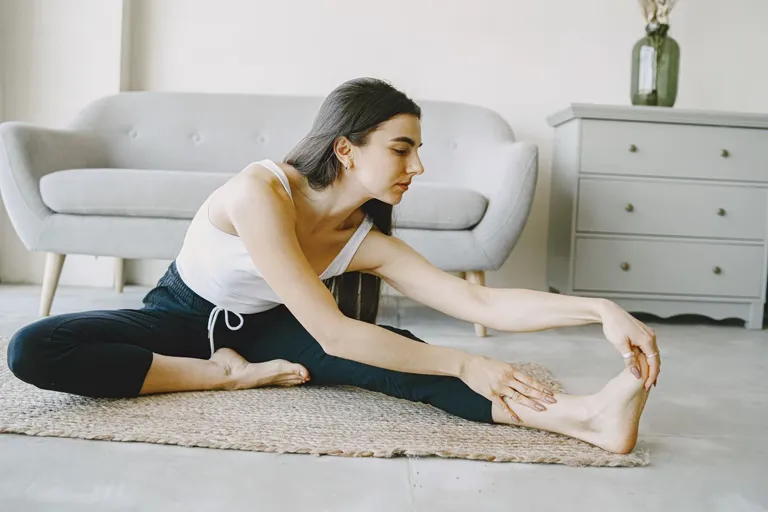
Not all stretching modalities serve the same physiological purpose. Understanding the distinction between passive techniques and active control is vital for functional fitness. Passive stretching involves holding a position for a set duration, allowing the muscle to lengthen with minimal active effort from the individual.
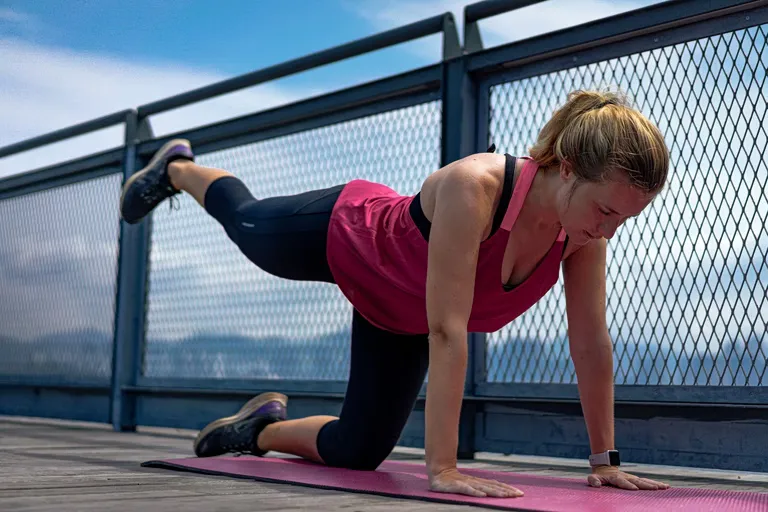
In contrast, active mobility exercises require the use of your own muscular strength to move and control a joint through its available range. While a meta-analysis of 77 studies in the Journal of Sport and Health Science confirms that systematic static stretching improves joint range of motion, it does not guarantee functional control. You may find that you can reach a certain position with the help of your hands, yet struggle to maintain that same position using only your internal muscle strength. To bridge this gap, it is beneficial to combine traditional stretching with exercises that enhance muscular control and stability.
Integrating strength for better movement
Relying exclusively on passive stretching can lead to "hypermobility without control," where joints move through large ranges but lack the stability to support weight or sudden movements. By incorporating strength training, you ensure that the new range of motion you gain is usable in daily life and athletic performance. This dual approach builds a body that is both fluid and resilient.
How do stress and lifestyle factors impact muscle tension?
Psychological stress can manifest physically as increased muscle tension, particularly in the shoulders, neck, and back. Stress affects the nervous system, which in turn dictates how much tension your muscles hold. During periods of high pressure, you may feel significantly stiffer, even if your physical stretching routine has not changed.
Furthermore, general fatigue and inadequate rest can make simple movements feel more taxing than usual. This highlights the fact that physical fitness does not exist in a vacuum; it is deeply integrated with your overall lifestyle. On high-stress days, a gentle session of controlled, slow movements may be more beneficial than a rigorous stretching routine, as it serves as a tool for relaxation rather than an additional physical stressor.
Why is recovery just as important as the stretching itself?
Physical activity triggers various physiological adaptations, but these adaptations occur during the recovery phase, not during the activity itself. If you combine intense training with insufficient rest, you are likely to experience heightened muscle discomfort and perceived stiffness. In these instances, the solution is rarely more or harder stretching.
When the body is overtaxed, it often requires lower intensity, gentle mobilization, or simply more time to rest. It is also critical to distinguish between the normal sensation of a "stretch" or pull and actual pain. Stretching should not be a painful experience to be effective. If you are feeling persistent pain, it is a signal from your body that it needs recovery rather than more tension.
How should you approach a consistent stretching routine?
Consistency is essential for long-term progress, but consistency does not mean performing the exact same movements with the same intensity every day. A successful approach requires adaptability based on your specific needs and daily physical state. For example, someone who spends long hours sitting may need to prioritize hip and thoracic spine mobilization, whereas an athlete may require a different protocol based on their training load.
Rather than constantly changing your program, focus on responding to your body's current needs. This might mean increasing the load or intensity gradually when appropriate, or scaling back when you feel fatigued. Remember that a "bad day" where you cannot reach your usual range of motion is not a sign of lost progress; it is a sign to adjust your intensity to match your current capacity.
Key takeaways
- Flexibility involves both muscle length and neurological stretching tolerance.
- Static stretching improves range of motion, but active mobility is required for functional control.
- Psychological stress can increase muscle tension in the neck, shoulders, and back.
- Recovery and rest are essential components of the flexibility adaptation process.
- Stretching should be adjusted based on daily fatigue and physical needs.
FAQ: Stretching and Flexibility
Why am I still stiff despite stretching every day?
Your stiffness may be caused by factors beyond muscle length, such as high stress levels, inadequate recovery, or low stretching tolerance. Your nervous system might be holding tension to protect your joints, meaning you need to focus on relaxation and active mobility rather than just more stretching.
Is it better to do static or dynamic stretching?
Both have roles. Static stretching is effective for increasing long-term range of motion, while active mobility and dynamic movements help improve muscular control. A balanced routine should ideally combine both to ensure you are not just flexible, but also strong and stable within that range.
Does stretching have to be painful to work?
No, stretching should not be painful. While you may feel a sensation of tension or a mild pull, intense pain is often a sign of injury or a protective response from the nervous system. Effective stretching involves moving toward your limits in a controlled and comfortable manner.
How often should I stretch to see results?
Consistency is more important than frequency. While regular sessions are necessary for adaptation, you should vary the intensity based on your daily physical state. It is better to have a moderate, consistent practice than an intense one that leads to injury or excessive fatigue.
Can stress actually make my muscles tighter?
Yes, stress triggers the nervous system, which can lead to increased muscular tension, especially in the upper body. This psychological component means that improving your flexibility sometimes requires managing your stress and improving your sleep as much as it requires physical exercise.
Conclusion
Achieving true flexibility is a holistic process that extends far beyond the simple act of pulling on a muscle. It requires a balance of static stretching for range, active mobility for control, and strength training for stability. By recognizing the influence of the nervous system, stress, and recovery, you can move away from a rigid, repetitive routine toward a more intelligent and responsive approach to movement. Ultimately, the goal is not to see how far you can stretch, but to move with ease, control, and comfort in your daily life.