Why are the France protests intensifying this week?
The current wave of unrest is driven by a significant gap between citizen expectations for wage increases and the current cost of living. Following a massive mobilization on Thursday, where participation figures varied widely between official and union estimates, the momentum has shifted toward sustained weekend protests. This follows four consecutive weekends of demonstrations, signaling a deep-seated social tension that has not dissipated despite government attempts to intervene.
The discrepancy in turnout figures highlights the complexity of the situation. While the Ministry of the Interior reported 575,000 participants, the CGT union estimated the number at 1.6 million. Regardless of the specific count, the scale of the Thursday mobilization served as a powerful signal to the French administration regarding the intensity of public dissatisfaction with purchasing power.
The economic driver: Purchasing power
At the heart of these movements is the urgent demand for higher wages to offset inflation and rising costs. Protesters are not merely seeking incremental changes but are demanding structural shifts in how the economy supports the average household's standard of living. This economic pressure has become the primary catalyst for the recent series of strikes and marches across the country.
How is the French government responding to the unrest?
Prime Minister Sebastian Lecornu has called for immediate dialogue with social partners to find a path toward stability. In a letter addressed to unions and employers, the Prime Minister stated that the government is listening to both the wage expectations of the public and the concerns expressed by employers. The administration's goal is to use these upcoming negotiations to present concrete answers to the needs of the French population.
The government's strategy involves a multi-tiered approach to consultation:
- Monday Morning: Formal dialogue sessions with trade unions and French employers.
- Monday Afternoon: Targeted meetings with student and youth organizations to address specific demographic concerns.
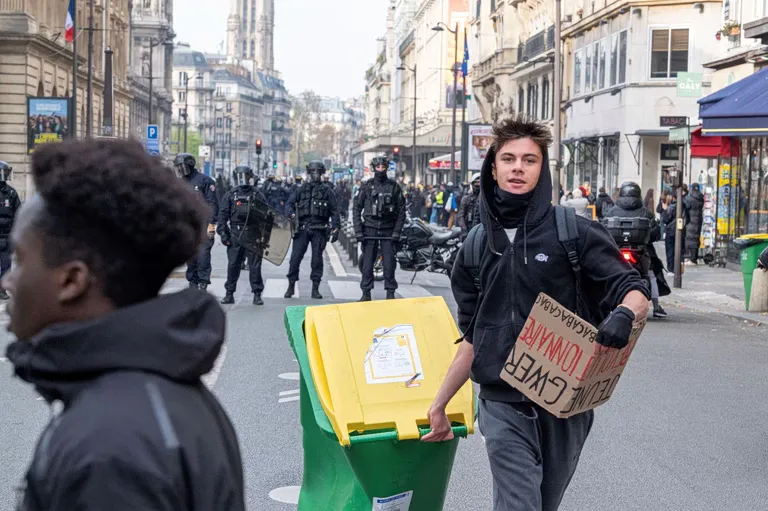
- Security Management: Deployment of significant police resources to prevent a recurrence of previous civil disturbances.
By engaging both the labor force and the employer class, the government aims to create a balanced framework that addresses inflation without destabilizing the broader economic structure. However, the effectiveness of this dialogue remains to be seen, as protesters continue to take to the streets to maintain pressure on decision-makers.
What is the role of the Yellow Vests in the current movement?
The Yellow Vests (Gilets Jaunes) are maintaining a distinct and independent presence from the traditional trade unions. While unions have focused on organized strikes and formal negotiations, the Yellow Vests have opted for more direct, often unauthorized, forms of protest. This separation underscores the fragmented nature of the social unrest in France, where different groups pursue different political and economic objectives.
The Yellow Vests have specifically called for a gathering at the Place de la Concorde, a location chosen for its symbolic proximity to centers of power such as the National Assembly. Despite the authorities denying permission for this specific assembly, organizers have called for "mass civil disobedience." Benjamin Bal, a member of their coordinating body, emphasized that their demands are fundamentally political in nature.
Comparing mobilization scales
Although the Yellow Vests are planning approximately 120 demonstrations across the country today, this figure is notably lower than the peak of their movement on October 17, which saw 1,700 mobilizations. This suggests a shift in tactics or a narrowing of focus, even as they remain a volatile element in the current social landscape.
Who are the other key actors in the demonstrations?
Beyond the Yellow Vests and the major unions, student and youth organizations have emerged as significant players in the current unrest. A coordinating body for youth organizations has called for a march specifically focused on fighting "inaccuracy and in favor of youth." This movement seeks to highlight how economic pressures disproportionately affect the younger generation's future prospects.
The planned route for these youth demonstrations in Paris, moving between Place de la République and Place de la Nation, has been officially authorized. This contrasts with the unauthorized Yellow Vest gatherings, showing a spectrum of protest styles ranging from sanctioned marches to planned acts of disobedience. The involvement of students adds a layer of long-term social concern to the immediate economic grievances of the workforce.
How are authorities managing security during the protests?
The French government has implemented strict security measures to prevent the escalation of violence and looting that characterized earlier demonstrations. The Ministry of the Interior has mobilized a massive security presence to maintain order, particularly in sensitive areas of Paris and other major urban centers.
According to the Ministry of the Interior, a total of 70,000 police officers and gendarmes have been deployed across France. This large-scale mobilization is intended to ensure that the current protests, which are expected to be more controlled than previous ones, do not devolve into the chaos seen during the October 17 mobilizations. Authorities are focusing heavily on protecting key government sites and preventing property damage in high-traffic areas like the Place de la Concorde.
Frequently asked questions
What is the main cause of the France protests?
The primary cause is the significant decline in purchasing power among the French population. Citizens are demanding higher wages and better economic protections to combat rising costs of living and inflation, which have fueled widespread social anger and led to repeated strikes and demonstrations.
How many people participated in the recent major strike?
Participation figures vary by source. The French authorities reported approximately 575,000 participants during the major Thursday mobilization, whereas the CGT union estimated that as many as 1.6 million people took to the streets across the country to demand economic reforms.
Is the government talking to the protesters?
Yes, Prime Minister Sebastian Lecornu has initiated a dialogue with social partners. The government has scheduled meetings with trade unions, employers, and student organizations to discuss wage expectations and economic concerns, aiming to find concrete solutions to the ongoing social crisis.
Are the Yellow Vests still active?
The Yellow Vests remain active but operate independently from the traditional unions. They have called for unauthorized gatherings at symbolic locations like the Place de la Concorde, emphasizing that their movement is driven by political demands rather than just labor issues.
How many police officers are deployed?
The French Ministry of the Interior has deployed 70,000 security personnel, including police and gendarmes, across the nation. This large-scale deployment is intended to maintain order and prevent the civil unrest and looting that occurred during previous protest cycles.
Key takeaways
- Protests are driven by a widespread demand for increased purchasing power and higher wages.
- Participation estimates for recent strikes range from 575,000 to 1.6 million people.
- The government is hosting dialogues with unions, employers, and students to find solutions.
- 70,000 security officers have been deployed to manage nationwide unrest.
- The Yellow Vests are conducting independent, unauthorized protests at symbolic locations.
Conclusion
The current wave of social unrest in France represents a complex intersection of economic grievance and political demand. With massive turnout figures and a diverse array of actors—ranging from organized unions to the independent Yellow Vests—the pressure on the French administration is significant. While Prime Minister Sebastian Lecornu's efforts to engage in social dialogue offer a potential path toward resolution, the scale of the security deployment and the calls for civil disobedience suggest that stability remains fragile. The outcome of the upcoming negotiations with employers and unions will be a critical indicator of whether the government can effectively address the nation's growing economic anxieties.