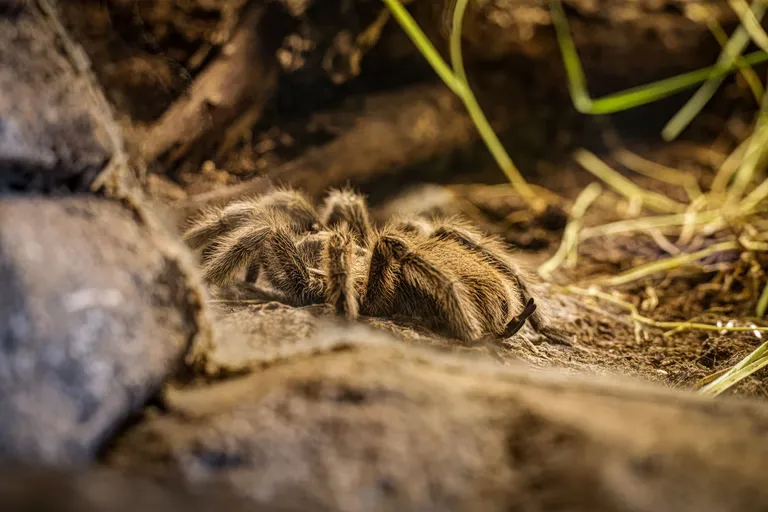
How were the thousands of tarantulas discovered?
Authorities at the capital's airport identified the illegal shipment through a physical inspection of passenger luggage. The discovery occurred when customs officers noticed unusual movement within the bags belonging to three travelers. During a manual check, officials observed that certain items within the suitcases were moving, leading to a more intensive search.
The Service for Forestry and Wildlife (SERFOR) confirmed that the tarantulas were hidden inside used socks to avoid detection. This specific method of concealment is often used by smugglers to mask the presence of live animals from standard X-ray scans or visual inspections. The inspection team, led by specialists, found that the spiders were packed in a way that suggested an attempt to bypass environmental security protocols.
The role of specialized inspection units
The interception was made possible by the vigilance of officers trained to recognize the signs of biological smuggling. Cora Suárez, a technician for SERFOR, described how the manual inspection process revealed the movement of the arachnids. Once the movement was detected, the team proceeded to secure the animals using specialized plastic containers to ensure their safety and prevent any escape during the investigation. The shipment included a diverse range of specimens, including eggs, very young spiders, and some adult samples collected from various regions across Peru.
Who is involved in this smuggling operation?
The smuggling attempt involved three foreign nationals: two German citizens and one Polish citizen. These individuals were intercepted at the airport while preparing to board a flight destined for Germany. Upon discovery of the 3,000-plus tarantulas, the three passengers were immediately detained by law enforcement authorities.
The legal response to this incident has been swift. A specialized police unit dedicated to prosecuting environmental crimes took the suspects into custody. According to SERFOR, a formal criminal case is currently being prepared by the prosecutor's office against the three individuals. This legal action aims to address the breach of environmental laws and the illegal transport of protected species across international borders.
Why is the illegal tarantula trade so lucrative?
The high market value of exotic arachnids in Europe drives the persistence of these smuggling rings. In European markets, a single tarantula can be sold for as much as €500. This significant profit margin makes the illegal trade a highly attractive venture for criminal organizations, despite the high risks of detection and prosecution.
The economic incentive behind wildlife trafficking is immense. According to Interpol, the global trade in illegal wildlife is estimated to generate approximately $20 billion in annual revenue. This massive influx of capital fuels various forms of organized crime, making environmental protection a complex challenge for international law enforcement agencies. The high demand for exotic pets in developed nations provides a consistent and profitable outlet for smugglers operating in biodiversity hotspots like Peru.
What is the impact of wildlife trafficking on the planet?
Wildlife trafficking is considered one of the primary drivers of global biodiversity loss. When thousands of animals are removed from their natural habitats to satisfy illegal market demands, the ecological balance of those regions is severely disrupted. The removal of key species can trigger a cascade of negative effects throughout the local ecosystem.
In the case of the Peruvian seizure, the fact that specimens were taken from various regions suggests a wide-scale extraction process. This type of unregulated harvesting can lead to the depletion of local populations, making it difficult for species to recover naturally. Beyond the immediate loss of individual animals, the trade threatens the long-term stability of ecosystems that rely on these arachnids for population control and other ecological functions.
The ecological consequences of mass extraction
Mass extraction of species like tarantulas often targets various life stages, as seen in this seizure which included eggs and juveniles. When juveniles are removed, it directly impacts the future recruitment of the species, preventing the next generation from reaching maturity. This creates a demographic gap that can lead to local extinctions. Furthermore, the methods used to capture and transport these animals often involve high mortality rates, meaning the ecological damage is even greater than the number of surviving animals in the illegal market suggests.
Frequently asked questions
How many tarantulas were seized in Peru?
Authorities seized more than 3,000 tarantulas during the airport operation. The shipment contained a variety of life stages, ranging from eggs and very young specimens to adult tarantulas, all intended for illegal sale in Europe.
What was the destination for the smuggled spiders?
The smuggled tarantulas were destined for Germany. The three suspects, who were German and Polish nationals, were caught at the airport just before their flight was scheduled to depart for the European country.
How much can a single tarantula sell for illegally?
In the illegal European market, individual tarantulas can be sold for up to €500. This high price point is a primary motivator for the smuggling of exotic species from biodiversity-rich regions like Peru.
What are the legal consequences for the smugglers?
The three individuals involved face criminal proceedings. They were detained by a specialized police unit focused on environmental crimes, and a formal case is being built by the prosecutor's office to address their actions.
How much money does wildlife trafficking generate globally?
According to Interpol, the global illegal wildlife trade generates an estimated $20 billion annually. This massive scale of criminal activity makes it one of the most profitable and damaging forms of organized crime worldwide.
Key takeaways
- Over 3,000 tarantulas were seized in Peru after being found hidden in socks.
- The smugglers, two Germans and one Pole, were targeting the German market.
- Illegal tarantulas can fetch up to €500 per specimen in Europe.
- Interpol estimates global wildlife trafficking generates $20 billion every year.
- The seizure involved various life stages, including eggs and adult spiders.
The ongoing battle against environmental crime
The seizure of thousands of tarantulas in Peru serves as a stark reminder of the scale and sophistication of the illegal wildlife trade. While the intervention of SERFOR and specialized police units successfully prevented this specific shipment from reaching Europe, the underlying demand remains a significant threat to global biodiversity. As long as the profit margins remain high—with individual animals fetching hundreds of euros—criminal networks will continue to exploit vulnerable ecosystems. Strengthening international cooperation and increasing the severity of legal penalties are essential steps in mitigating the devastating impact of this multi-billion dollar industry on the planet's natural heritage.