The mandate for government formation and coalition math
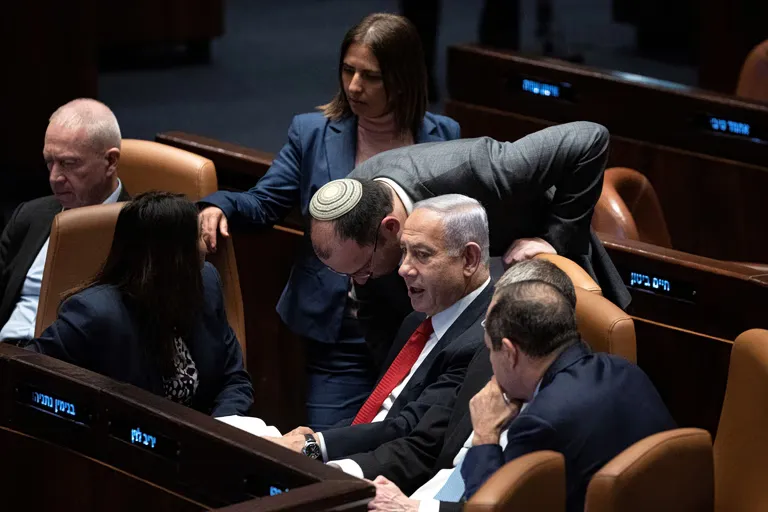
Gadi Eizenkot holds the primary mandate to form a new government following consultations with President Isaac Herzog. The political landscape is divided, with Eizenkot having 67 supporters and Benjamin Netanyahu having 46. Because a majority requires at least 61 seats in the 120-member Knesset, any successful coalition must navigate complex ideological divides.
Eizenkot has proposed a minority government model. This strategy relies on four Jewish opposition parties: Yashar, Together, the Democrats, and Yisrael Beiteinu. Together, these parties hold 48 seats, leaving a significant gap that must be filled by external support to pass legislation or survive a vote of confidence.
Potential paths to a majority
To bridge the gap between 48 seats and the required 61, several political scenarios exist:
- Arab Party Support: The United Arab List or the Joint List have indicated they would support an opposition coalition to prevent a Netanyahu-led government. However, Jewish opposition parties face political risks in formalizing such alliances due to previous campaign stances.
- Ultra-Orthodox Support: The United Torah Judaism party declined to support any candidate during initial consultations with President Herzog.
- Abstentions: A minority government could function if at least one party chooses to abstain from the vote of confidence, allowing the coalition to meet the threshold of active support.
Historically, minority governments in Israel have been short-lived, typically lasting no more than two years before a coalition member withdraws support.
The legal timeline for the formation process
The constitutional process for forming a government follows a strict sequence of deadlines managed by President Herzog. If the first mandate holder fails, the President has the authority to assign the task to subsequent candidates.
| Stage | Actor | Timeline/Conditions |
|---|---|---|
| First Mandate | Gadi Eizenkot | 28 days, with a possible 14-day extension approved by the President. |
| Presidential Decision | Isaac Herzog | 3 days to decide whether to grant the mandate to a second candidate. |
| Second Mandate | Second Candidate | 28 days to form a coalition, with no possibility of an extension. |
| Third Mandate | Third Candidate | If 61 MKs support a third candidate, they have 14 days to form a government. |
If all three candidates fail to secure a majority, the Knesset will be dissolved. In such an event, new elections must be held, with a final deadline of late May 2027, unless the Knesset votes for early self-dissolution.
The role of the Knesset during the interim period
While the formation process unfolds, the 26th Knesset can continue to operate despite the lack of a formal government. During this period, the outgoing administration led by Benjamin Netanyahu serves as a caretaker government, though its powers are significantly restricted.
The caretaker government faces limitations regarding new legislative initiatives and high-level appointments. However, the Knesset itself maintains several functional capacities:
- Leadership Elections: The Knesset can elect a new Speaker and staff the Constitution, Budget, and Law Committee, which is essential for setting the daily agenda.
- Legislative Action: Under specific conditions, the Knesset can still promote and vote on legislation.
- Oversight: The body can conduct parliamentary oversight of the outgoing ministers.
- Inquiry Commissions: The Knesset has the power to establish independent commissions of inquiry, such as a potential investigation into the failures of October 7 and the responsibilities of Benjamin Netanyahu.
Political maneuvering and the Speaker's position
The immediate political priority for the new Knesset is the election of the Speaker. The current Speaker, Amir Ohana, is an ally of Benjamin Netanyahu and a member of the Likud party. The rules allow for a vote on this position during the inaugural session or no later than the day the new government is sworn in.
The Speaker holds significant influence over the legislative agenda. This creates a strategic tension: even if Eizenkot successfully forms a government, he may face delays if the Speaker uses their authority to prioritize bills submitted by the opposition bloc. Furthermore, Eizenkot is expected to wait until the Speaker's position is potentially filled by a representative from his own political bloc before presenting his government for a vote of confidence.