The Democratic shift in Congress and the European reaction
The establishment of a US Congress under Democratic control following the midterm elections has triggered a notable sense of relief across European capitals. For many observers, the decisive defeat of Trump-aligned Republicans suggests that the MAGA movement may be facing a significant setback, potentially altering the trajectory of transatlantic relations. This shift offers a brief reprieve from the volatility that has defined the previous two years of US-European engagement.
However, this relief is tempered by the reality of the US executive branch's power. While the legislative landscape has changed, the presidency remains a potent force capable of independent action. The Democratic control of Congress does not automatically translate to a unified or predictable foreign policy that aligns perfectly with European interests.
The limits of legislative influence
Blanche Lerondin of the Institut Montaigne in Paris notes that European leaders cannot assume the new Democratic majority in Congress will act as a shield against Trump's unilateralism. According to Lerondin, the priority of the Democratic Congress is not necessarily the restoration of harmonious relations with Europe. The current Democratic foreign policy remains difficult to decipher, lacking a singular, consistent position between its progressive and centrist factions regarding both Europe and the conflict in Ukraine.
Potential flashpoints in US-European relations
Donald Trump's capacity to influence international affairs remains high despite his legislative limitations, as he has previously acted without Congressional approval to initiate trade wars and military tensions. Experts warn that Europe could become a primary target for his administration's more confrontational stances.
Nathalie Tocci, a professor at the Johns Hopkins School of Advanced International Studies in Europe and a senior researcher at the Bocconi University Institute of European Affairs, suggests that Trump and the MAGA movement have historically viewed Europe as a symbol of their domestic political enemies. She argues that Trump views Europe as a collection of "arrogant, 'woke' and weakened liberals," and that his hostility toward the continent may intensify now that these perceived enemies have returned to the domestic US stage.
Specific areas of concern include:
- Trade and Tariffs: The possibility of renewed "tariff chaos" as a tool of political leverage.
- Ukraine Support: The risk of a presidential veto on aid to Kyiv or the restriction of access to critical defense technologies.
- Territorial Negotiations: Concerns that the US might attempt to broker a "great, wonderful deal" for Ukraine that involves partitioning Eastern Europe in cooperation with Russia.
Paul Taylor, a senior visiting researcher at the European Centre for Policy Studies, has highlighted these scenarios as significant threats to European security and sovereignty.
The divergent response of European far-right parties
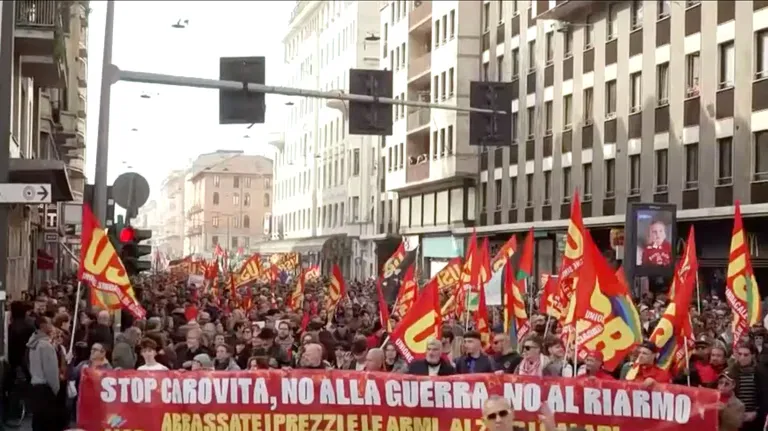
The political fallout of the US midterm results is not uniform across the European continent, particularly among nationalist and far-right movements. While some leaders are being forced to recalibrate, others are distancing themselves from Trump to protect their domestic standing.
In Central and Eastern Europe, where the MAGA spirit has found significant resonance, the impact varies by country. In Poland, conservative President Karol Nawrocki, who maintains close ties to Trump and is supported by the Law and Justice opposition, faces increasing scrutiny. In the Czech Republic, Prime Minister Andrej Babiš and his coalition partners have faced public demonstrations, signaling a potential shift in the popularity of pro-MAGA stances.
| Country | Political Context | Reaction to Trump/MAGA |
|---|---|---|
| Italy | Giorgia Meloni (Far-right PM) | Strategically leveraged tensions with Trump to appeal to voters who view him with disdain. |
| France | Marine Le Pen (National Rally) | Distanced herself from Trump to focus on French national interests and the impact of his policies on purchasing power. |
| Germany | Alice Weidel (AfD Co-leader) | Criticized Trump following his policies regarding tariffs and Greenland. |
| Spain | Pedro Sánchez (Socialist PM) | Welcomed the Democratic victory as a sign of progress for progressive forces. |
The strategic distancing seen in France and Germany suggests that even far-right leaders recognize the potential economic damage caused by Trump's policies, such as trade tariffs or the destabilization of energy markets through conflict in the Middle East.
The resilience of populist movements
Despite the midterm results, it would be an error to assume that nationalist-populist forces are in decline across the West. Blanche Lerondin observes that while Democrats won in the US because of exhaustion with Trump, the situation in Europe is different. In nations where populist forces are not yet in power but are poised to seize it, the political calculation remains distinct. In France, Marine Le Pen continues to lead in polls ahead of the presidential elections, with the cost of living remaining a central issue.
Spain and the shifting political landscape
Spain represents a critical testing ground for the direction of European politics. Prime Minister Pedro Sánchez has framed the US midterm results as a harbinger of a political rebirth for progressive forces. However, domestic economic pressures are complicating this narrative.
The Spanish political environment is currently defined by high levels of social unrest regarding housing and wage stagnation. This tension led to a major general strike on November 11. While the Socialist government seeks to capitalize on the global shift toward the center-left, the political momentum currently favors the right-wing People's Party (PP). If the PP forms a coalition with the far-right Vox party, it would mark the first time a far-right party has entered the Spanish government since the end of the dictatorship.