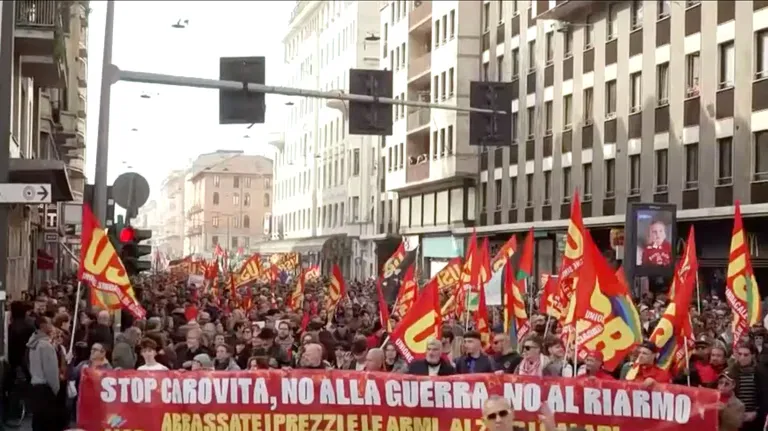
Widespread disruption across public and private sectors
The general strike in Italy has caused significant operational delays across various industries, affecting both state-run and private enterprises. While the mobilization is nationwide, the scope of the disruption varies depending on the sector involved. According to the organizers, the strike is a direct response to the economic framework proposed in the government's latest budget plan.
Impacted services and sectors
The industrial action is expected to heavily impact several critical infrastructure and service areas. While the strike is broad, it is not universal across all transportation modes. The following table outlines the expected levels of disruption based on the current strike parameters:
| Sector | Expected Impact Level | Notes |
|---|---|---|
| Healthcare | High | Potential delays in non-emergency services. |
| Education | High | Disruption to school and university operations. |
| Ports | High | Logistical delays in maritime transport and cargo. |
| Public Transport | High | Significant disruptions to local and regional transit. |
| Aviation | Low | Air connections are expected to remain operational. |
| Long-distance Rail | Low | Intercity train services are exempt from the strike. |
The strategic exclusion of aviation and long-distance rail services suggests a targeted approach to maximize social pressure while maintaining certain essential mobility corridors. However, the paralysis in ports and local transport is likely to create secondary economic ripples in supply chains and daily commuting.
Union demands for economic relief and social spending
Labor federations are centering their protests on the immediate financial pressures facing Italian households. The primary demand is a substantial increase in wages to offset the erosion of purchasing power caused by persistent inflation and the escalating cost of living. Beyond direct income, the unions have outlined a comprehensive list of social requirements they believe the government must address in its budget.
- Wage Adjustments: Immediate increases to match inflationary trends.
- Healthcare Funding: Increased budgetary allocations to bolster the public health system.
- Educational Support: Enhanced spending to strengthen the national education infrastructure.
- Housing Security: Implementation of measures to ensure and protect housing access.
- Workplace Safety: Stricter regulations and enforcement of safety standards in professional environments.
These demands represent a holistic critique of the current fiscal direction, suggesting that the unions view the government's budget as insufficient for maintaining social stability and protecting the most vulnerable citizens.
The call to freeze defense spending
A central and highly visible pillar of the current mobilization is the demand to "freeze" spending on military equipment. Unions are advocating for a reallocation of these funds, arguing that capital currently earmarked for defense should be diverted to cover pressing social needs. This policy stance positions the labor movement in direct opposition to increased military procurement.
By calling for a freeze on equipment budgets, the unions are attempting to force a debate on national priorities. They argue that the social costs of inflation and inadequate public services outweigh the necessity of expanding military hardware. This redirection of funds is presented as a necessary step to stabilize the social fabric of the country through improved healthcare, education, and housing protections.
Leadership and mobilization strategy
Maurizio Landini, the Secretary of the CGIL—Italy's largest trade union—has emphasized the importance of high participation rates to ensure the movement's success. The CGIL, alongside other federations such as Cobas, Clap, and Sial, is aiming for a massive turnout that includes not only workers but also students and younger demographics. The scale of the movement is underscored by the expectation of over 100 demonstrations taking place across the country.
Statements from CGIL leadership
During the mobilization, Landini addressed the media regarding the nature of the protests and the potential for unrest. He characterized the movement as a disciplined expression of democratic rights rather than a chaotic disruption. According to Landini, the essence of this mobilization lies in its scale and the diversity of its participants.
"The essence of this mobilization will be large participation, with an impressive mobilization of employees, students, and young people," stated Maurizio Landini, Secretary of the CGIL.
Addressing concerns regarding the possibility of violent incidents or civil disorder, Landini maintained a stance of calm and intentionality. He stated that those participating in the CGIL strike are exercising their fundamental right to demonstrate with clear and specific demands. He added that the unions are taking to the streets and squares of the country with "great sobriety" while maintaining "clear positions."