The legal framework of Article 118 and Law 4412/2016
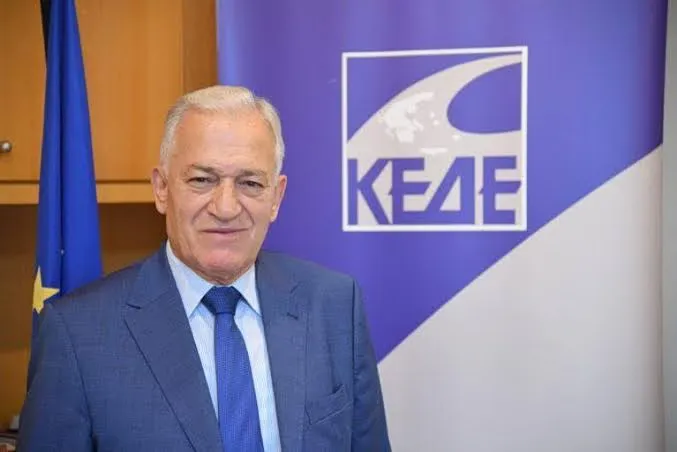
The legality of direct contracting is anchored in Article 118 of Law 4412/2016, which permits municipalities to bypass standard tender processes for specific annual expenditures. According to KEDE, this provision allows for direct awards for any type of annual expense provided the budgeted amount does not exceed €30,000 plus VAT. The organization emphasizes that mayors do not create these laws but are legally obligated to implement them as part of their administrative duties.
KEDE highlights several key aspects of this legislative provision to counter criticisms regarding the necessity of such contracts:
- No emergency requirement: The law does not mandate that a direct award be triggered by an unforeseen or emergency situation.
- Annual repetition: There is no legal prohibition against repeating direct awards on an annual basis for each new financial year.
- Broad application: This mechanism is not exclusive to municipalities; it is utilized by various state entities, including Ministries, Forestry Services, Archaeological Services, and various public legal entities.
The Union notes that the current legislation was voted into effect by the SYRIZA government in 2016 under the Ministry of Spyrtzis. Since its inception, the law has remained unchanged and is applied across the entire Greek public sector to facilitate the execution of routine operational costs.
Addressing allegations of opacity and cumulative spending
Critics often suggest that direct awards are used to hide non-transparent or "closed-door" agreements, a claim KEDE rejects by pointing to digital oversight mechanisms. The organization asserts that the entire process—from the initial documented request to the final contract and payment order—is recorded publicly. These transactions are uploaded to the 'Diavgeia' (Transparency Program) and the KHMDS (Central Electronic Register of Public Procurement), ensuring a digital audit trail.
The distinction between annual limits and cumulative totals
A significant point of contention involves how the €30,000 limit is calculated and reported. KEDE argues that some reports intentionally misrepresent the scale of these contracts by aggregating totals over several years to create the illusion of massive, irregular payments to specific contractors.
To clarify the distinction, the following table illustrates how the law treats these expenditures:
| Metric | Legal Standard (KEDE position) | Criticism Basis |
|---|---|---|
| Threshold Basis | Annual expenditure per service/item | Cumulative expenditure over multiple years |
| Limit Value | Up to €30,000 (plus VAT) per year | Aggregated totals exceeding €30,000 |
| Frequency | Permitted annually for recurring needs | Viewed as repetitive or suspicious |
KEDE maintains that because services like accounting, legal representation, and technical consultancy are required every year, a new contract is legally necessary for each new fiscal period. Summing these annual contracts over five or ten years does not constitute a legal violation, but rather reflects the continuous nature of municipal needs.
Nature of services and the role of municipal professionals
Direct awards are frequently utilized for specialized professional and technical services that municipalities require to function. These services are often essential for the daily administration of local government and are provided by experts who maintain a consistent working relationship with the municipality. KEDE lists several categories of services typically handled through this method:
- Financial and Legal: Tax and accounting services, and legal representation in courts.
- Technical and Advisory: Technical and financial consultants, and services for the licensing and maturation of projects.
- Administrative and Public Relations: Public relations, recording and transcribing minutes of collective bodies, and port or coastline zoning services.
KEDE notes that for many small to medium-sized municipalities, these essential professional services do not individually exceed the €30,000 annual threshold. The law grants heads of public entities the right to select trusted professionals, provided they remain within the established budgetary limits.
Internal controls and the multi-level oversight system
The organization rejects the notion that direct awards are granted "gratuitously" or without oversight. KEDE clarifies that contracts are not signed by elected mayors in isolation; instead, they involve specific deliverables—whether goods, works, or services—that must be verified by municipal employees.
The oversight of these expenditures is managed through a structured hierarchy of professionals and institutions:
- Delivery Verification: Specialized committees composed of municipal employees, rather than elected officials, are responsible for the receipt and signing of works and services.
- Financial Validation: The head of financial services in each municipality is responsible for checking the substance and completeness of payment orders.
- Multi-level Audit: Municipalities are subject to a continuous system of checks derived from Article 102 of the Constitution.
This oversight includes administrative legality checks, fiscal and pre-contractual audits by the Court of Audit, and internal audits conducted by mandatory Internal Audit Units within the municipalities. Furthermore, the National Transparency Authority conducts regular or extraordinary inspections to investigate any potential cases of maladministration.