Infrastructure improvements at the Metamorfosi junction
The intervention at the Metamorfosi junction aims to resolve long-standing congestion issues by separating traffic flows connecting the Attica Odos with the Athens–Lamia National Road. According to Minister Christos Dimas, the project will implement two distinct entry lanes to facilitate smoother transitions for drivers. This structural change is intended to address the bottleneck where multiple routes converge.
The technical objective of these modifications is to significantly increase the efficiency of the intersection. Dimas noted that based on the studies conducted for the project, the implementation of these separate lanes is expected to result in a doubling of transit speeds through the junction. This improvement will specifically benefit drivers approaching from either Venizelos or Elefsina, providing them with dedicated paths into the National Road.
Strategic de-congestion of the Kifisos area
The upgrades at Metamorfosi are part of a broader strategic plan to alleviate traffic pressure in the Kifisos region. Dimas highlighted several key projects currently in the pipeline or under development to achieve this goal:
- Skaramangas Triple Junction: A major project with an estimated completion timeline of three years.
- Elefsina–Oinofyta Connection: A planned link that is currently awaiting formal approval from the European Commission.
These projects are viewed as essential components in a network-wide approach to reducing transit times and improving the reliability of the Attica metropolitan transport corridor.
Addressing OPEKEPE and administrative reforms
Minister Dimas addressed the controversies surrounding OPEKEPE and the broader administrative challenges within the Ministry of Rural Development and Food. He admitted that the government failed to implement necessary reforms in a timely manner, stating, "If there is a mistake on the part of the government, it is that the reform in the Ministry of Rural Development was not addressed earlier. On that point, I am ready to accept criticism. That is a mistake."
Regarding the specific allegations of wiretapping and the involvement of OPEKEPE, the Minister suggested that certain actors are attempting to exaggerate the scale of the issue. He also noted that many officials previously implicated in these matters have been cleared, as their cases were subsequently archived. However, he acknowledged that these controversies have had a measurable impact on the standing of the New Democracy party.
Political landscape and potential PASOK cooperation
The Minister provided insights into the current political climate, acknowledging that after eight years of governance, a significant portion of the electorate may be experiencing fatigue with the New Democracy administration. Despite this, Dimas maintained that the party's goal of achieving a parliamentary majority remains a "difficult but feasible" objective.
When questioned about potential political alliances following future elections, Dimas deferred to the position of the Prime Minister. He indicated that the only party with which cooperation might be possible, under specific circumstances, is PASOK. This comment highlights the shifting dynamics of the Greek political landscape as parties prepare for the next electoral cycle.
Analysis of the opposition and political credibility
Dimas expressed concern regarding the political influence of former Prime Minister Alexis Tsipras. While acknowledging Tsipras's communication skills, the Minister offered a critical assessment of his political influence and the public's perception of his leadership.
The Minister highlighted two primary concerns regarding the opposition leader:
- Public Perception: Dimas noted with concern that a large percentage of citizens still believe Tsipras could lead the country with "more stable hands."
- Credibility: He argued that Tsipras possesses the ability to easily mislead the Greek citizenry, citing the events of 2015 as a permanent stain on his political reliability. "For me, 2015 is not easily erased," Dimas stated.
This critique underscores the ongoing tension between the current administration and the leadership of the opposition, centered on the themes of stability and historical accountability.
Personal reflections on political life
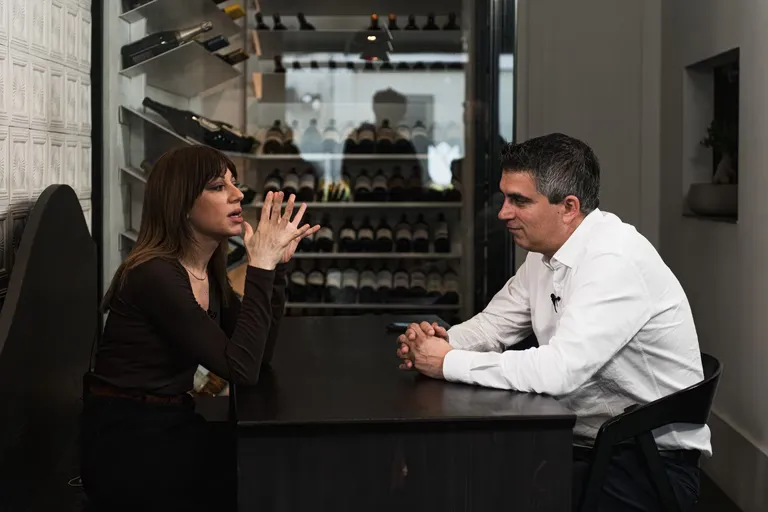
In a more personal turn during the discussion, Dimas addressed whether the rigors of political life had taken a toll on him. Reflecting on a conversation with his father, he provided a candid view of the emotional demands of public service.
While he explicitly stated, "I have not grown tired," he did not shy away from describing the nature of the profession. He characterized politics as a "soul-destroying process" and admitted that, ultimately, it is "tiring." This admission provides a humanizing perspective on the pressures faced by high-ranking government officials in the current climate.