The impact of Nina Kasimati's return on party stability
Nina Kasimati's return to PASOK has caused "mini" internal disturbances, although the party leadership has maintained a public silence regarding the choice. While prominent figures like former PASOK secretary Socrates Xynidis and Giorgos Sakellion have voiced criticisms regarding the current direction of the movement, no central official has explicitly condemned Kasimati's reintegration. Instead, the dissatisfaction remains largely confined to internal murmurs, with some members suggesting that all strategic choices will ultimately be judged by the electorate at the polls.
The leadership's decision to welcome Kasimati back is heavily influenced by her previous electoral performance. In the May 2023 elections, Kasimati's personal vote count in the Piraeus B constituency was significant compared to the party's overall results. The following table illustrates the electoral data from the 2023 period for the Piraeus B region:
| Entity/Candidate | Votes/Percentage (2023) |
|---|---|
| Nina Kasimati | 13,123 votes |
| PASOK (Party total) | 11,872 votes |
| PASOK (June 2023 percentage) | 7.6% |
| Dimitris Diamantidis (PASOK) | 4,970 votes |
This data highlights a strategic calculation by Nikos Androulakis: integrating candidates who possess a proven personal electoral mechanism. However, the competitive landscape in Piraeus B is expected to intensify with the candidacy of journalist Stefanos Konstantinidis, making the consolidation of existing voter bases a priority for the party.
Leadership response and the "open call" strategy
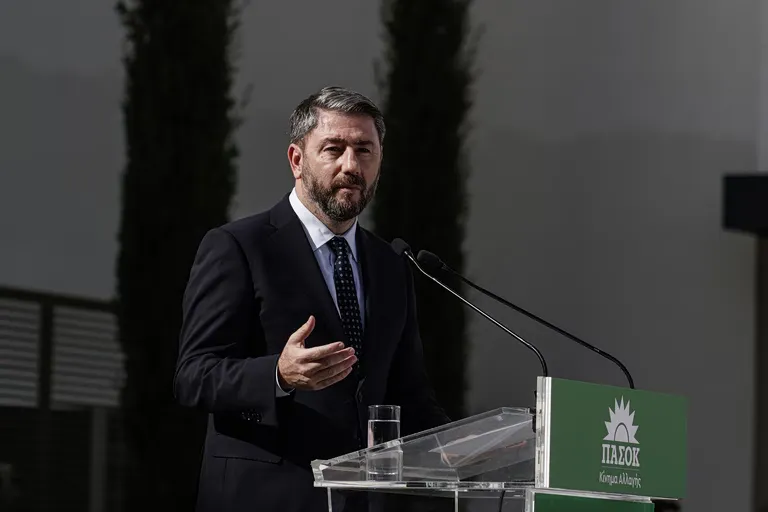
Nikos Androulakis has addressed the shifting dynamics by emphasizing the inclusive nature of the party. Speaking to SKAI, Androulakis stated, "PASOK is a welcoming party. It is enough that these people do not have moral issues." He framed the movement's current trajectory as an "open call" intended to rally progressive citizens toward a broader goal of political change. This stance aims to mitigate internal friction by shifting the focus from individual returns to the collective necessity of electoral growth.
Giota Poulo and the expansion toward former SYRIZA members
The political landscape is seeing a notable shift as Giota Poulo, a former SYRIZA Member of Parliament, enters into open communication with PASOK. Having departed from the party led by Stefanos Kasselakis this past July, Poulo is reportedly undergoing close political "marking" by the PASOK headquarters at Charilaou Trichioupis. Unlike the return of long-standing members, Poulo's potential alignment represents a strategic attempt to absorb political capital from the left-wing sphere.
This movement toward the left is a point of contention within the party's traditionalist wings. While Androulakis views the recruitment of figures like Poulo as a way to broaden the progressive front, critics like Giorgos Sakellion have expressed disagreement with this "leftward opening." The leadership is essentially weighing the benefits of ideological expansion against the risk of alienating its traditional voter base. The success of this "flirting" with former SYRIZA elements will likely depend on whether these figures can be integrated without disrupting the party's core identity.
Theodora Tzakri and the constitutional hurdles to reintegration
The potential return of Theodora Tzakri remains an unresolved issue, complicated by both political and structural factors. As a former close collaborator of Stefanos Kasselakis and a former SYRIZA MP, Tzakri has openly confirmed that she is in discussions with PASOK. However, her candidacy faces a significant obstacle: the current party statutes. Changes to the internal regulations are currently stalled, creating a practical block for potential candidates due to specific provisions regarding parliamentary term limits.
PASOK leadership is currently evaluating Tzakri's situation through two distinct lenses:
- The Electoral Mechanism: The party recognizes the personal electoral strength Tzakri maintains in the Pella region.
- Statutory Constraints: The existing rules regarding parliamentary term limits and membership requirements pose a legal hurdle that has yet to be cleared.
Because of these complexities, no definitive decision has been made or disclosed by the party leadership. The resolution of Tzakri's status will serve as a litmus test for how PASOK manages the tension between its desire for new political talent and the rigidities of its own internal governance.
Electoral mathematics and the Piraeus B constituency
The strategic logic behind recent personnel decisions is deeply rooted in the electoral mathematics of the 2023 elections. The leadership is acutely aware of the discrepancy between party performance and individual candidate strength in specific regions. In Piraeus B, the party's total vote share in June 2023 was only 7.6%, yet individual candidates like Kasimati were able to outpace the party's collective results.
This phenomenon forces the party into a delicate balancing act. To win significant seats, PASOK must rely on "heavyweight" candidates who can carry their own weight, even if their political background or recent history causes internal friction. The competition in the Piraeus B regional unit is set to be fierce, and the party's ability to manage these "personal electoral mechanisms" while maintaining ideological cohesion will be a determining factor in their upcoming campaign success.