Why is the PASOK political council focusing on the far-right?
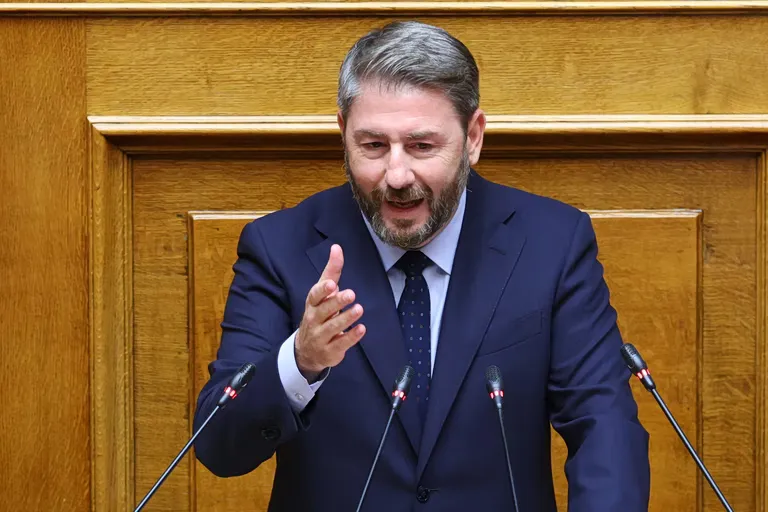
The PASOK political council is prioritizing the rise of far-right sentiment as a central threat to the Greek democratic fabric. During recent parliamentary sessions, PASOK leader Nikos Androulakis expressed significant concern regarding the visibility of extremist elements in the public sphere. This concern is not merely rhetorical; party officials have reported a tangible increase in far-right influence within urban neighborhoods and among the youth in both the Western Sector and Athens.
The party views the recent activities of controversial figures, specifically those associated with the convicted neo-Nazi Ilias Kasidiaris, as a direct challenge to the nation's historical struggles. By addressing this issue, PASOK seeks to fulfill several strategic objectives:
- Identity Reinforcement: Establishing the party as the definitive voice of the Greek Democratic Tradition.
- Electoral Safeguarding: Mitigating the influence of extremist ideologies in key demographic areas.
- Voter Capture: Appealing to centrist voters who are increasingly uncomfortable with the government's perceived proximity to far-right viewpoints.
This anti-fascist positioning is considered a fundamental identity issue for the movement, designed to maintain a bridge with left-leaning voters while simultaneously challenging the government's centrist credentials.
How has Nikos Androulakis criticized the current government?
Nikos Androulakis has intensified his criticism of the New Democracy-led government, specifically targeting their perceived silence on extremist provocations and their handling of civil unrest. The PASOK leader has used recent parliamentary forums to launch sharp attacks on both the ruling party's leadership and individual ministers.
One of the most notable critiques was directed at Health Minister Adonis Georgiadis. Androulakis pointedly reminded the assembly of the minister's past far-right associations, suggesting that the current government's silence on recent extremist events is a reflection of its own historical ideological roots. Furthermore, the opposition leader has condemned the government for the police response during recent demonstrations in Aristotelous Square, framing it as an issue of democratic accountability.
The political tension between PASOK and New Democracy
The friction between the official opposition and the government has reached a fever pitch following the recent debates in the Hellenic Parliament. PASOK's strategy involves a dual-track approach of confrontation and policy differentiation. While attacking the government on social and ideological grounds, the party is also preparing to challenge the administration on economic fronts, particularly regarding debt management and private liabilities. This creates a high-stakes environment where every parliamentary intervention is designed to highlight the government's perceived weaknesses in both social cohesion and economic stewardship.
What is the upcoming electoral roadmap for PASOK?
The PASOK leadership is transitioning into a high-intensity campaigning phase, with the political calendar appearing increasingly compressed despite the recent months of relative stability. The political council meeting serves as the launchpad for a series of strategic "stations" designed to increase the party's visibility across Greece.
Following a recent tour of Northern Greece, Nikos Androulakis is expected to focus his efforts on the Peloponnese. A key component of this regional outreach will be his participation in the annual KEDE conference in Kalamata. This move is intended to consolidate the party's base in traditional strongholds while projecting momentum toward the upcoming elections. The party's internal mood is described as one of "restrained optimism," fueled by recent polling data that suggests PASOK is gaining ground and is now competing more effectively on equal terms with the administration.
How is PASOK positioning itself on economic policy?
PASOK is actively preparing to challenge the government's economic framework, specifically regarding the management of private debt. The party leadership is closely monitoring the government's proposal for a "120 installments" measure, which is expected to be a major point of contention in the coming weeks.
The movement's economic team has submitted a competing legislative proposal for private debt management. According to party sources, they believe their approach is significantly superior to the plan currently being advanced by the New Democracy government. By positioning themselves as the more competent and compassionate alternative in economic management, PASOK aims to capture centrist voters who are dissatisfied with the current government's handling of the cost-of-living crisis and debt restructuring.
FAQ: PASOK political developments
What is the main focus of the PASOK political council?
The main focus is the strategic planning of the party's next steps leading up to the elections. This includes addressing the rise of far-right extremism, defining the party's anti-fascist identity, and coordinating regional campaigning efforts to maximize voter engagement.
Why did Nikos Androulakis target Adonis Georgiadis?
Androulakis targeted the Health Minister to highlight what he perceives as the government's ideological inconsistencies. By referencing Georgiadis's past, the PASOK leader aims to question the government's ability to stand firmly against far-right provocations and extremist elements in society.
What concerns does PASOK have regarding the far-right?
PASOK is concerned about the growing influence of neo-Nazi supporters and extremist ideologies among the youth and in urban residential areas. They view this trend as a significant threat to democratic stability and a challenge to the country's social cohesion.
How is PASOK planning to approach the upcoming elections?
PASOK is employing a dual strategy: maintaining communication with left-leaning voters through anti-fascist rhetoric while simultaneously targeting centrist voters by criticizing the government's perceived right-wing shifts and economic policies.
What is the party's stance on private debt?
PASOK is positioning itself as a superior alternative to the government's economic plans. The party has submitted its own proposal for managing private debt, which it claims is more effective and beneficial than the government's current legislative proposals.
Key takeaways
- PASOK is prioritizing a strategic response to the rising influence of far-right extremist movements in Greece.
- Nikos Androulakis is utilizing anti-fascist rhetoric to solidify the party's identity as the primary democratic alternative.
- The party is preparing for intensive regional campaigning, starting with a focus on the Peloponnese region.
- PASOK aims to challenge the government on economic issues, specifically regarding private debt management legislation.
The path toward the polls
The current political climate in Greece is characterized by rapid shifts and heightened ideological tension. For PASOK, the upcoming months represent a critical period of consolidation and expansion. By framing the political contest as a choice between democratic stability and extremist encroachment, the party is attempting to capture a broad spectrum of the electorate. The success of this strategy will depend on the party's ability to translate its parliamentary critiques into tangible support at the local level as the election cycle intensifies.