How is the Greek government responding to the Turkey-Libya memorandum?
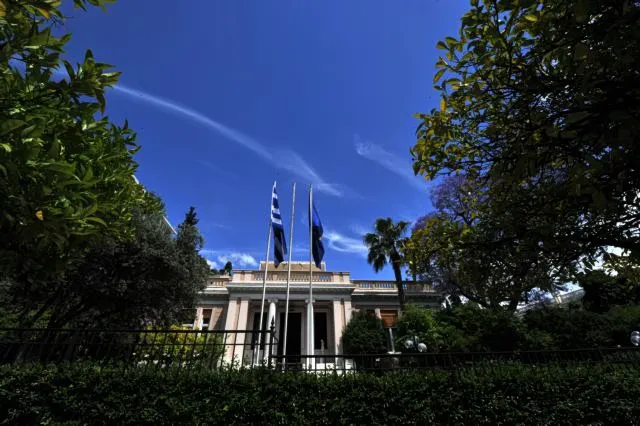
The Greek government is working urgently to internationalize its opposition to the Turkey-Libya maritime memorandum after its ratification by the Libyan House of Representatives. Prime Minister Kyriakos Mitsotakis has taken the lead in condemning the agreement on the global stage, attempting to mitigate the political damage caused by the recent developments in Libya. The administration's strategy involves framing the memorandum not merely as a bilateral issue between two nations, but as a direct challenge to the established principles of the Law of the Sea.
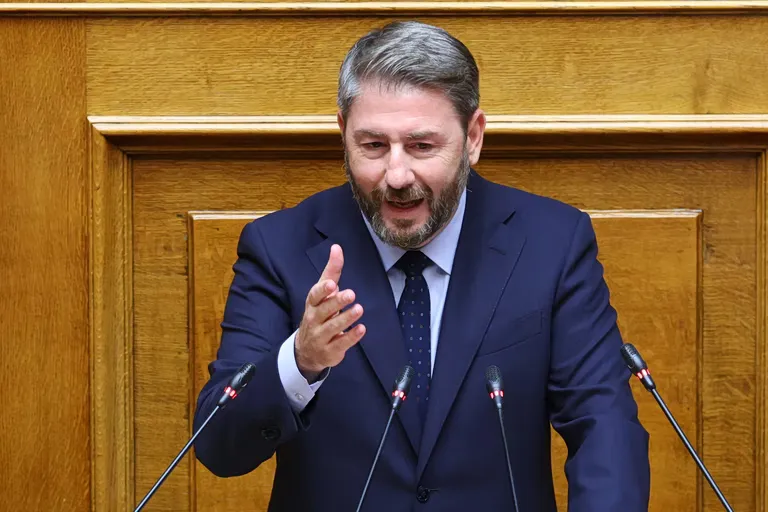
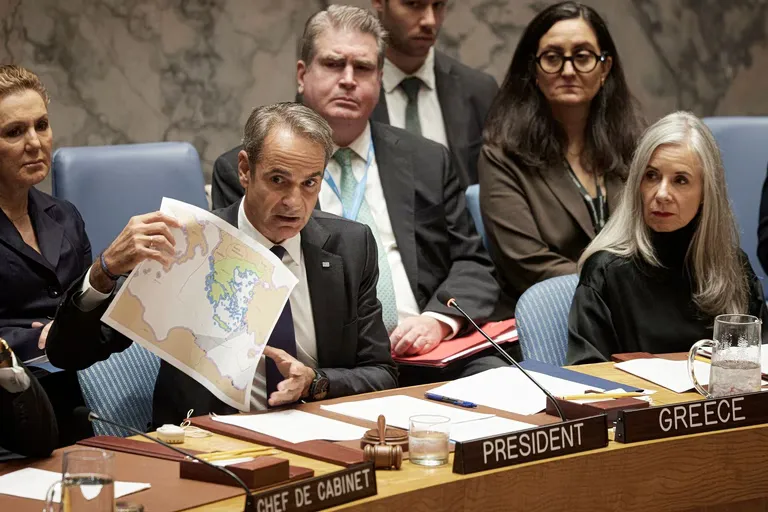
During a high-level discussion presided over by the Greek Presidency of the UN Security Council in New York, the Prime Minister presented a formal rebuttal to the agreement. By utilizing maps to illustrate the maritime boundaries in question, Mitsotakis sought to demonstrate that the memorandum creates artificial borders that ignore geographical realities. The government's stance is that the memorandum cannot be allowed to serve as a pretext for questioning legitimate maritime activities or obstructing critical regional connectivity projects.
The diplomatic offensive in New York
The Prime Minister's intervention at the UN Security Council marks a pivotal moment in Greece's attempt to regain the diplomatic initiative. By presenting the memorandum as an "arbitrary" and "illegal" instrument, Athens is attempting to build a multilateral consensus against the Turkey-Libya axis. The use of visual aids, specifically maritime maps, is intended to provide a clear, evidence-based counter-narrative to the claims made by Ankara and Tripoli, emphasizing that sovereignty cannot be redrawn through unilateral agreements that disregard coastal proximity.
What are the legal arguments against the maritime agreement?
The primary legal argument against the Turkey-Libya maritime memorandum is that it constitutes a flagrant violation of the fundamental principles of the International Law of the Sea. Prime Minister Mitsotakis has explicitly stated that the agreement is "illegal, arbitrary, and contrary to geography." The core of the Greek legal position rests on the fact that Turkey and Libya do not possess objective or adjacent coasts that would justify the maritime boundaries established by the memorandum.
According to the Prime Minister's statements at the UN, the agreement attempts to establish an "artificial maritime border" between two nations that lack the geographical contiguity required for such a delimitation. The Greek leadership maintains that sovereign rights cannot be erased by drawing arbitrary lines on a map. This legal stance is intended to protect Greece's own maritime interests and ensure that strategic regional projects, such as energy interconnections, are not impeded by these contested boundaries.
Why is the memorandum causing internal friction within New Democracy?
The ratification of the memorandum has ignited a firestorm of criticism within the ranks of the ruling New Democracy (ND) party, creating a significant internal political challenge for the Mitsotakis administration. While the government maintains a unified front in public international forums, the "blue corridors" of the party are reportedly filled with dissatisfaction. This internal tension stems from a perception that Greek diplomacy may have miscalculated the political landscape in Libya.
Prominent figures within the party have voiced their concerns, ranging from subtle critiques to direct accusations of diplomatic failure. The tension is not limited to the official opposition but has permeated the parliamentary group of New Democracy itself. This internal unrest suggests that the government is fighting a two-front battle: one against the geopolitical realities imposed by Turkey and Libya, and another against the loss of confidence among its own lawmakers regarding the handling of the Libyan crisis.
Voices of dissent within the ruling party
The scale of the internal criticism is evidenced by the variety of perspectives shared by ND members. Some lawmakers have avoided using terms like "victory" or "defeat," instead characterizing the situation as a "bad moment" where Greek diplomacy failed to correctly assess the prevailing conditions. Others have been more blunt, suggesting that the administration placed excessive investment in certain Libyan factions, such as Khalifa Haftar, without reaping the expected diplomatic dividends. This perceived miscalculation has left the party feeling vulnerable to Turkish influence in the region.
What is the political impact of the Libyan developments?
Politically, the memorandum is being viewed by many as a significant setback for Greek interests, regardless of its eventual legal standing. Even if the agreement is deemed legally void in international courts, the political reality is that it represents a demonstration of force and an attempt by Turkey to create a fait accompli in the Eastern Mediterranean. This shift in influence has implications for Greece's regional alliances, particularly its relationships with Egypt and Israel.
The political fallout is characterized by a sense of losing ground in a critical theater of influence. As Turkey strengthens its ties with elements in Eastern Libya, Greece finds itself navigating a more complex web of regional dynamics. The concern is that the memorandum provides Turkey with a platform to challenge the status quo and exert pressure on the maritime activities of neighboring states, effectively altering the political balance of power in the Mediterranean.
The shift in regional alignments
A key concern raised by political commentators and party members is the shifting alignment of Libyan factions. There are indications that certain influential figures in Eastern Libya may be gravitating toward the Turkish camp. This development is particularly troubling for Greece, as it potentially isolates Athens from its traditional regional partners. The ability of Turkey to project influence through these maritime agreements complicates the strategic cooperation between Greece, Cyprus, Egypt, and Israel, making the Mediterranean a more contested and unpredictable space.
How does the crisis affect future energy projects?
The maritime dispute poses a direct threat to upcoming strategic energy projects, most notably the planned electrical interconnection cable to Cyprus. The uncertainty surrounding maritime boundaries creates a legal and political minefield for infrastructure development. There is a growing fear that the Turkey-Libya memorandum will be used as a tool to obstruct or delay these essential connectivity projects, which are vital for the economic and energy security of the region.
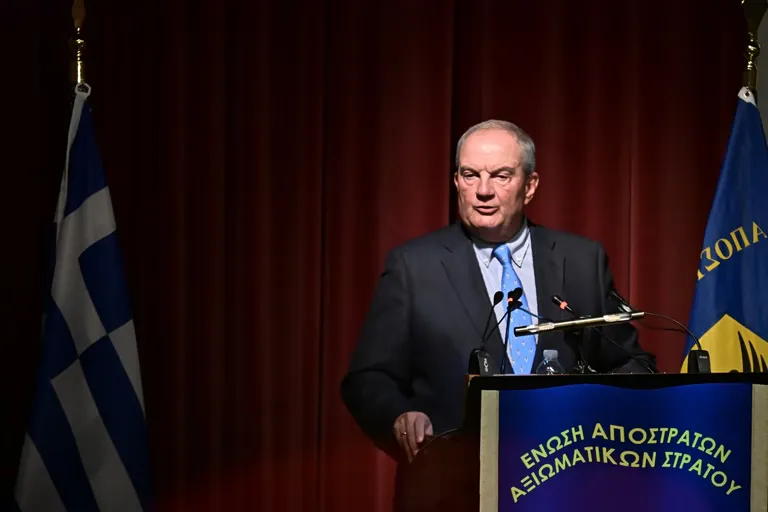
Former Prime Minister Kostas Karamanlis has issued stern warnings regarding this issue, stating that any demand for permission from Turkey to proceed with the Cyprus interconnection cannot be accepted. He emphasized that whether such a request is framed as an "update" or an "announcement," it would represent a significant concession. The government must now navigate these tensions while ensuring that the legal integrity of its energy corridors remains intact despite the geopolitical pressures from the south.
FAQ: Turkey-Libya maritime memorandum
What is the main reason Greece opposes the memorandum?
Greece opposes the memorandum because it claims the agreement violates the International Law of the Sea. The Greek government argues that the maritime boundaries defined by Turkey and Libya are artificial and ignore the actual geography of the Mediterranean, failing to account for the legitimate maritime rights of neighboring coastal states.
Is the Turkey-Libya memorandum legally binding?
While the memorandum was ratified by the Libyan House of Representatives, the Greek government and many legal experts argue it is legally invalid. They contend that because it ignores geographical realities and international maritime principles, it cannot serve as a legitimate basis for redefining maritime zones or challenging existing sovereign rights.
How has the Greek government reacted internationally?
The Greek government has sought to internationalize the issue by bringing it before the UN Security Council. Prime Minister Kyriakos Mitsotakis has used high-level diplomatic forums to present evidence, such as maritime maps, to demonstrate that the agreement is an arbitrary attempt to redraw borders and disrupt regional stability.
What are the internal political consequences in Greece?
Internally, the memorandum has caused significant friction within the ruling New Democracy party. Many members have criticized the government's diplomatic handling of the situation, describing it as a political defeat and a failure to accurately predict the shifting political landscape in Libya and the resulting increase in Turkish influence.
How does this affect the Greece-Cyprus energy connection?
The dispute creates significant obstacles for the electrical interconnection project between Greece and Cyprus. There are concerns that Turkey may use the contested maritime boundaries as a pretext to demand concessions or obstruct the development of this strategic energy infrastructure, which is essential for regional connectivity.
Key takeaways
- The Turkey-Libya maritime memorandum is viewed by Greece as a violation of international maritime law.
- Prime Minister Mitsotakis has actively sought to internationalize the dispute via the UN Security Council.
- The agreement has triggered significant internal criticism and political tension within the New Democracy party.
- The dispute threatens strategic regional projects, including the electrical interconnection between Greece and Cyprus.
- The memorandum is seen as a move by Turkey to create a political fait accompli in the Mediterranean.
Conclusion
The ratification of the Turkey-Libya maritime memorandum has placed the Greek government in a precarious position, necessitating a dual response to external geopolitical shifts and internal political pressure. While Athens continues to fight a legal and diplomatic battle on the international stage to uphold the principles of the Law of the Sea, it must also manage the growing discontent within its own ranks. The outcome of this crisis will likely determine the stability of maritime boundaries in the Eastern Mediterranean and the viability of critical energy projects that are central to the region's future security and connectivity.