What are the primary legal and linguistic obstacles to the agreement?
The finalization of the agreement text remains a critical technical priority to prevent future disputes. Currently, the document is drafted in English, but for it to be legally binding and unambiguous for all parties, it must be translated into both Egyptian Arabic and Greek. This process requires mutual authentication of the versions to ensure that no interpretive discrepancies arise between the monastic leadership and the Egyptian state.
Beyond the text itself, there is significant pressure regarding transparency and the public's right to know the terms of this historic settlement. Observers and political figures have emphasized that the document should be released to the public on the day of the signing, if not sooner, to uphold the principles of good faith. This transparency is seen as essential for maintaining the legitimacy of the new institutional framework.
The necessity of ecclesiastical endorsements
The agreement is not merely a bilateral matter between the monastery and the Egyptian government; it requires a broad consensus within the Orthodox world. For the agreement to be fully realized, the formal letters of approval from several key religious bodies must be made public. These include the Ecumenical Patriarchate, the Patriarchate of Jerusalem, the Patriarchate of Alexandria, and the Churches of Greece and Cyprus. Without these endorsements, the legal and spiritual standing of the new regime could be challenged by various factions within the Orthodox community.
How will property rights and monastic treasures be managed?
A major point of contention involves the precise definition of "religious use and possession" within the agreement. The scope of this term must be clearly delineated to protect the monastery's autonomy while respecting Egyptian sovereignty. This ambiguity could potentially lead to jurisdictional conflicts regarding how the monastery operates its daily religious functions and manages its physical presence on the Sinai Peninsula.
The management of assets located outside of Egyptian territory also requires explicit clarification. There are two distinct categories of assets that demand legal certainty:
- Real Estate: The agreement must define the extent of the monastery's jurisdiction and authority over properties held abroad.
- Treasures and Relics: Similar to the real estate, the legal status and control over the monastery's vast collection of historical treasures and religious relics located outside Egypt must be codified to prevent future ownership or repatriation disputes.
What administrative changes are required for the new regime?
The transition to a new institutional status involves significant internal restructuring for the Sinai brotherhood. One of the most pressing issues is the establishment of a new Holy Synod. Under the current system, the existing Synod remains in place, but the new agreement envisages the creation of a fresh governing body following the election of a new Abbot. This shift is vital for ensuring that the monastery's leadership is aligned with its new legal status.
Furthermore, the monastery faces a logistical challenge regarding its historical documentation. Currently, vital archival materials and evidence are scattered across various locations, including Athens, Cairo, and the Sinai Peninsula. A key component of the post-agreement phase will be the systematic collection, documentation, and digitization of these archives to ensure the monastery's historical legacy is preserved and legally verifiable.
Establishing legal personality in Egypt
A fundamental question remains regarding the monastery's legal standing within the Egyptian judicial system. It is yet to be fully clarified whether the monastery will be granted the status of a Legal Entity of Public Law (NPDD) within Egypt. This distinction is crucial, as it determines whether the monastery's foundational regulations will be recognized by Egyptian authorities as a binding legal text or if they will be treated merely as "internal use" documents with limited external legal weight.
What is the impact of diplomatic relations on the timeline?
The current positive climate in Greek-Egyptian relations serves as an ideal framework for the rapid completion of these negotiations. High-level statements from Greek Prime Minister Kyriakos Mitsotakis, Foreign Minister George Gerapetritis, and the Egyptian Ministry of Foreign Affairs have signaled a mutual desire to finalize the deal. This diplomatic momentum is expected to help overcome the remaining "thorns" in the negotiation process.
To maintain this momentum, Archbishop Simeon must act swiftly. Sources indicate that he needs to propose a specific signing date to the Egyptian government immediately. The timeline also depends on the Archbishop's health; should his recovery proceed smoothly, he is expected to travel to Sinai within a week. Simultaneously, the Egyptian government is expected to issue the necessary Presidential Decree to recognize the Archbishop, enabling him to sign the agreement on behalf of the monastery.
How does the choice of signing location affect the agreement's symbolism?
The venue selected for the final signing carries profound symbolic weight. The location will communicate different messages to the international community and the religious world. There are three primary scenarios considered by ecclesiastical sources:
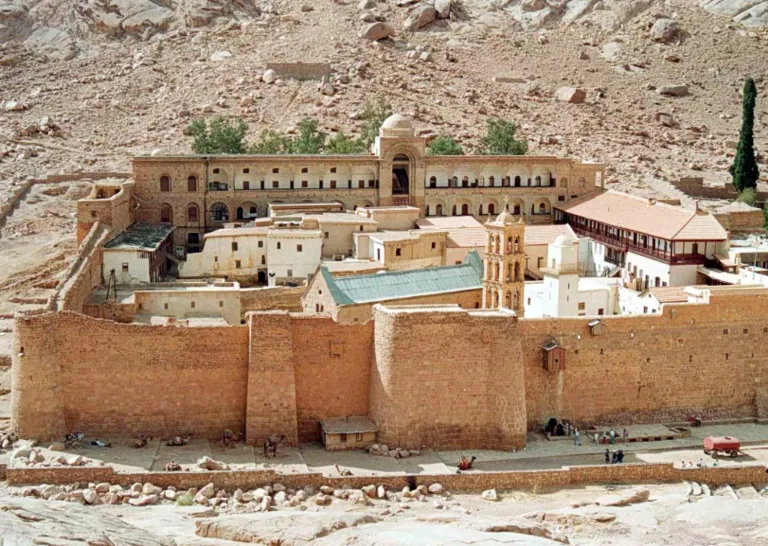
- At the Monastery: A signing ceremony held at Saint Catherine's in the presence of the leaders of Greece and Egypt would signify deep respect for the site's sanctity and the monastery's historical importance.
- Administrative Offices: A signing at the Ministries of Tourism, Antiquities, or Environment would frame the agreement as a successful bureaucratic and regulatory settlement.
- South Sinai Governorate: A ceremony at the South Sinai Administration would emphasize the integration of the monastery into the regional governance of the Egyptian state.
While Greece's role is primarily that of an observer, the symbolic choice of venue will underscore the nature of the relationship between the monastic community and the Egyptian state.
Frequently asked questions
What is the significance of the 1,500-year institutional gap?
For over a millennium and a half, the monastery has operated without a definitive, modern legal framework recognized by the state. This agreement seeks to resolve this long-standing "institutional vacancy," providing the monastery with a clear legal identity and protecting its existence under modern Egyptian law.
What are the concerns regarding residency permits?
One of the practical "thorns" in the agreement is the duration of residency permits for the monastic brotherhood. Current discussions suggest that these permits may be limited to a three-year term, a point that requires careful negotiation to ensure the continuity of monastic life.
Why is the involvement of other Patriarchates necessary?
The Saint Catherine's Monastery is a central site for global Orthodoxy. Therefore, the agreement requires the formal endorsement of the Ecumenical Patriarchate, Jerusalem, Alexandria, and the Churches of Greece and Cyprus to ensure the settlement is recognized and respected by the entire Orthodox communion.
What political pressure is being applied to the deal?
In Greece, political figures and parties, including PASOK and former Prime Minister Antonis Samaras, have called for the agreement to be made public promptly. There is a strong demand for transparency regarding the specific provisions and the long-term implications of the settlement.
How will the monastery's archives be handled?
The monastery plans to undergo a massive archival project to centralize its records. Currently, documents are dispersed between Athens, Cairo, and Sinai. The new framework will facilitate the documentation and digitization of these materials to protect the monastery's historical and legal integrity.
Key takeaways
- The agreement aims to resolve a 1,500-year-old legal ambiguity for the Sinai monastery.
- Key hurdles include multilingual translation and the clarification of property rights.
- Diplomatic improvements between Greece and Egypt are accelerating the final negotiations.
- The monastery's legal status within Egypt (NPDD) remains a critical point of discussion.
- Transparency and public disclosure of the agreement are major political demands.
Conclusion
The Saint Catherine's Monastery agreement represents a pivotal moment in the history of the Sinai brotherhood and its relationship with the Egyptian state. While the recent diplomatic thaw between Athens and Cairo provides a window of opportunity for a swift conclusion, the technical complexities regarding property, governance, and legal personality cannot be overlooked. Successfully navigating these "thorns" will not only secure the monastery's institutional future but also provide a modern legal foundation for one of the world's most significant religious sites. The final outcome will depend on the delicate balance between monastic autonomy and state sovereignty.