How did the Brazilian diaspora vote across the continents?
The second round of the 2026 Brazilian presidential election revealed a clear geographic split in political preference among the diaspora. Early tallies from overseas voting stations, which were among the first to be completed, showed that the voting patterns of Brazilians living abroad did not mirror a single unified trend, but rather shifted based on regional concentrations and local community demographics.
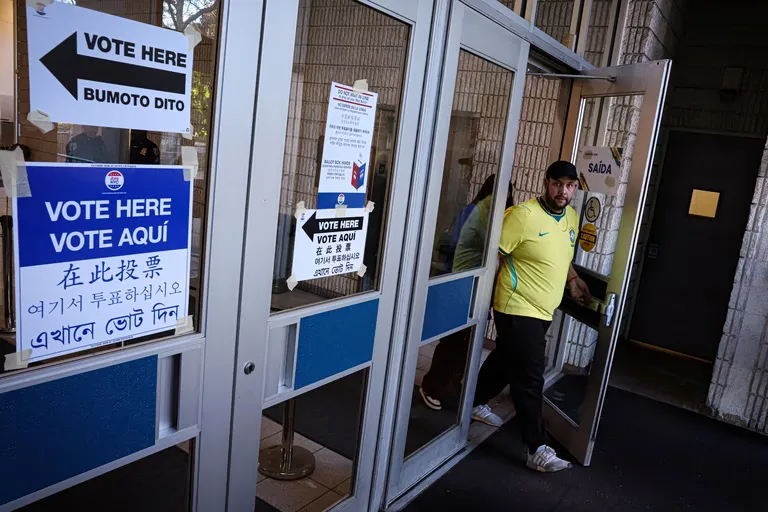
In the Americas, the results leaned heavily toward Flávio Bolsonaro. In the United States, which hosts the largest Brazilian electorate outside of Brazil, Bolsonaro achieved a decisive victory. Out of 85,741 votes cast from a pool of 265,047 eligible voters, Bolsonaro received 53,718 votes (62.65%), while Lula garnered 32,023 votes (37.35%). This represents a significant margin of 25.3 percentage points.
Why did Luiz Inácio Lula da Silva dominate the European results?
Lula da Silva secured commanding leads in almost every major European nation, reflecting a strong preference among the Brazilian communities in these regions. The support for the Workers' Party candidate was particularly pronounced in Western and Northern Europe.
Breakdown of European voting patterns
The margin of victory for Lula in several European countries was substantial, often exceeding 50 percentage points. In France, Lula received 10,676 votes (83.96%), leaving Bolsonaro with only 16.04%. Similar trends were seen in Germany, where Lula won with 79.09% of the vote, and in Denmark, where he reached 85.06%. Even in Portugal, one of the largest Brazilian communities, Lula maintained a strong lead with 60.14% of the vote compared to Bolsonaro's 39.86%.
The following table summarizes the results in key European territories:
| Country | Lula % | Bolsonaro % |
|---|---|---|
| France | 83.96% | 16.04% |
| Germany | 79.09% | 20.91% |
| Denmark | 85.06% | 14.94% |
| Spain | 68.42% | 31.58% |
| Ireland | 80.20% | 19.80% |
| Italy | - | - |
| Greece | 45.05% | 54.95% |
Notably, Greece stood as an exception to the general European trend, where Flávio Bolsonaro led with 54.95% (311 votes) against Lula's 45.05% (255 votes).
What were the voting trends in Oceania and Asia?
The voting patterns in Oceania and Asia presented a mixed landscape, with Lula finding success in Australia and New Zealand, while Bolsonaro maintained strongholds in Japan and Taiwan.
In Oceania, Lula's support was robust. He secured 63.46% of the vote in Australia, totaling 6,017 votes, and achieved an even higher 80.54% in New Zealand. Conversely, the Asian results were more fragmented. Bolsonaro saw massive support in Japan, where he captured 79.94% of the vote (29,215 votes). He also led in Taiwan (58.04%) and the Philippines. However, Lula managed to secure victories in several other Asian nations, including China (65.28%), South Korea, and Singapore, as well as in several Middle Eastern countries such as Saudi Arabia, Kuwait, and Turkey.
How did the Middle Eastern and Southeast Asian results differ?
The Middle East and Southeast Asia showed a high degree of volatility in candidate preference. While Lula dominated in Turkey and much of the Levant, Bolsonaro held sway in the United Arab Emirates, Qatar, and Indonesia. In Southeast Asia, the results were highly competitive; for instance, in Malaysia, Bolsonaro won by a narrow margin of 44 votes to 41. In Thailand, Bolsonaro also held a slight edge with 60 votes against Lula's 56.
Frequently asked questions
Who won the most votes in the United States?
Flávio Bolsonaro won the majority of the votes in the United States. He received 53,718 votes, which accounted for 62.65% of the total valid votes cast by the 85,741 Brazilians who participated in the election from that country.
In which European countries did Lula da Silva win?
Lula da Silva won in the vast majority of European countries, including Portugal, France, Germany, Spain, Ireland, the Netherlands, Italy, Switzerland, Finland, Estonia, Croatia, Slovenia, the Czech Republic, Poland, Serbia, Slovakia, Belgium, Hungary, Denmark, Sweden, Norway, Austria, and Cyprus.
Where did Flávio Bolsonaro see his strongest support outside the US?
Outside of the United States, Bolsonaro's strongest performance was in Japan, where he achieved a massive 79.94% of the vote. He also saw significant support in Taiwan, where he secured 58.04% of the electorate's preference.
Was there any European country where Bolsonaro won?
Yes, Greece was an exception to the broader European trend. In Greece, Flávio Bolsonaro led the vote with 54.95% (311 votes), while Luiz Inácio Lula da Silva received 45.05% (255 votes).
How did the voting results look in Oceania?
In Oceania, Luiz Inácio Lula da Silva won both major territories. He secured 63.46% of the votes in Australia and 80.54% of the votes in New Zealand, demonstrating a strong preference for the Workers' Party candidate in that region.
Key takeaways
- Bolsonaro won the US with 62.65% of the valid votes cast.
- Lula da Silva dominated most of Europe, including France and Germany.
- Japan was a stronghold for Bolsonaro with 79.94% of the vote.
- Greece was an outlier in Europe, voting for Bolsonaro.
- Lula won both Australia and New Zealand in Oceania.
Synthesis of global diaspora preferences
The 2026 Brazilian presidential election results from the diaspora highlight a profound geopolitical divide in political sentiment. The Americas and parts of Asia, particularly Japan and Taiwan, showed a clear inclination toward Flávio Bolsonaro. In contrast, the European continent and Oceania acted as strongholds for Luiz Inácio Lula da Silva. This divergence suggests that the political priorities and ideological leanings of the Brazilian diaspora are deeply influenced by their regional contexts and the specific demographics of the communities settled in different parts of the world.