The circumstances surrounding the Tsavdaridis resignation
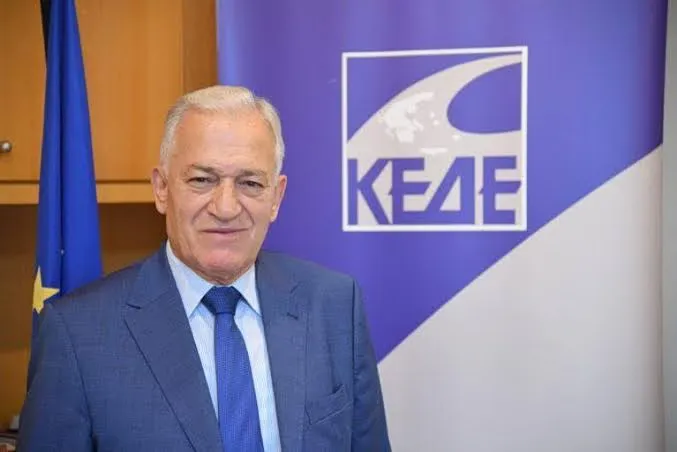
Lazaros Tsavdaridis has officially resigned from his position as Deputy Minister of Development following a series of allegations regarding academic misconduct. The controversy centers on claims that his daughter received undue advantages through a handball team to secure credits required for university entrance. According to reports cited by Theoni Koufonikolaku, the spokesperson for the Hellenic Police, the scandal involves the manipulation of academic mechanisms to benefit the family of a high-ranking official.
The core of the accusation involves the specific use of athletic participation to bypass standard academic requirements. A handball coach has reportedly alleged that the selection process for the team was compromised. Specifically, the coach claims that two female athletes, who had consistently performed well during training sessions, were excluded from the team's roster to make room for the Deputy Minister's daughter. This alleged manipulation was intended to ensure the child could benefit from the credits associated with team membership.
Before his departure, Tsavdaridis attempted to defend his position. He reportedly argued that the accusations were misunderstood and claimed that his daughter had earned her standing legitimately. He further asserted that the academic credits in question were not utilized and that he was unaware of the specific grounds for the accusations against him. However, these defenses failed to halt the political fallout, leading to his eventual exit from the Ministry of Development.
Criticism from the Hellenic Police spokesperson
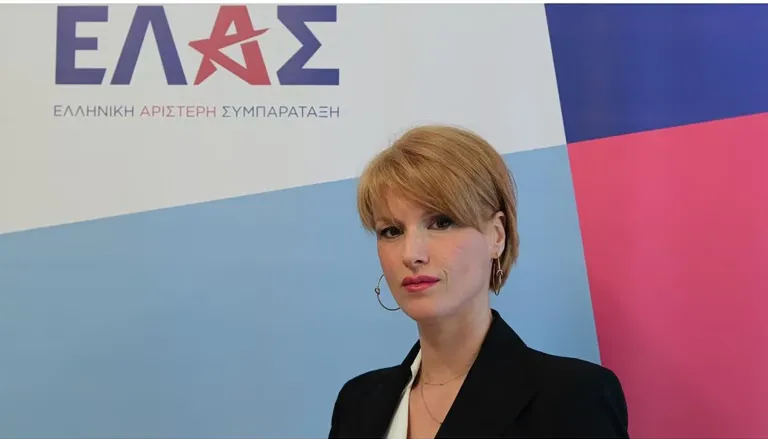
Theoni Koufonikolaku, the spokesperson for the Hellenic Police, has issued a sharp critique of the government in the wake of the resignation. She characterized the event not as an isolated incident, but as "another scandal in a pile of scandals," suggesting that the resignation of a single minister does not address the underlying systemic issues. Koufonikolaku's comments frame the Tsavdaridis resignation as a symptom of a deeper moral decline within the administration.
Koufonikolaku highlighted a perceived pattern of corruption that she believes is escalating. She noted that the issues have moved from previous controversies involving OPEKEPE to academic degrees, and now to the current scandal regarding university entrance credits. She warned that the scope of such incidents could continue to expand, stating, "Yesterday it was OPEKEPE. Then came the degrees. Today it is the credits. Tomorrow it will be something else."
The perceived pattern of institutional corruption
The spokesperson's critique emphasizes a sequence of perceived failures within state institutions. By linking the current scandal to previous administrative controversies, she argues that the government is failing to protect the public interest. According to Koufonikolaku, these actions place a financial and social cost on citizens while the administration continues to face accusations of dishonesty. She suggested that while individuals like Tsavdaridis may leave their posts, the underlying system remains unchanged because the responsibility for oversight lies at the very top of the political hierarchy.
Allegations of systemic inequality and favoritism
A central theme in the reaction to the Tsavdaridis resignation is the allegation of a two-tier system in Greece. Koufonikolaku argued that the current administration operates under a framework where opportunities are distributed based on proximity to power rather than merit. She claimed that there is a distinct difference in how opportunities are allocated between the children of the political elite and the broader population.
The spokesperson detailed this perceived disparity by stating that positions, benefits, and programs are frequently reserved for the children of those in power. She contrasted this with the experience of the general public, stating, "For their own children, there is always a place; for the children of the large social majority, there is always a vacancy." This sentiment suggests that the scandal is viewed not merely as a personal failing of a minister, but as an example of how state mechanisms are allegedly being used to favor a specific social class.
This perceived favoritism extends to various sectors of the administration, including:
- The distribution of state-funded benefits and programs.
- The management of administrative mechanisms that govern access to public services.
- The allocation of academic and professional advantages through institutional influence.
Political accountability and the role of leadership
The political fallout from the Tsavdaridis resignation has led to direct attacks on the leadership of Prime Minister Mitsotakis. Koufonikolaku did not limit her criticism to the Deputy Minister, instead directing it toward the head of the government. She argued that the responsibility for the current state of affairs rests with the Prime Minister, claiming that he is not merely observing the corruption but is central to it.
Koufonikolaku used strong language to describe the Prime Minister's role, calling him the "high priest" of the corruption she described. She asserted that the administration has failed to implement the necessary checks and balances to prevent such scandals. According to her, the Prime Minister should have already established "traps" or mechanisms to catch such misconduct, rather than allowing it to persist. Her comments suggest that the resignation of Tsavdaridis is an insufficient remedy for the perceived lack of accountability within the government.
The following table summarizes the key elements of the scandal as reported:
| Element | Details |
|---|---|
| Primary Actor | Lazaros Tsavdaridis, Deputy Minister of Development |
| Nature of Scandal | Alleged use of handball team membership for university entrance credits |
| Key Accusation | Exclusion of deserving athletes to favor the Minister's daughter |
| Political Response | Resignation of the Deputy Minister and calls for leadership accountability |
| Spokesperson's View | Systemic corruption originating from the top of the government |