Who are the leading candidates in the Bulgarian presidential election?
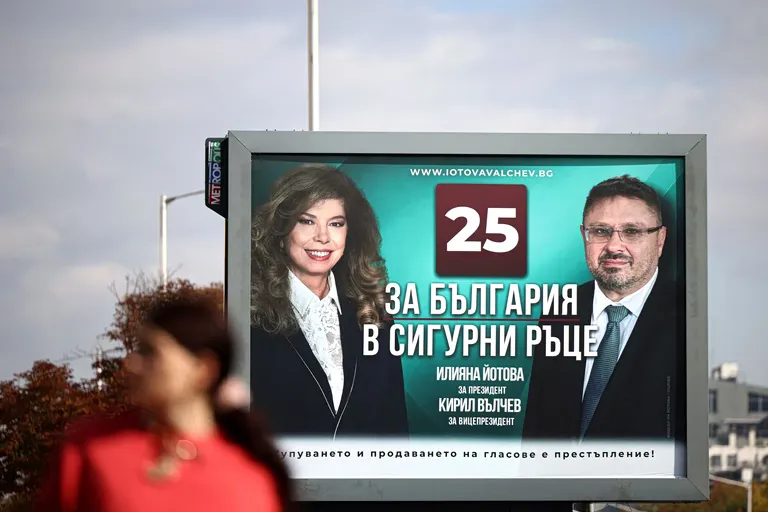
Iliana Yotova is currently the leading candidate in the Bulgarian presidential election, holding a significant advantage in recent opinion polls. The incumbent president, who recently celebrated her 62nd birthday, has positioned herself as a candidate for peace, specifically targeting the conclusion of the conflict in Ukraine. According to four separate polls released on Wednesday, Yotova commands between 41.1% and 47.3% of the projected vote.
Her primary challenger is Andrei Gyurov, a former acting Prime Minister and deputy governor of the central bank. Gyurov represents a more Western-aligned faction, advocating for Bulgaria to remain a reliable partner within NATO. Polling places him between 27.8% and 30.6%. The third major contender is the leader of the far-right, pro-Russian Vatrashdanne (Renaissance) party, who sits in the 10.2% to 12.8% range.
The profiles of the main contenders
The race is characterized by a sharp divide in political philosophy. Yotova, a former journalist and member of the Socialist Party, previously served in the European Parliament and held the position of vice president under Rumen Radev. Her campaign has focused on national unity and combating poverty, while simultaneously calling for a diplomatic resolution to the war in Ukraine. She has explicitly criticized the current coalition of European governments supporting Kyiv, arguing for a "coalition for peace" instead of a "coalition of the willing." In contrast, Andrei Gyurov emphasizes military readiness and strong diplomacy to protect Bulgarian interests. He seeks to strengthen the country's ties with Western institutions, arguing that Bulgaria must defend its sovereignty through clear positions and robust preparation. The competition is not merely between individuals but between two distinct visions for the nation's identity: one that is conservative and oriented toward the East, and another that is liberal, elite-driven, and Western-facing.
How are security concerns impacting the voting process?
Security threats in the Black Sea have become a central theme for voters as they head to the polls. Recent maritime instability, specifically drone attacks on commercial vessels near the Bulgarian coast, has heightened public anxiety regarding national safety. On October 6 and October 13, four commercial ships were struck by drones in international waters off the Bulgarian coast, an incident that has left 21 people missing.
These attacks have forced the political leadership to address maritime defense. Rumen Radev, the president who stepped down in January to focus on parliamentary elections, has characterized these strikes as beneficial to Moscow's interests. While he has stopped short of officially blaming Russia due to a lack of definitive evidence, he has actively sought increased aerial surveillance support from NATO allies. This led to the deployment of a US P-8 Poseidon aircraft to monitor the region.
For many citizens, the geopolitical tension is not an abstract concept but a direct threat to stability. During campaign rallies, voters have expressed that regardless of the winner, the primary responsibility of the new president must be to ensure that regional conflicts are resolved through peaceful means to prevent further loss of life and economic disruption.
What are the geopolitical stakes for Bulgaria and Europe?
The outcome of this election carries significant weight for the balance of power in the Balkans and the broader European Union. With 27 candidates vying for the presidency and vice-presidency, the field is deeply divided, with approximately half of the candidates expressing pro-Kremlin sentiments. This division reflects a long-standing historical tension within Bulgaria regarding its relationship with Russia.
Political analysts suggest that the election is a contest between two competing visions. One vision seeks a more traditional, conservative path with closer ties to Eastern powers, while the other seeks to solidify Bulgaria's role within the liberal democratic framework of the West. The winner will determine whether Bulgaria acts as a bridge between East and West or as a more assertive participant in shaping European security policy.
The role of international interests
The election is being watched closely by international observers and diplomats. Vesela Tserneva, Deputy Director of the European Council on International Relations, noted that the incoming president must decide whether to serve the interests of Russia, the United States, or Turkey, or whether to prioritize Bulgarian influence within the EU. This decision will have long-term consequences for how Bulgaria contributes to the development of stronger, more unified European policies.
The potential victory of Yotova could reinforce the influence of pro-dialogue factions within the region, potentially shifting the tone of Bulgaria's participation in European security initiatives. Conversely, a victory for Gyurov would likely signal a hardening of Bulgaria's commitment to NATO and Western strategic objectives, providing a more unified front in the face of regional aggression.
When will the final results be determined?
Polling stations in Bulgaria opened at 07:00 and are scheduled to close at 20:00 local time. The election process is designed to ensure a clear mandate, but the high number of candidates makes a first-round victory complex. If no candidate secures an absolute majority in the first round, the process will move to a runoff.
The second round of voting is scheduled to take place on November 1, 2026. This runoff will feature the two candidates who received the highest number of votes from the initial round. Until then, the nation remains in a state of anticipation, waiting to see if the current political crisis will lead to a shift toward Eastern alignment or a reinforcement of Western integration.
FAQ: Bulgarian Presidential Election 2026
Who is the current frontrunner in the election?
Iliana Yotova is the leading candidate according to recent polling data. She has secured between 41.1% and 47.3% of the intended vote, positioning her as the favorite to potentially become the first woman directly elected to the presidency in Bulgaria.
What is the main difference between the top two candidates?
The primary difference lies in their geopolitical orientation. Iliana Yotova advocates for dialogue with Russia and a peaceful resolution to the Ukraine conflict. Andrei Gyurov, however, promotes a Western-aligned approach, emphasizing Bulgaria's role as a reliable and prepared partner within NATO.
How have recent maritime incidents affected the election?
Drone attacks on commercial vessels near the Bulgarian coast have introduced significant security concerns into the election. These incidents, which resulted in 21 missing persons, have made maritime safety and regional stability central themes for both candidates and the electorate.
What happens if no candidate wins in the first round?
If no candidate achieves an absolute majority during the first round of voting, a runoff election will be held. This second round is scheduled for November 1, 2026, and will feature the two candidates who received the most votes.
Why is this election considered geopolitically significant?
The election is significant because it serves as a referendum on Bulgaria's strategic direction. The results will influence whether the country moves closer to Eastern powers like Russia or strengthens its integration and commitment to Western institutions like the EU and NATO.
Key takeaways
- Iliana Yotova leads the polls with an estimated 41.1% to 47.3% of the vote.
- Andrei Gyurov is the main Western-aligned challenger, polling between 27.8% and 30.6%.
- Security concerns stem from drone attacks on commercial ships near the Bulgarian coast.
- A runoff election will occur on November 1 if no majority is reached in round one.
Conclusion
The 2026 Bulgarian presidential election represents a defining moment for a nation caught between competing geopolitical spheres. With the electorate facing heightened security risks in the Black Sea and a deeply divided political landscape, the choice between Iliana Yotova’s pursuit of Eastern-oriented peace and Andrei Gyurov’s Western-aligned stability is profound. The outcome will not only shape the domestic leadership of Bulgaria but will also resonate across the European Union and NATO, determining the country's strategic role in an increasingly volatile regional environment.