What triggered the police intervention in Rossio Square?
Police moved to dismantle the protest camp in Lisbon's Rossio Square shortly after 2:00 a.m. on Sunday, following a large-scale demonstration held the previous day. The operation was characterized by a significant police presence, with officers using batons and accompanied by police dogs to clear the area. Before the physical intervention, authorities issued warnings to the occupants to remove their tents, threatening charges of disobedience to authority for anyone who resisted the order.
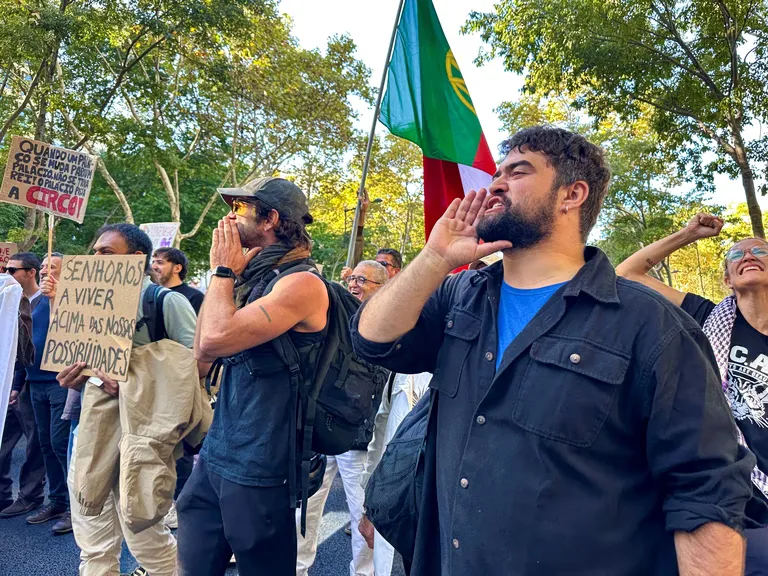
The camp had been established by demonstrators following a massive march on Saturday, which saw thousands of people occupying one of the capital's main avenues. According to reports from the scene, the camp consisted of more than 100 tents. While the police successfully cleared the site and conducted several arrests, reports of minor injuries among the protesters have emerged, though specific casualty figures have not yet been officially confirmed.
The scale of the crackdown
The intervention was not an isolated incident, as this marked the second time a similar camp had been cleared within the same week. Observers and protesters noted that hundreds of people had gathered to protect the site, anticipating a repeat of the previous Tuesday's police action. The atmosphere was described as highly tense, with protesters viewing the sudden deployment of force as a direct response to their peaceful occupation of public space.
Why is the housing crisis driving unrest in Portugal?
The housing crisis in Portugal has reached critical levels, with property prices and rental costs experiencing dramatic increases that have outpaced wage growth. Since 2017, housing prices across the country have effectively doubled, while rents for new lease agreements have seen similar surges. This economic pressure is creating a sense of desperation among the population, particularly among younger generations who find themselves increasingly priced out of the urban centers.
The scale of the deficit is staggering. According to estimates from the Bank of Portugal, there is a national shortage of approximately 300,000 homes. To put this figure into perspective, the total housing deficit in the entire country is roughly equivalent to the entire housing stock available in Lisbon. This scarcity, combined with high living costs, has transformed housing from a basic necessity into a primary driver of social discontent.
Protesters have identified several key culprits behind this instability:
- Real estate speculation: The practice of treating housing as a high-yield investment rather than a social right.
- Wealth concentration: The accumulation of property assets in the hands of a few, driving up market entry barriers.
- Rising inequality: The widening gap between those who own property and those forced into precarious rental situations.
How are protesters responding to legislative changes?
Demonstrators are actively campaigning against recent legislative moves that they believe exacerbate the housing shortage and favor landlords over tenants. A central point of contention is a new bill that has passed its first reading in Parliament. Protesters argue that this legislation makes the eviction process easier and seeks to abolish existing rent caps on new lease agreements, which would further destabilize the rental market.
The political landscape surrounding this issue is deeply divided. While the government moves forward with these reforms, various political factions have taken opposing stances. For instance, the far-right party Chega abstained from the vote, while left-wing representatives have been vocal in their condemnation of the police response and the underlying policies.
Fabian Figueiredo, a member of the Left Bloc who was present at the camp, criticized the police action as "completely disproportionate." He argued that there were no public order disturbances to justify the level of force used against hundreds of people who were gathered peacefully to express their grievances.
What is the human impact of rising costs in Lisbon?
The social consequences of the housing crisis are most visible in the lived experiences of students and young professionals. For many, the inability to secure stable, affordable housing is not just a financial burden but a barrier to future stability and social mobility.
Vítor Gomes, a 21-year-old multimedia communications student, expressed the pessimism felt by many in his demographic. He stated that there is a moral obligation to fight for the beliefs held by the movement, citing speculation and wealth concentration as the primary reasons for his lack of optimism regarding the future. His sentiment is echoed by many who feel that the current economic trajectory makes independent living nearly impossible.
The tension in Lisbon and Porto suggests that the demand for housing rights is not a localized issue but a national movement. As the cost of living continues to climb, the pressure on the Portuguese government to implement meaningful reforms—rather than just legislative adjustments—is intensifying.
FAQ: Lisbon Housing Protests
What caused the police to clear the Rossio Square camp?
Police cleared the camp in the early hours of Sunday following a massive protest march on Saturday. Authorities ordered the removal of over 100 tents and warned that resisting the order would lead to charges of disobedience to authority.
How many homes are missing in Portugal?
According to the Bank of Portugal, the country faces a shortage of approximately 300,000 homes. This deficit is roughly equal to the total amount of housing available in the city of Lisbon alone.
What are the protesters demanding from the government?
Protesters are demanding the withdrawal of a new bill that would ease evictions and remove rent caps on new leases. They are also calling for an end to real estate speculation and increased protections for tenants.
How much have rents increased in Portugal?
Since 2017, housing prices and rents for new leases have nearly doubled in many areas. This rapid increase has created significant financial pressure on households, particularly younger citizens and students.
Was there violence during the police operation?
While the police used batons and dogs to clear the camp, reports indicate that injuries were minor. However, protesters and political figures have described the police response as disproportionate to the peaceful nature of the gathering.
Key takeaways
- Portugal faces a national housing deficit of approximately 300,000 units.
- Housing prices and rents have nearly doubled since 2017.
- Police cleared a 100-tent protest camp in Lisbon's Rossio Square.
- Protesters are fighting a new bill that eases evictions and removes rent caps.
The evolving landscape of Portuguese housing rights
The recent events in Lisbon highlight a significant fracture in the social contract in Portugal. What began as a series of localized grievances regarding rent increases has evolved into a structured movement demanding fundamental changes to how housing is regulated and distributed. The collision between police enforcement and peaceful demonstrators in Rossio Square serves as a stark indicator of the volatility surrounding this issue. As the government navigates the legislative challenges of balancing market interests with social stability, the pressure from a disillusioned younger generation is likely to persist, making housing the defining political battleground of the decade.