Emergency evacuations on Santa Cruz island
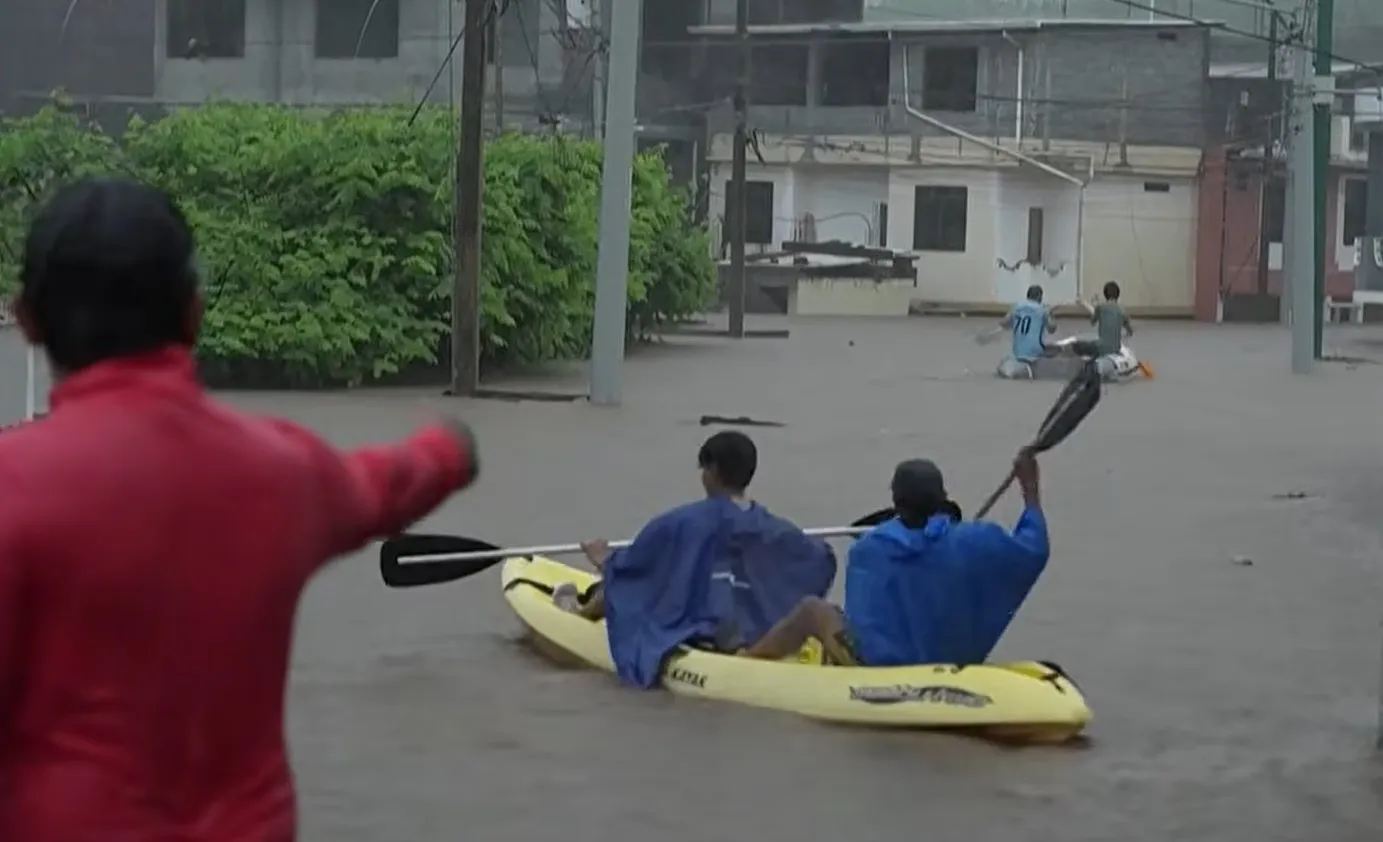
Local emergency services have prioritized the removal of residents from high-risk zones on Santa Cruz following intense rainfall. The evacuation process has been physically demanding, with many inhabitants forced to navigate the rising waters by boat, by swimming, or by wading through streets where floodwaters reached waist height. The local aid service utilized social media platform X to report that 100 individuals were moved from their homes to safer locations.
The humanitarian response is currently focused on two primary pillars: the distribution of essential food supplies and the provision of immediate medical assistance to those affected by the deluge. Images released by local services depict the scale of the logistical challenge as responders attempt to reach isolated residents within the archipelago.
Individual accounts of displacement
The human impact of the flooding is characterized by a sense of repetitive loss among the local population. Paula Calderón, a domestic worker on Santa Cruz, reported to AFP that she and her husband were forced to flee their home at dawn on Saturday following urgent loudspeaker announcements from firefighters. Calderón stated, "I am in a truly difficult situation, I have lost almost everything as my house was completely flooded."
Similarly, Maria Campos, a 23-year-old cleaning employee, described the inundation of her residence in a three-story building, noting that water reached the second floor. She expressed the psychological toll of the recurring weather patterns, stating, "We had just started from zero and we have to start from the beginning again. It is very difficult to lose again the little you had started to recover."
The scale of the El Niño impact in Ecuador
The flooding in the Galapagos is part of a much larger climatic crisis affecting mainland Ecuador. Since Ecuador declared a state of emergency on August 29, 2026, due to the El Niño phenomenon, the national impact has been severe. According to the National Secretariat for Risk Management, the country has recorded 22 deaths and more than 105,947 people affected across the nation.
While the Galapagos Islands are located approximately 1,000 kilometers from the Ecuadorian coast, they are not insulated from the broader national crisis. The archipelago, which houses roughly 28,500 residents across its various islands, has seen its own rising tally of victims. Authorities report that 7,425 people in the Galapagos have been affected by the torrential rains and floods associated with the phenomenon since the emergency declaration in late August.
| Metric | National Total (Ecuador) | Galapagos Islands Total |
|---|---|---|
| Deaths recorded since Aug 29 | 22 | [Not specified] |
| People affected/displaced | 105,947 | 7,425 |
| Emergency Status | Declared Aug 29, 2026 | Active |
Climatic mechanisms of the El Niño phenomenon
The current El Niño event is expected by experts to be among the most intense recorded to date. This phenomenon functions by causing a rise in sea temperatures in specific regions of the Pacific Ocean, which subsequently triggers radical shifts in global wind patterns and atmospheric pressure. These changes manifest as extreme weather events, including heavy rainfall and severe storms in various parts of the world.
In the context of the Galapagos, these shifts result in much higher rainfall levels than the islands typically experience. The archipelago is of volcanic origin and serves as a critical biological sanctuary. The sudden influx of water and changes in temperature present unique challenges to the region's delicate ecosystem, which acts as a natural laboratory for studying endemic flora and fauna.
Vulnerability of the Galapagos archipelago
The geographical and biological makeup of the Galapagos makes it particularly susceptible to the effects of El Niño. As a volcanic archipelago, the terrain can be subject to rapid runoff during extreme rain events, leading to the flash flooding observed on Santa Cruz. The archipelago's isolation, while protecting its biodiversity, also complicates the delivery of emergency supplies and the movement of displaced populations.
The recurring nature of these floods creates a cycle of economic and structural instability for the inhabitants. As noted by local residents, the difficulty lies not just in the immediate danger of the flood, but in the exhaustion of rebuilding after repeated disasters. The islands' population is spread across four main inhabited areas, meaning that weather patterns affecting one island can rapidly impact the entire archipelago's stability.