The maritime cable project as a geopolitical flashpoint
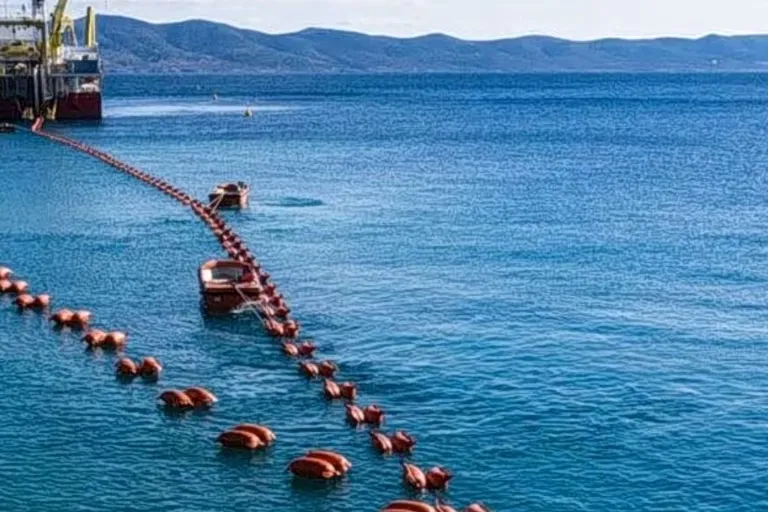
The undersea cable project has transitioned from a technical infrastructure task into a complex geopolitical thriller with significant political dimensions. What began as a project to bridge connectivity has become a focal point for broader disputes regarding continental shelf delimitation and Exclusive Economic Zones (EEZ) between Athens and Ankara. The project's progress is no longer viewed solely through an engineering lens but is instead tied to the resolution of long-standing maritime disagreements.
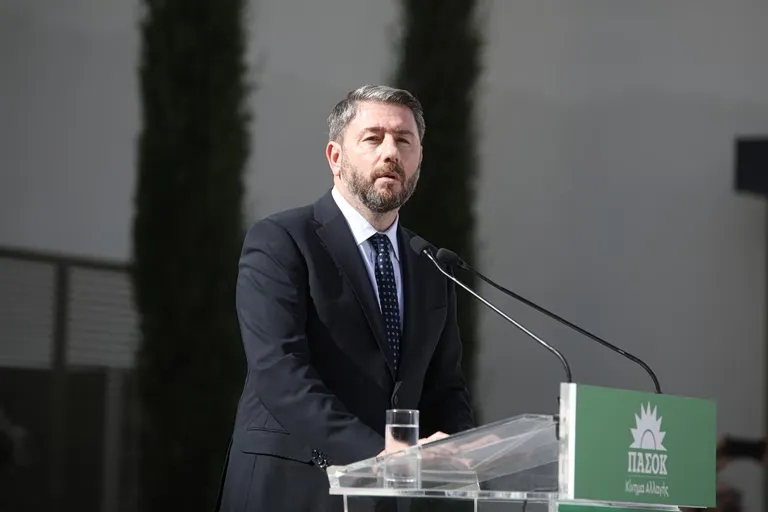
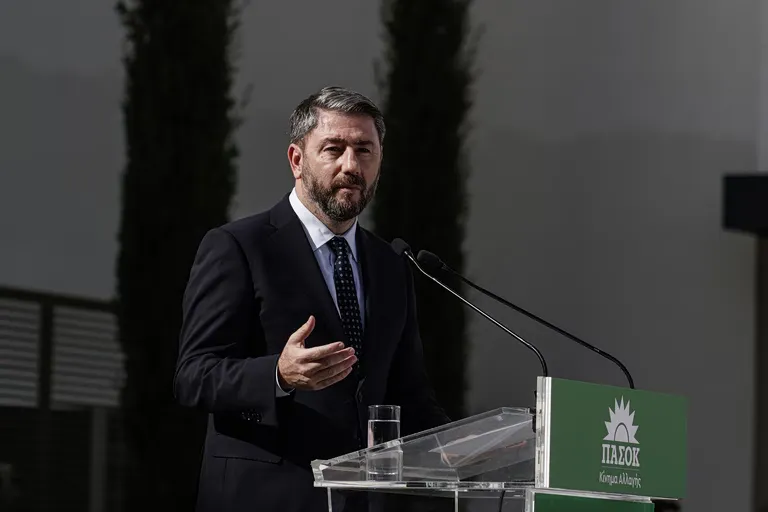
According to political analysts cited in the discussion, the technicalities of the cable are being overshadowed by political maneuvering. This tension is exacerbated by the fact that the completion of the cable does not inherently resolve the underlying territorial disputes. As former PASOK president and Deputy Prime Minister/Foreign Minister Evangelos Venizelos noted, the legal and technical aspects must be handled with precision, warning that "amateurism is dangerous" when dealing with such sensitive national interests.
Escalating maritime claims and legislative pressures
The tension is compounded by recent legislative and diplomatic developments in the region. The Turkish Parliament is expected to address legislation regarding maritime zones, widely known as the "Blue Homeland" (Mavi Vatan) doctrine. This comes on the heels of the validation of the Turkish-Libyan memorandum by the House of Representatives in Libya, which is controlled by the Haftar regime in Benghazi. These legal frameworks create a high-stakes environment where any technical operation, such as cable laying, can be interpreted as a provocative act or a violation of perceived sovereignty.
The role of France in risk diffusion
France has emerged as a key mediator, utilizing traditional diplomatic tools to bypass the immediate risk of naval confrontation. Rather than relying solely on the deployment of frigates, French diplomacy has engaged in the "information" of neighboring states, including Turkey, through personal contact and formal communiqués. This approach aims to implement a strategy of "risk diffusion," a method described by Professor Maria Gavouneli of the National and Kapodistrian University of Athens as a way to avoid direct kinetic conflict.
The effectiveness of this "French route" lies in its ability to manage perceptions. By using an impersonal communiqué to convey information, France provides a buffer that allows states to manage potential failures or friction points without immediate escalation. While the legal necessity of this step is questioned—as official NAVTEX notifications are technically sufficient—the social and political reality of international law requires these extra layers of communication to maintain stability on the ground.
| Actor | Action/Position | Objective |
|---|---|---|
| France | Diplomatic communiqué and personal contact | Risk diffusion and avoiding naval confrontation |
| Greece | Issuance of NAVTEX and technical project execution | Securing maritime infrastructure and legal rights |
| Turkey | "Blue Homeland" legislation and maritime claims | Asserting sovereignty over disputed zones |
| Libya (Haftar regime) | Validation of Turkish-Libyan memorandum | Solidifying maritime agreements in the Mediterranean |
Legal complexities and the reality of maritime enforcement
International law in the Mediterranean operates as a horizontal system where states act simultaneously as legislators, enforcers, and judges. Professor Maria Gavouneli highlights that there is no automated dispute resolution system, making the potential for a direct confrontation between Greek and Turkish vessels a constant risk. The gap between legal theory and field reality is significant; a legal argument remains theoretical unless it can be safely implemented amidst active maritime operations.
A recent practical example illustrates this friction: a vessel was successfully diverted to follow the path defined by the Greek NAVTEX, yet shortly thereafter, a Turkish NAVTEX claimed maritime scientific research activities were being conducted with Turkish authorization. This discrepancy highlights the difficulty of achieving unified maritime governance. As Gavouneli observes, "In the international field, appearances are often more important than substance, as they allow states to absorb failures and survive to return the next day."
The limits of NAVTEX and diplomatic communication
While the NAVTEX serves as the primary legal tool for notifying maritime activity, it does not resolve the fundamental disagreement over who has the right to authorize such activities. The tension arises when one state's notification is met with a counter-notification from another, claiming the same area under a different legal interpretation. This creates a cycle of "tit-for-tat" maritime claims that technical projects like the cable must navigate.
Political domestic pressures and the cycle of rhetoric
The maritime dispute is heavily influenced by domestic political cycles in both Greece and Turkey. Foreign Minister George Gerapetritis has maintained a measured tone, suggesting that informing Ankara is not a request for permission but a standard diplomatic procedure. However, the Greek government faces internal pressure to satisfy nationalist sentiments, particularly from the far-right, which can complicate the pursuit of nuanced diplomacy.
In Turkey, Hakan Fidan has accused Greece of exploiting national issues for electoral gain. This accusation is met with counter-claims from Greek officials, such as George Gerapetritis, who points to the surge in aggressive reporting within the Turkish media. This creates a feedback loop where media narratives in both countries amplify existing problems rather than solving them. The political challenge for the Greek administration is to prevent the cable project from being used as a tool for domestic political theater while ensuring that the state does not appear to be retreating in its sovereign claims.
The necessity of a stable diplomatic modus vivendi
Ultimately, the resolution of Greek-Turkish tensions requires more than technical success or diplomatic communiqués; it necessitates a stable framework for coexistence. Analysts suggest that no government has yet successfully initiated a definitive resolution or a functional "modus vivendi" with Turkey. Such a move is often incorrectly labeled as "submission" or "betrayal" by political opponents, making it a high-risk endeavor for any administration.
For the maritime cable project to proceed without becoming a permanent source of crisis, there must be a distinction between technical cooperation and the resolution of permanent territorial disputes. The current reliance on third-party mediators like France provides a temporary solution, but the underlying issues of the continental shelf and EEZ remain. Stability will likely depend on the ability of both nations to maintain a consistent, responsible line of communication that prioritizes de-escalation over nationalist posturing.