The Unseen Victims: Children of Domestic Violence
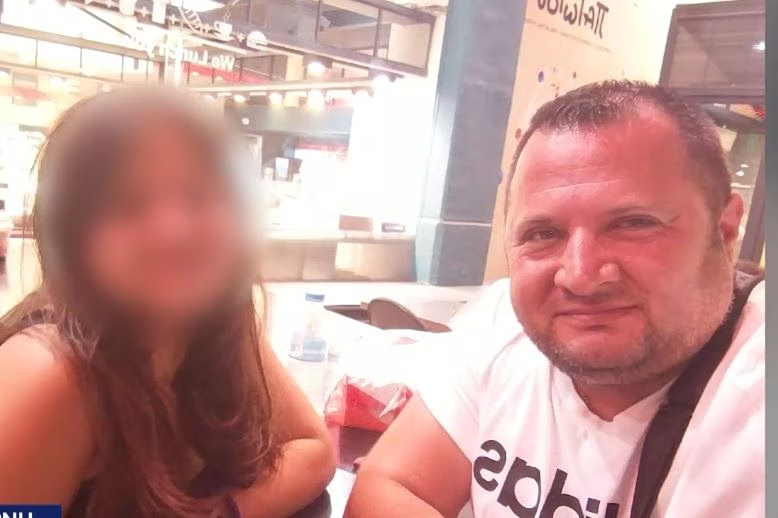
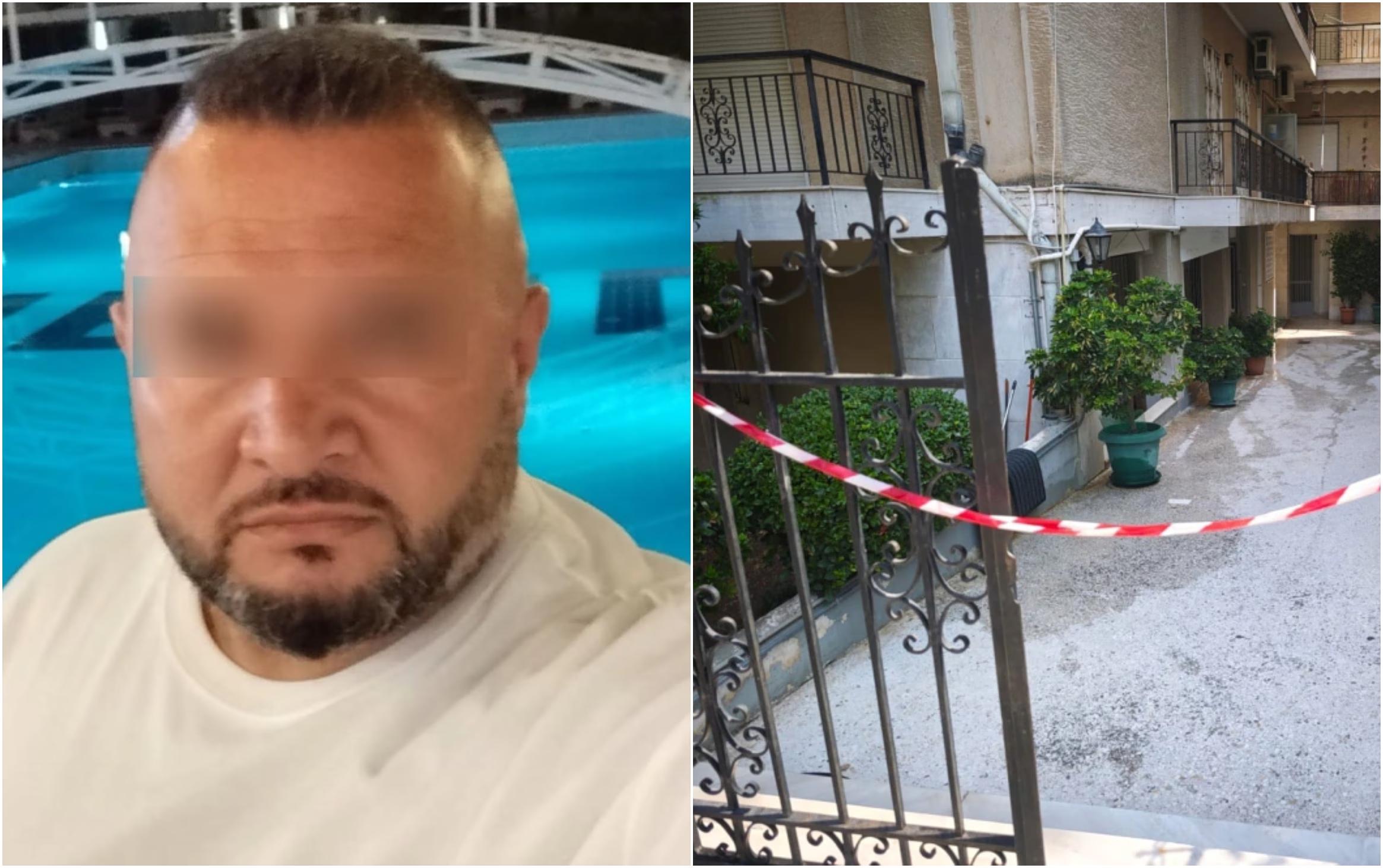
Domestic violence, a pervasive societal issue, extends its destructive reach far beyond the immediate individuals involved. While public discourse often centers on the perpetrator and the primary victim, the children caught in such circumstances frequently bear a silent, profound burden. Their experiences, often overlooked, reveal a complex tapestry of grief, confusion, and psychological trauma that can echo through their lives for decades. The recent tragedy in Nea Smyrni, involving a femicide where the perpetrator was the victim's husband and the father of their children, has once again brought this harrowing reality to the forefront, as the daughters, now adults, bravely articulate their suffering.
The term 'femicide' itself underscores a grim reality: the intentional killing of women or girls because of their gender. While the legal and social frameworks grapple with appropriate responses to such horrific acts, the human cost, particularly on the children of those involved, remains immeasurable. These children are not merely witnesses to violence; they are often direct recipients of its psychological fallout, forced to navigate an unbearable reality where love and terror are intertwined within the very fabric of their family.
A Dual Legacy of Pain
In the aftermath of the Nea Smyrni incident, the voices of the daughters offer a poignant insight into the intricate pain of being connected to both victim and perpetrator. Their statements, though brief, resonate with a deep sense of injustice and a profound understanding of their own victimhood, distinct yet intrinsically linked to that of their mother. This dual connection—to the person who was taken and to the person who took them—creates an almost unimaginable emotional landscape for these individuals to traverse.
For these daughters, the loss is not singular. They mourn their mother, a life brutally cut short, and simultaneously grapple with the devastating realization that their father, a figure who should have been a source of protection and love, was capable of such an act. This duality can lead to an internal conflict of emotions, including love, hate, confusion, and betrayal, all vying for dominance within their psyche. The societal expectation to grieve in a conventional manner often clashes with the reality of their situation, where the source of their grief is also a deeply embedded part of their personal history and identity.
The Psychological Scars: Long-Term Impact
The psychological impact on children who experience such family tragedies is extensive and well-documented by experts in psychology and sociology. These children often exhibit a range of symptoms, including post-traumatic stress disorder (PTSD), anxiety, depression, and difficulties in forming healthy relationships in adulthood. The sense of safety and security, fundamental to a child's development, is irrevocably shattered, leading to a worldview often colored by mistrust and fear.
Moreover, the concept of 'moral injury' frequently arises in these contexts. Moral injury refers to the psychological distress that results from actions, or lack of actions, that violate one's own moral or ethical beliefs. For children, witnessing or being intimately involved in severe domestic violence perpetrated by a parent can inflict deep moral wounds, as their understanding of right and wrong, and of the nature of familial bonds, is severely challenged. They may struggle with feelings of guilt, shame, and a sense of responsibility, even when objectively they bear none.
Societal Responsibility and Support Systems
The public's response to such tragedies often focuses on punitive measures for the perpetrator and empathy for the primary victim. While these are crucial, the narrative must expand to include comprehensive support for the children left behind. These individuals require specialized psychological care that addresses their unique trauma, acknowledging their complex relationship to both victim and perpetrator.
Support systems must go beyond immediate crisis intervention. Long-term therapy, access to safe housing, educational assistance, and financial aid are vital to help these children rebuild their lives. Furthermore, societal attitudes need to evolve to recognize and validate their experiences as victims in their own right, rather than merely as collateral damage. Breaking the cycle of violence often begins with providing robust, compassionate support to those who have directly experienced its devastating effects.
Breaking the Silence: The Power of Testimony
The decision by the daughters in the Nea Smyrni case to speak out, despite their immense pain, is a powerful act. Their testimony serves multiple critical functions. Firstly, it humanizes the statistics, reminding society that behind every tragic headline are real individuals grappling with unimaginable loss and trauma. Secondly, it provides a voice for countless other children who have endured similar experiences but remain silent, either out of fear, shame, or lack of opportunity.
By sharing their story, these daughters contribute to a broader understanding of domestic violence, emphasizing that its repercussions are multi-generational and deeply rooted. Their courage can inspire other survivors to seek help and can galvanize communities to implement more effective prevention strategies and support mechanisms. Their words underscore the urgent need for a holistic approach to addressing domestic violence, one that recognizes and prioritizes the well-being of all those affected, especially the children who are often the most vulnerable and voiceless.
Towards a Future of Healing and Prevention
The profound statement from the daughters, 'In essence, we are the victims,' encapsulates the complex reality faced by children of domestic violence. It is a call for recognition, empathy, and action. For society to truly address the scourge of domestic violence, it must move beyond superficial analyses and delve into the deeper, often hidden, wounds inflicted upon entire families.
Prevention efforts must be strengthened, focusing on education, challenging patriarchal norms, and fostering environments where violence is neither tolerated nor excused. Simultaneously, robust and accessible support services must be in place to help those who have already been impacted. The healing process for these children is arduous and prolonged, but with adequate resources and societal understanding, a path towards recovery and resilience is possible. Their future, and the future of countless others like them, depends on a collective commitment to acknowledging their pain and working towards a world free from such devastating familial tragedies.