Public Health Imperative: Addressing West Nile Virus Risks
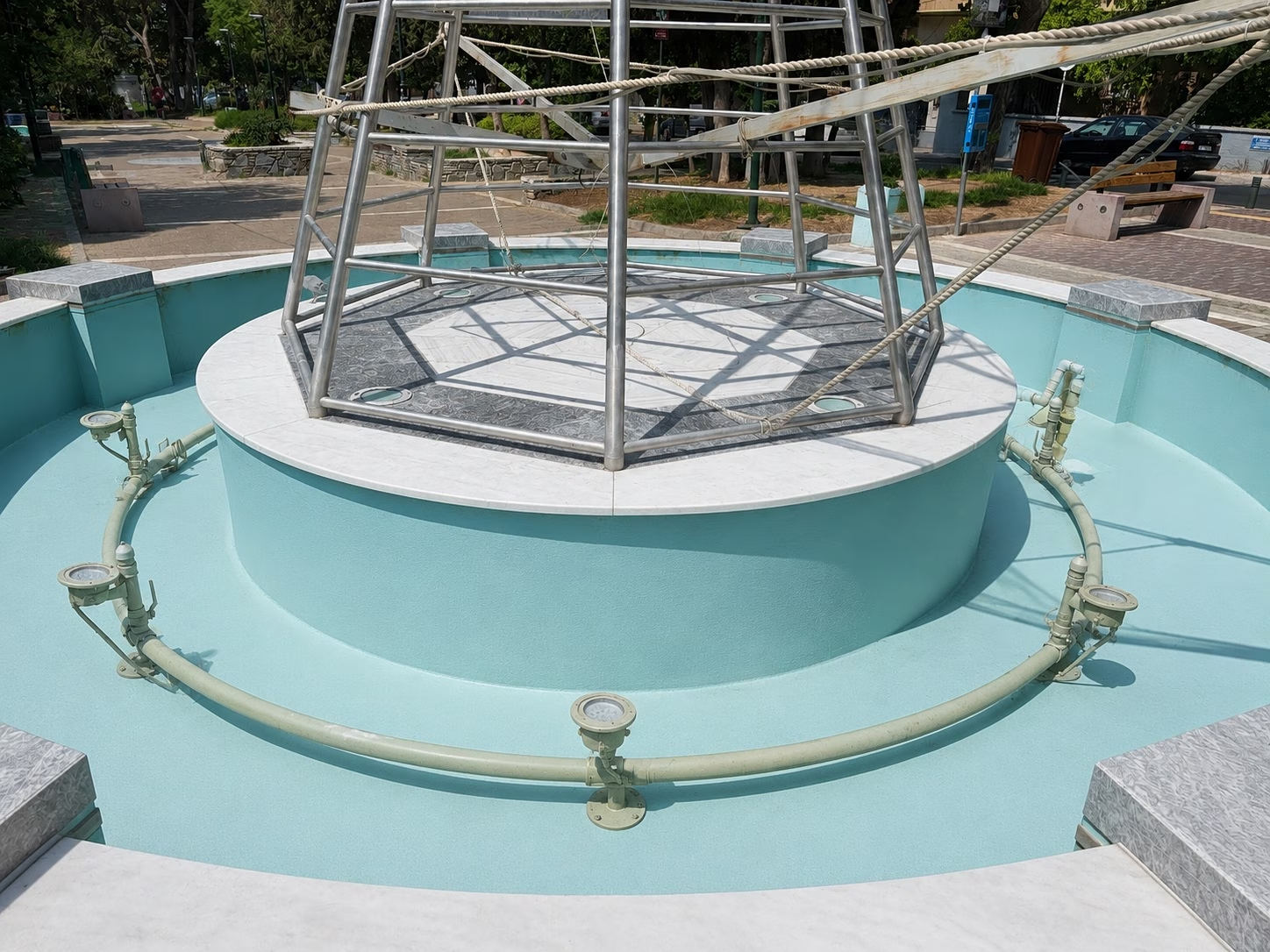
In a move aimed at safeguarding public health, municipalities in Attica are implementing temporary closures of public fountains. This decision comes as part of a broader strategy to mitigate the risks associated with the West Nile Virus, which is primarily transmitted through mosquito bites. The presence of stagnant water in fountains has been identified as a significant factor contributing to mosquito proliferation, particularly during periods of increased insect activity.
The West Nile Virus (WNV) is a mosquito-borne zoonotic arbovirus belonging to the family Flaviviridae. It is typically transmitted to humans through the bite of infected mosquitoes, which acquire the virus by feeding on infected birds. While many individuals infected with WNV experience no symptoms or mild flu-like symptoms, a small percentage can develop severe neurological illnesses such as encephalitis or meningitis, which can be life-threatening. The virus was first identified in Uganda in 1937 and has since spread globally, becoming a recurring public health concern in many regions, including parts of Europe and North America. Seasonal outbreaks are common, often peaking in late summer and early autumn when mosquito populations are at their highest and environmental conditions are favorable for viral transmission. Public health agencies worldwide monitor WNV activity closely, implementing various surveillance and control measures to prevent its spread and protect vulnerable populations. These measures often include mosquito surveillance, larvicide and adulticide treatments, public awareness campaigns, and personal protective recommendations.
Proactive Measures in Response to Increased Mosquito Activity
The Municipality of Vyronas, for instance, has officially announced its initiative to drain water from all public fountains within its jurisdiction. This action, which commenced on August 25th, is a direct response to the current surge in mosquito populations and the imperative to minimize potential breeding sites. The process of removing water from these installations is expected to be completed within a few days, after which the fountains will remain non-operational until further notice. This temporary cessation of service is considered an essential preventative step, as stagnant and standing water bodies are well-documented breeding grounds for mosquitoes, thereby increasing the risk of WNV transmission.
The decision to temporarily close public fountains underscores a proactive approach to public health management. Rather than waiting for confirmed cases to escalate, local authorities are taking preemptive action to disrupt the mosquito life cycle and reduce the overall mosquito burden in urban areas. This strategy aligns with established epidemiological principles that emphasize environmental control as a primary method for managing vector-borne diseases. By eliminating potential breeding habitats, municipalities aim to decrease the density of mosquito populations, consequently lowering the probability of human exposure to infected mosquitoes.
Understanding the Threat of West Nile Virus
The West Nile Virus poses a recurrent public health challenge, particularly in regions with suitable climates for mosquito proliferation. While the majority of individuals infected with WNV experience mild or no symptoms, a subset can develop severe neurological complications, including encephalitis (inflammation of the brain) and meningitis (inflammation of the membranes surrounding the brain and spinal cord). These severe forms of the disease can lead to long-term health issues or, in rare cases, be fatal. The elderly, immunocompromised individuals, and those with underlying health conditions are particularly vulnerable to developing severe symptoms.
The virus is primarily transmitted through the bite of infected mosquitoes, particularly species belonging to the Culex genus. These mosquitoes typically become infected when they feed on birds carrying the virus. Once a mosquito is infected, it can then transmit the virus to humans and other animals through subsequent bites. The lifecycle of the virus involves a complex interplay between birds as reservoir hosts, mosquitoes as vectors, and incidental hosts like humans and horses. Effective control strategies, therefore, must target the mosquito vector at various stages of its development, from larvae to adult. Public awareness campaigns also play a crucial role in educating residents about personal protective measures, such as using insect repellent, wearing long sleeves and pants, and eliminating standing water around homes.
Community Engagement and Continued Prevention Efforts
Beyond the immediate action of draining fountains, the Municipality of Vyronas has affirmed its commitment to a comprehensive suite of preventive and protective measures. These ongoing efforts are designed to ensure the continued safety and well-being of its residents by actively managing environmental factors that contribute to mosquito-borne disease transmission. Such initiatives often include regular larviciding of other identified standing water bodies, adult mosquito spraying in areas with high mosquito activity, and public education campaigns to inform citizens about personal protection strategies and how they can contribute to mosquito control within their own properties. Public engagement is a critical component of successful vector control programs, as community participation in eliminating breeding sites can significantly amplify the effectiveness of municipal efforts.
Residents are encouraged to play an active role in these prevention efforts by routinely checking their properties for any sources of standing water. Common breeding sites around homes include flower pots, bird baths, clogged gutters, discarded tires, and unmaintained swimming pools. Even small amounts of water can serve as breeding grounds for mosquitoes. By emptying and cleaning these containers regularly, residents can significantly reduce mosquito populations in their immediate surroundings. Educational campaigns often highlight the importance of these individual actions, emphasizing that collective effort is essential in combating the spread of the West Nile Virus. Furthermore, local health authorities typically provide guidelines on using mosquito repellents containing EPA-registered active ingredients, repairing window and door screens, and avoiding outdoor activities during peak mosquito biting hours, which are typically at dusk and dawn.
Long-Term Strategies for Vector Control
The temporary closure of fountains is one component of a broader, long-term strategy for vector control. Municipalities are increasingly investing in integrated pest management (IPM) approaches that combine various methods to manage mosquito populations sustainably. These approaches may include biological control, such as introducing mosquito-eating fish into larger bodies of water, and environmental management, which involves modifying habitats to reduce mosquito breeding. Chemical control, using larvicides and adulticides, is often employed as a targeted intervention when mosquito populations reach critical thresholds or when there is an elevated risk of disease transmission. The selection of specific control methods is often guided by ongoing surveillance data, which provides information on mosquito species, population densities, and the presence of WNV in local mosquito populations and bird species.
Moreover, technological advancements are also being leveraged to enhance vector control efforts. Geographic Information Systems (GIS) are used to map mosquito breeding sites and track WNV activity, allowing for more precise and efficient targeting of interventions. Remote sensing and drone technology can also assist in identifying hard-to-reach breeding grounds. The ultimate goal of these multifaceted strategies is to maintain mosquito populations at levels that minimize the risk of WNV transmission to humans, thereby protecting public health while also considering environmental impacts. The collaboration between local governments, public health agencies, and community members is paramount in achieving these objectives and ensuring a resilient defense against mosquito-borne diseases.