A Pattern of Violence Behind the Nea Smyrni Femicide Case
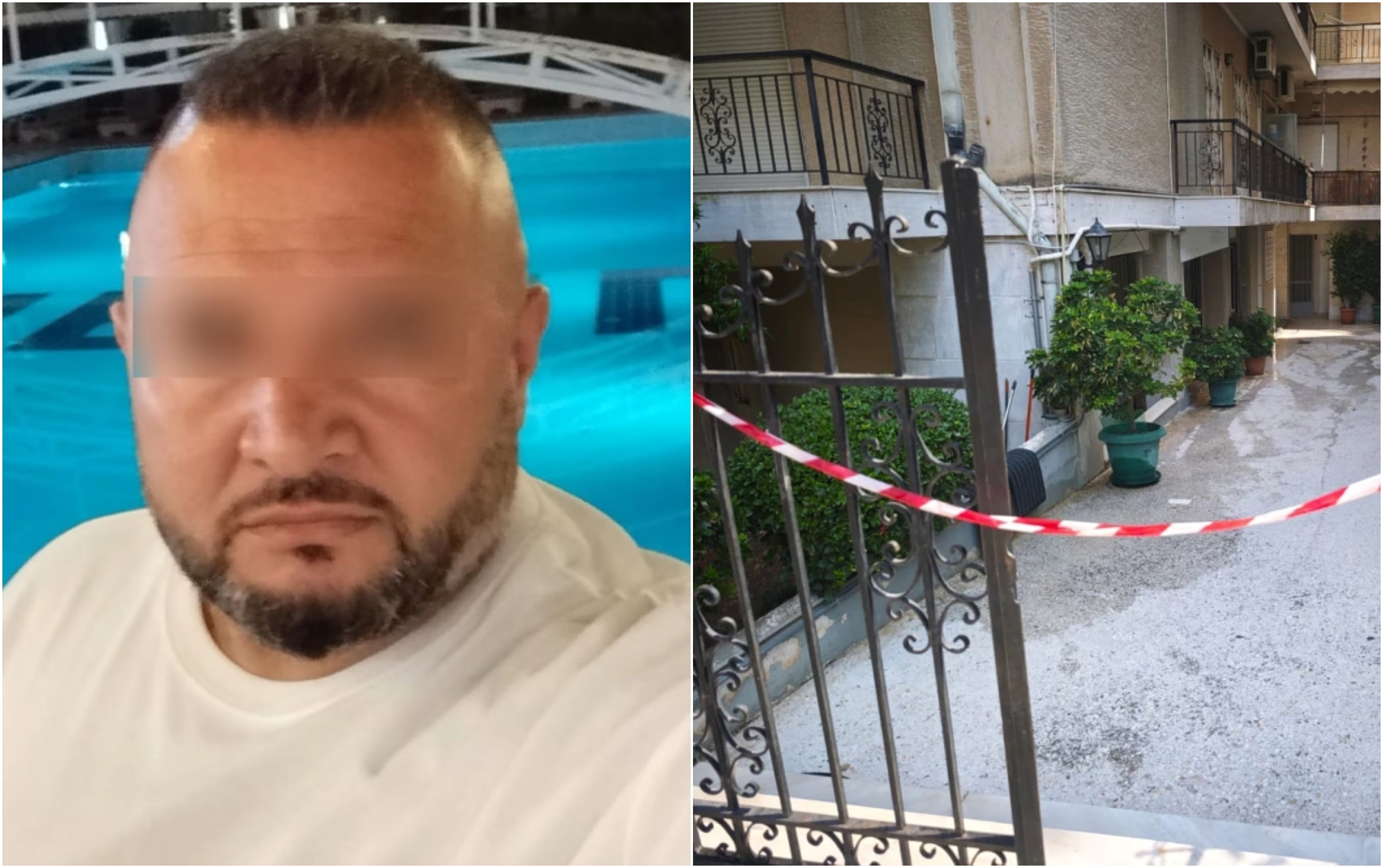
The arrest of a 48-year-old man in connection with a femicide in Nea Smyrni, a southern suburb of Athens, has drawn public attention not only to the brutal nature of the crime itself but also to the suspect's troubling background. Investigators and reporters have pieced together a profile of an individual who had long displayed aggressive behavior toward women, a fascination with martial arts, and a habit of posing with weapons on social media platforms.
Authorities confirmed that this was not an isolated incident of violent behavior on the suspect's part. His history with law enforcement stretches back several years, raising difficult questions about whether warning signs were missed and what systemic gaps may have allowed the situation to reach this tragic outcome.
A History of Harassment and Refusal to Accept Separation
According to information that has emerged since the arrest, the suspect's pattern of violent conduct toward women is not a recent development. As far back as 2016, while still residing in Albania, he faced formal accusations of harassing his former wife. The core of the complaint was his persistent refusal to accept the end of their relationship. Rather than respecting the separation, he allegedly subjected her to ongoing harassment, a behavior that is widely recognized by domestic violence experts as a serious warning sign for escalating danger.
This earlier case is significant in understanding the broader context of the crime. Research consistently shows that individuals who refuse to accept the termination of romantic relationships and who engage in harassment or stalking behaviors are at a considerably higher risk of committing acts of severe violence, including femicide, against current or former partners. The 2016 incident suggests that concerns about this individual's behavior were not entirely new at the time of the Athens killing.
Martial Arts Enthusiasm and Weapon Displays Online
Beyond his history of interpersonal violence, the suspect was also known as an enthusiast of combat sports and martial arts. Those who knew him or followed him on social media described someone who was deeply invested in presenting a physically dominant image. This extended to his online activity, where he reportedly posted photographs of himself posing with weapons.
The practice of displaying firearms or other weapons on social media has become a recognized behavioral pattern that law enforcement agencies in multiple countries have begun to monitor more closely. While such activity does not automatically indicate criminal intent, experts note that it can reflect underlying attitudes about power, dominance, and the use of force that may correlate with violent behavior in personal relationships.
In this case, the combination of a prior harassment complaint, an interest in combat techniques, and the public display of weapons painted a picture that many observers found deeply unsettling in retrospect.
Femicide as a Broader Social Issue
The killing has reignited a national conversation in Greece about femicide, a term used specifically to describe the murder of women based on their gender, often at the hands of intimate partners or former partners. Greece, like many European countries, has been grappling with the frequency of such crimes and the adequacy of existing legal and social mechanisms to prevent them.
Women's rights organizations and domestic violence advocates have long argued that the legal system must treat harassment, stalking, and threats from former partners as serious precursors to lethal violence, rather than treating them as minor offenses. The Nea Smyrni case appears to underscore this argument, given that a harassment complaint filed a decade earlier did not prevent the suspect from going on to commit an act of deadly violence.
- Femicide cases in Greece have received growing media and public attention in recent years.
- Advocates argue that restraining orders and follow-up mechanisms need to be strengthened.
- Prior harassment complaints are now widely recognized as key risk indicators for future lethal violence.
- Social media behavior, including weapon displays, is increasingly factored into threat assessments.
Community Reaction and Calls for Accountability
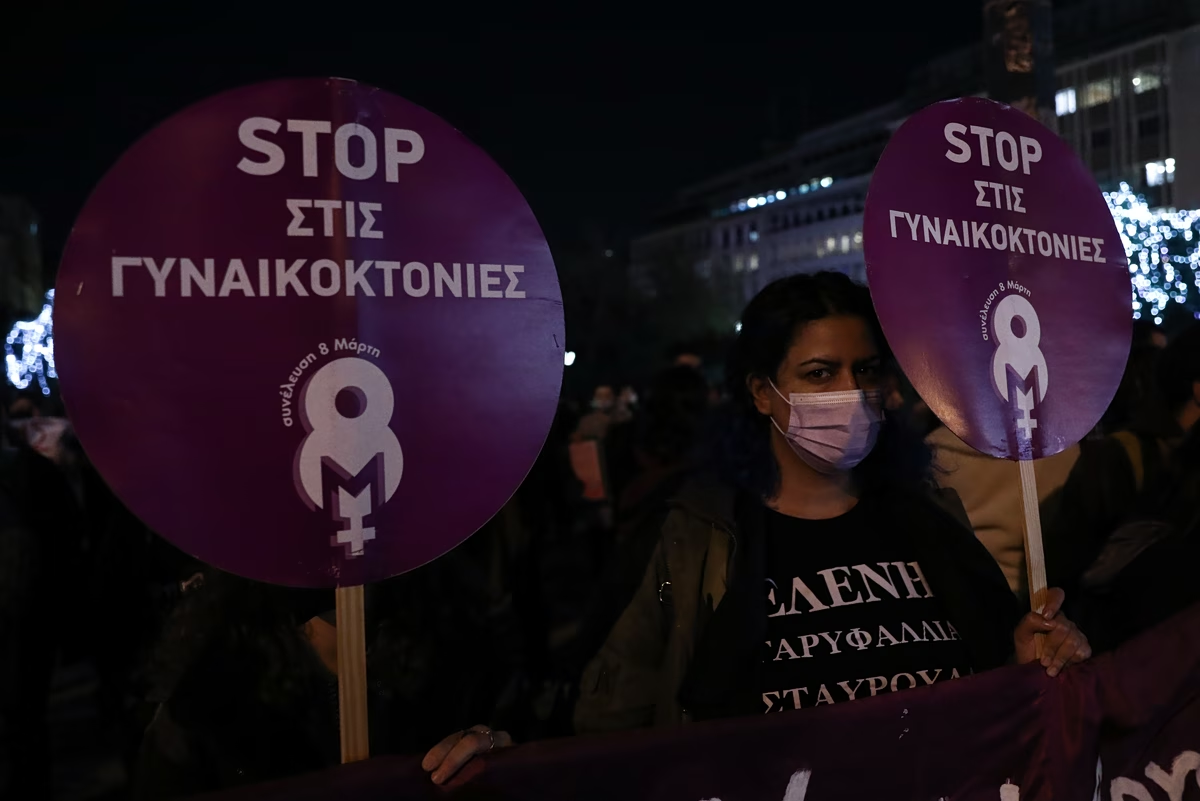
The local community in Nea Smyrni expressed shock and grief following the incident. Residents and community groups organized in response, calling for greater accountability and stronger protective measures for women facing threats from current or former partners. Candlelight vigils and public demonstrations took place in the days following the crime, with participants demanding both justice for the victim and systemic reform.
Political figures also weighed in, with members of various parties calling on the government to expedite legislative measures aimed at better protecting women from domestic violence. The case prompted renewed debate about whether current laws in Greece provide sufficient tools for law enforcement to intervene before violence reaches a fatal level.
Domestic violence experts emphasize that femicide is rarely an isolated act — it is almost always the endpoint of an escalating pattern of control, harassment, and abuse that has often been reported, and sometimes dismissed, long before a killing occurs.
Ongoing Investigation
Authorities are continuing their investigation into the circumstances surrounding the killing. Prosecutors are expected to examine the suspect's full history, including the prior harassment case in Albania, as part of building their legal case. Digital evidence, including the suspect's social media activity and any communications between him and the victim, is also reportedly being reviewed by investigators.
The case serves as a stark reminder of the deadly consequences that can follow when early warning signs of violent behavior are not adequately addressed. As the legal proceedings move forward, the victim's family, along with advocacy groups across Greece, are watching closely — hoping that this case will serve as a turning point in how the country addresses violence against women at both the individual and institutional level.
The broader implications of the Nea Smyrni femicide extend well beyond the immediate tragedy. They touch on deep-seated questions about gender-based violence, the effectiveness of protective legal frameworks, and the responsibility of communities and institutions to act decisively when warning signs emerge.