Strengthening Bilateral Bonds
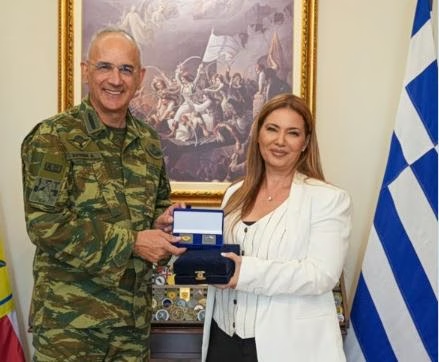
The strategic relationship between Greece and Israel has entered a new phase of enhanced cooperation, highlighted by the recent inaugural meeting between General Dimitrios Houpis, Chief of the Hellenic National Defense General Staff (HNDGS), and Pninat Ganai, the newly appointed Israeli Ambassador to Greece. This high-level engagement underscored a mutual commitment to deepening defense and strategic collaboration, with discussions focusing on a range of initiatives, including advanced armaments programs and the significant 'Achilles' Shield' project. The dialogue between the two officials signals a concerted effort to fortify regional security and stability through a robust partnership.
The meeting served as a pivotal moment for both nations to reaffirm their shared interests and commitment to a stable Eastern Mediterranean. General Houpis, representing Greece's military leadership, emphasized the importance of sustained collaboration in an increasingly complex geopolitical landscape. Ambassador Ganai, in her first official interaction with the Greek defense chief, conveyed Israel's strong desire to expand existing defense frameworks and explore new avenues for joint action. The discussions were characterized by a spirit of mutual understanding and a clear vision for the future of their strategic alliance.
Historical Context of the Alliance
The defense relationship between Greece and Israel has evolved considerably over the past decade, driven by shared security concerns, common geostrategic interests, and a recognition of the value of cooperation in a volatile region. Initially, relations were somewhat constrained, but a significant shift occurred in the early 2010s, leading to a rapid acceleration of military and diplomatic ties. This rapprochement was spurred by several factors, including changing regional dynamics, a shared concern over certain state and non-state actors, and the discovery of significant energy reserves in the Eastern Mediterranean, which necessitated enhanced security cooperation to protect critical infrastructure and maritime interests.
Joint military exercises have become a regular feature of this partnership, allowing both forces to enhance interoperability, share tactical knowledge, and prepare for a range of contingencies. These exercises, often involving air, naval, and special forces, have demonstrated the growing sophistication and depth of their collaboration. Beyond military drills, there has been a steady increase in intelligence sharing, technological cooperation, and defense industry partnerships. Both countries recognize that a strong, coordinated defense posture is essential for deterring aggression and maintaining peace in a region prone to instability.
Key Pillars of Defense Cooperation
The discussions between General Houpis and Ambassador Ganai delved into several critical areas of defense cooperation. One prominent aspect was the focus on armaments programs. Both nations possess advanced defense industries and are keen to explore opportunities for co-development, technology transfer, and joint procurement. This collaboration aims to leverage each other's strengths to enhance their respective defense capabilities and potentially create synergies that could benefit both economies. The emphasis on modernizing defense equipment and integrating cutting-edge technologies is a testament to their forward-looking approach to security.
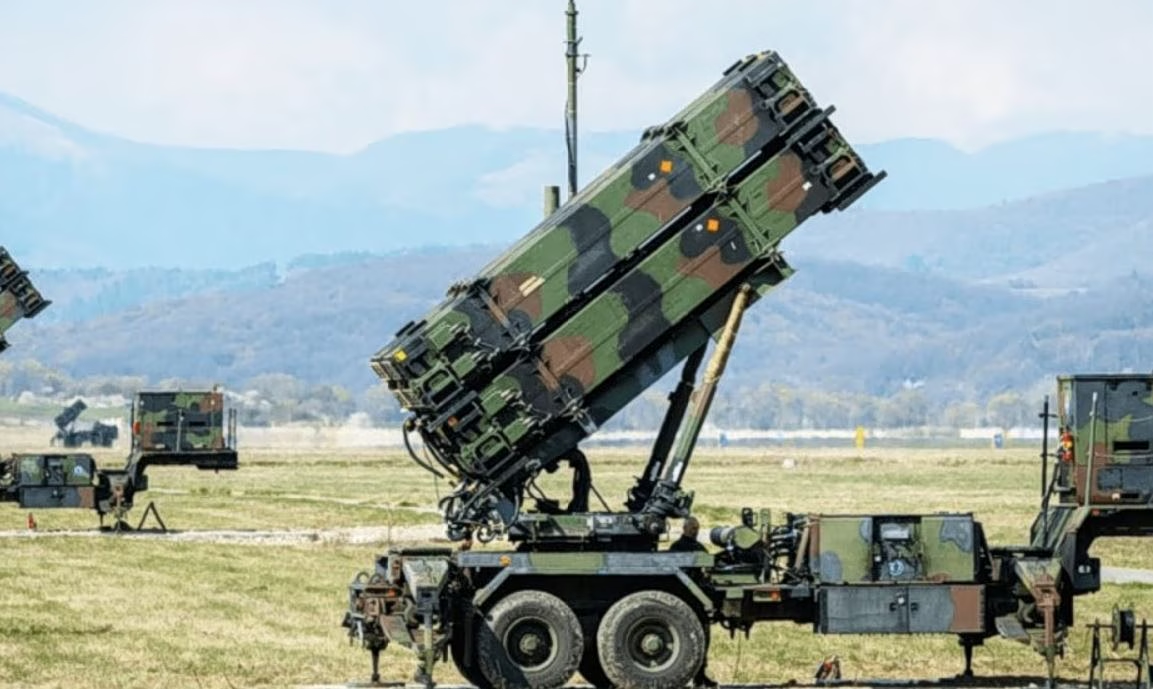
Another significant point of discussion was the 'Achilles' Shield' project. While specific details of this initiative are not publicly disclosed, its mention indicates a high-priority collaborative effort, likely involving advanced defense systems or strategic infrastructure protection. Such projects typically involve substantial investment, technological innovation, and a long-term commitment from both parties, underscoring the strategic depth of their partnership. The naming convention itself suggests a defensive posture, focused on safeguarding critical national assets and ensuring resilience against potential threats.
Regional Security Implications
The strengthening of the Greece-Israel defense alliance carries significant implications for regional security. The Eastern Mediterranean is a geopolitical crossroads, characterized by competing interests, maritime disputes, and ongoing conflicts. The partnership between Greece, a key member of NATO and the European Union, and Israel, a powerful regional actor, creates a formidable bloc that advocates for stability and adherence to international law. This alliance acts as a counterweight to destabilizing influences and promotes a framework of cooperation among like-minded states.
The collaboration extends beyond bilateral engagements to include trilateral and multilateral formats, most notably with Cyprus. The Greece-Cyprus-Israel trilateral mechanism has become a cornerstone of regional cooperation, focusing on energy, security, and economic development. These partnerships contribute to a broader strategy of establishing a stable and prosperous Eastern Mediterranean, where disputes are resolved through dialogue rather than confrontation. The joint efforts in security, energy, and economic development are intrinsically linked, as energy security often requires robust defense capabilities to protect infrastructure and supply routes.
Future Prospects and Challenges
Looking ahead, the Greece-Israel strategic defense cooperation is poised for further expansion. The commitment expressed by both General Houpis and Ambassador Ganai suggests a trajectory of increasing integration and shared strategic planning. Potential areas for future collaboration include cybersecurity, counter-terrorism, disaster relief, and further joint research and development in defense technologies. The continuous exchange of military personnel for training and education also plays a vital role in fostering deeper understanding and interoperability between their armed forces.
However, this partnership also faces challenges. The volatile nature of the Eastern Mediterranean means that geopolitical shifts, new threats, and evolving alliances can rapidly alter the strategic landscape. Maintaining consensus on shared objectives, navigating complex diplomatic environments, and ensuring sustained political will are crucial for the long-term success of this alliance. Both nations must remain agile and adaptive to respond effectively to emerging challenges, whether they stem from state-sponsored aggression, non-state actors, or broader regional instability.
Economic and Technological Dimensions
Beyond the purely military aspect, the defense cooperation between Greece and Israel has significant economic and technological dimensions. Defense procurement and joint development projects can stimulate economic growth, create jobs, and foster innovation in both countries. Israel, with its highly advanced defense technology sector, offers Greece access to cutting-edge solutions, while Greece provides strategic geographical advantages and a gateway to European markets. This symbiotic relationship extends to research and development, where joint ventures can lead to breakthroughs in areas such as unmanned systems, electronic warfare, and advanced materials.
The exchange of expertise and technology contributes to the overall modernization of their respective armed forces, ensuring they remain at the forefront of defense capabilities. This collaboration is not merely about acquiring equipment but also about building a shared knowledge base and developing human capital in critical defense-related fields. The long-term vision encompasses a partnership that goes beyond transactional exchanges to a deeper, more integrated approach to defense and security, underpinned by mutual trust and shared strategic objectives.
Conclusion
The recent meeting between General Dimitrios Houpis and Ambassador Pninat Ganai underscores the robust and deepening strategic defense partnership between Greece and Israel. This alliance, built on shared security interests and a commitment to regional stability, is manifesting through joint armaments programs, high-priority projects like 'Achilles' Shield,' and extensive military exercises. As the Eastern Mediterranean continues to navigate complex geopolitical currents, the strong collaboration between Athens and Jerusalem serves as a critical anchor for peace and security. This partnership is not static; it is continuously evolving, adapting to new challenges, and exploring new frontiers of cooperation to ensure the long-term stability and prosperity of both nations and the broader region.