Political Tensions Rise as Thessaloniki International Fair Approaches
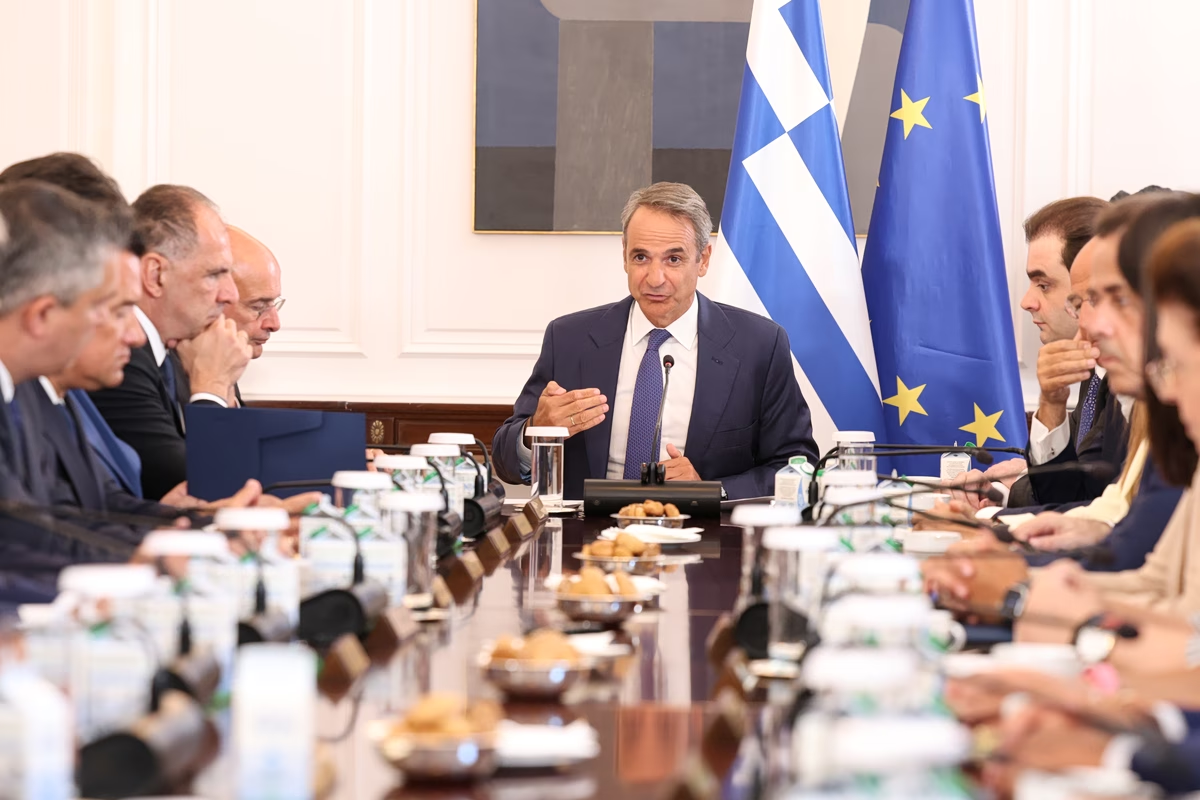
As Greece prepares for one of its most politically significant annual events — the Thessaloniki International Fair (ΔΕΘ) — opposition politicians have intensified their criticism of the current government, questioning its credibility and the effectiveness of its economic strategy. The fair traditionally serves as a platform where the prime minister outlines key policy priorities and announces major initiatives, making the days preceding it a hotbed of political debate.
Opposition Figures Challenge Government's Economic Credibility
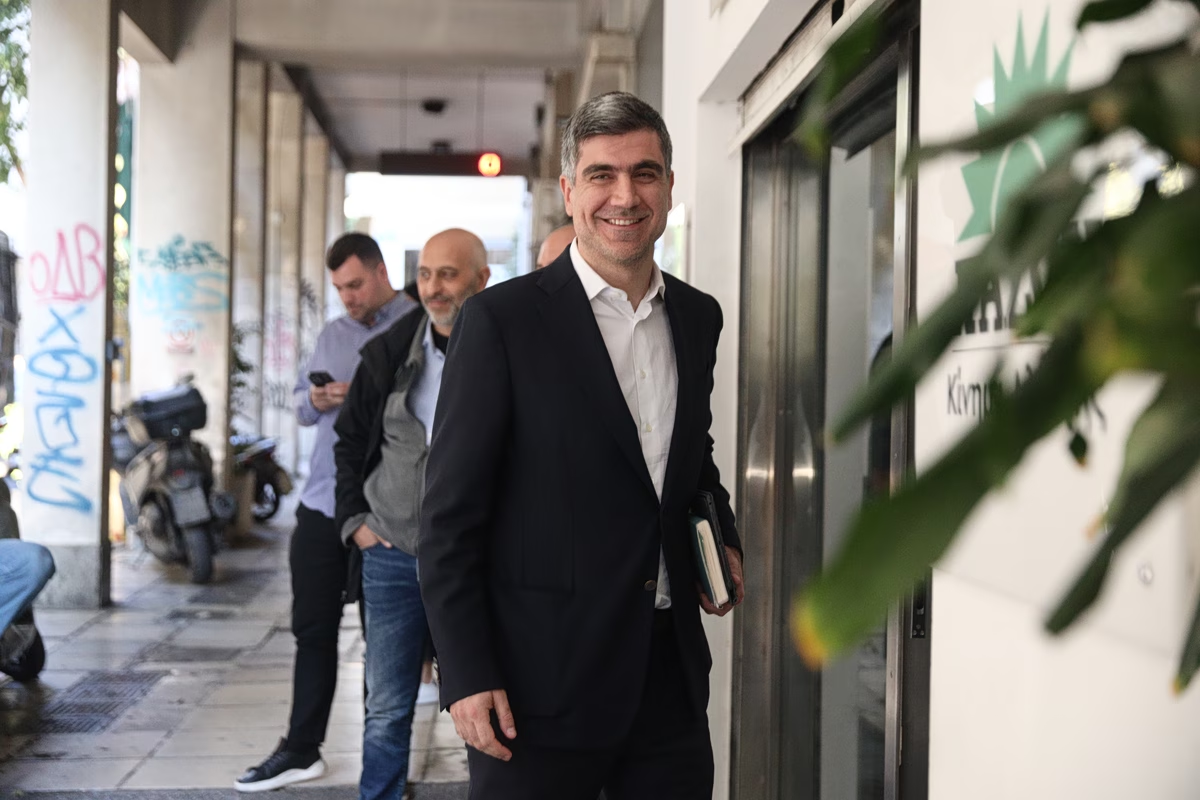
Among the most vocal critics in the lead-up to this year's fair was Christos Kaklamanis, the secretary of the Justice sector within PASOK. Kaklamanis argued that the existing economic policy mix is no longer sufficient to address the pressing challenges facing Greek households and businesses. He maintained that a fundamentally different approach is needed, one that prioritizes social equity and sustainable growth over short-term fiscal metrics.
Kaklamanis was direct in his assessment, suggesting that the government has gradually lost the trust of both citizens and key institutional stakeholders. His remarks reflected a broader PASOK narrative that has been building for months — namely, that while Greece may be posting improved macroeconomic figures on paper, the lived reality for many citizens tells a very different story. Rising costs of living, persistent unemployment among younger demographics, and uneven regional development were among the issues he cited as evidence that the current policy framework is falling short.
ELAS Political Committee Member Weighs In
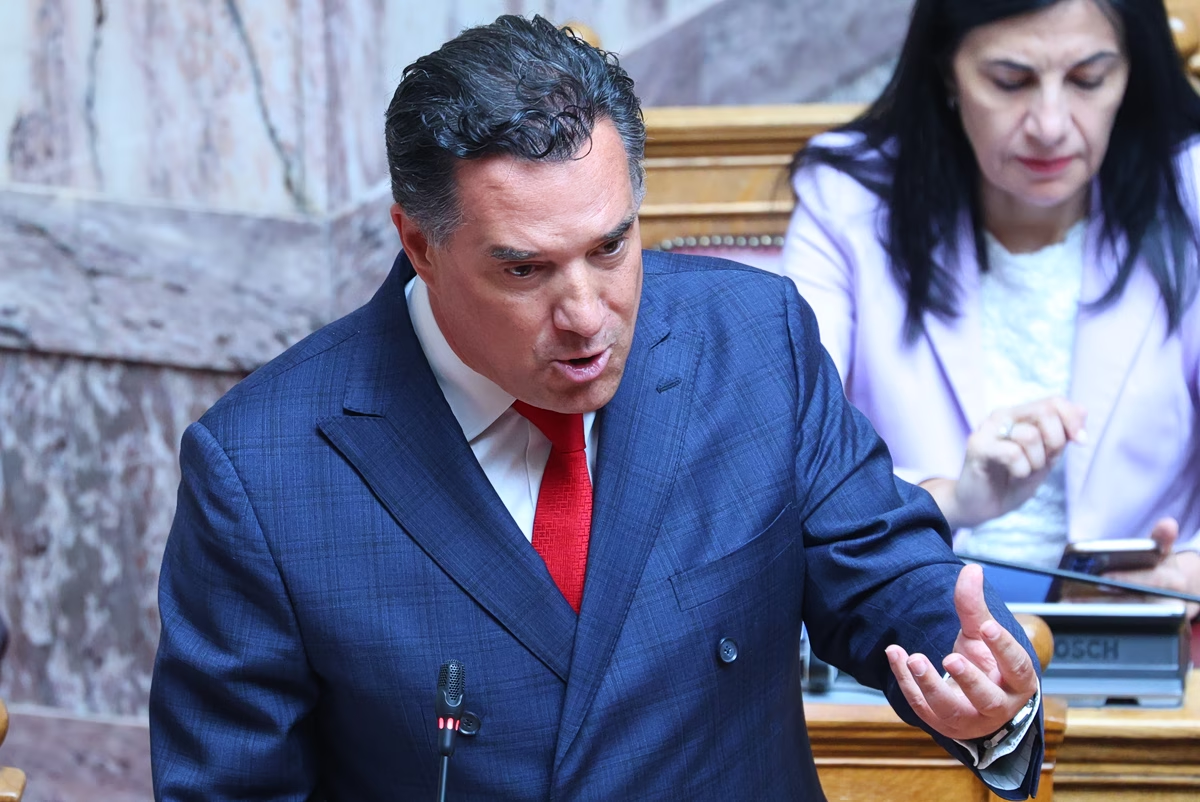
Haris Athanasiades, a member of the Political Committee of ELAS, also joined the chorus of criticism. His intervention added another layer of opposition perspective to the debate, with a focus on what he characterized as structural failings within the government's broader governance agenda. Athanasiades contended that the announcements expected at the Thessaloniki International Fair are unlikely to represent genuine reform but rather amount to pre-packaged political messaging designed to manage public perception ahead of future electoral cycles.
He argued that Greek citizens deserve substantive policy shifts rather than announcements crafted primarily for their symbolic or media value. His comments pointed to what he sees as a pattern of governance in which headline-grabbing pledges are made at high-profile events but fail to translate into meaningful change at the ground level. The Thessaloniki International Fair, in his view, risks becoming another occasion where style overshadows substance.
New Democracy Spokesperson Defends the Government's Record
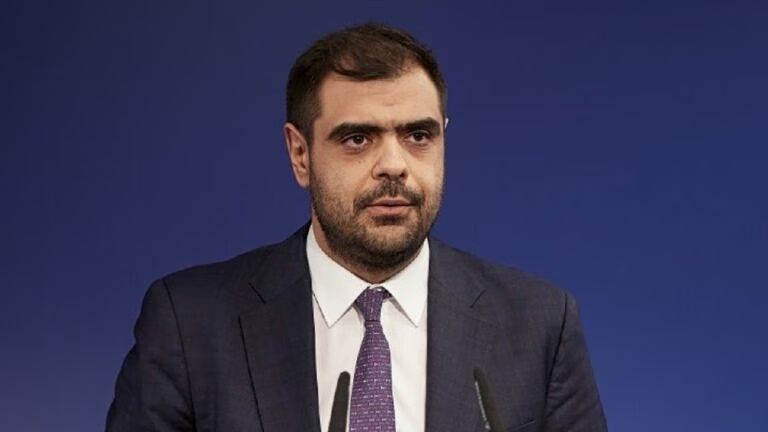
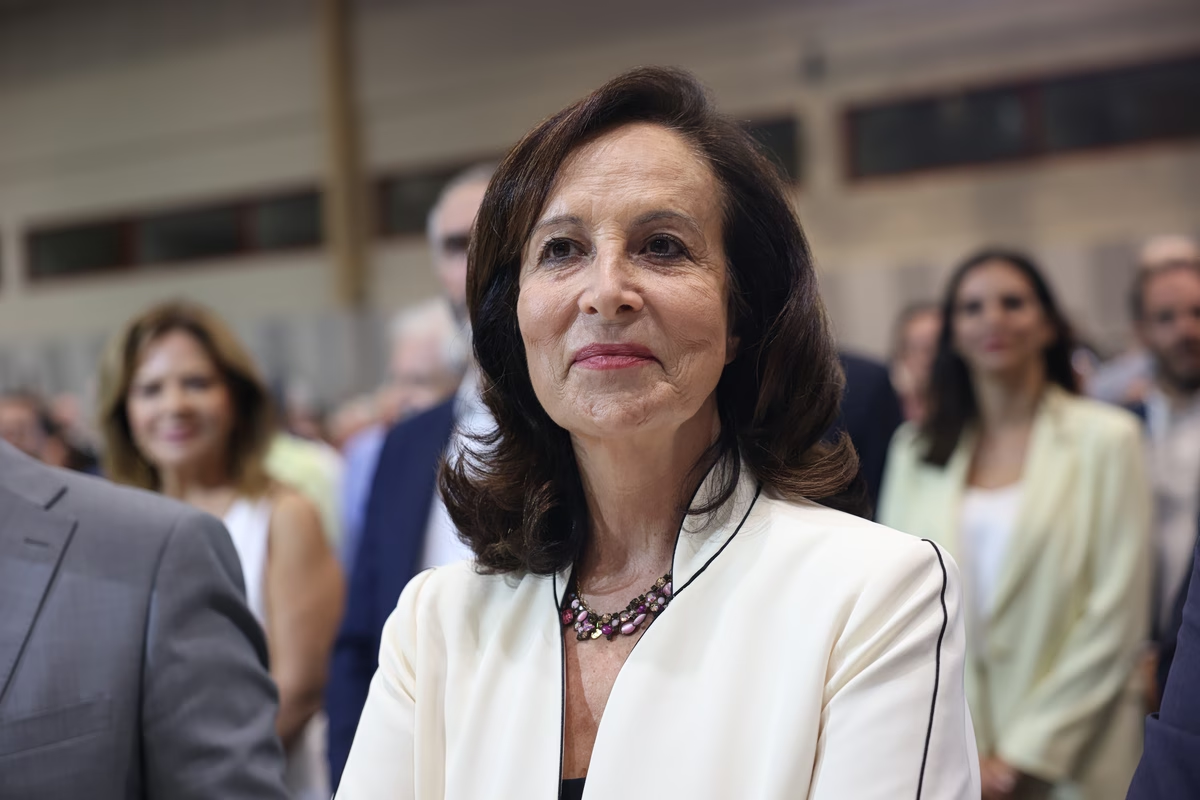
Not all voices in the political exchange were critical of the government, however. Alexandra Sdoukou, serving as spokesperson for New Democracy — the ruling party — offered a counterpoint to the opposition narrative. Sdoukou defended the government's track record, arguing that the economic policies implemented over recent years have placed Greece on a more stable and competitive footing within the European Union.
She pushed back against claims that the government has lost credibility, asserting instead that the criticism being leveled by opposition parties reflects political opportunism rather than a genuine analysis of the facts. According to Sdoukou, the announcements to be made at the Thessaloniki International Fair will demonstrate the government's continued commitment to growth, investment, and improving citizens' quality of life.
Her remarks underscored the sharp ideological divide that continues to define Greek political discourse, with the ruling party emphasizing macroeconomic stability and reform progress while opposition forces highlight social inequalities and governance concerns.
The Thessaloniki International Fair as a Political Barometer
The Thessaloniki International Fair has long been one of the most important fixtures on Greece's political calendar. Held annually in the northern city of Thessaloniki, the event brings together business leaders, policymakers, and international observers in a setting that traditionally allows the sitting prime minister to set the tone for the country's economic and political agenda for the year ahead.
Opposition parties typically use the occasion to offer alternative visions and hold the government to account for commitments made in previous years. This dynamic gives the days surrounding the fair an atmosphere of heightened political intensity, as competing narratives are tested against the backdrop of public and media scrutiny.
This year appears to be no different. With economic concerns continuing to dominate public discourse — particularly around inflation, wages, and housing affordability — the stakes attached to the government's announcements are considerable. Citizens and analysts alike will be watching closely to see whether the policy measures unveiled at the fair represent meaningful progress or fall short of the expectations being set.
Broader Context: Economic Policy at a Crossroads
The debate unfolding ahead of the fair reflects deeper tensions within Greek society about the direction of economic policy. On one side, supporters of the current government point to improvements in Greece's credit ratings, increased foreign investment, and a return to growth following years of austerity-driven recession. On the other, critics argue that the benefits of economic recovery have not been distributed equitably, leaving large segments of the population behind.
The opposition's call for a different economic policy mix touches on questions that extend beyond Greece's borders. Across Europe, governments are grappling with similar dilemmas: how to balance fiscal responsibility with the need to address social inequality, and how to sustain growth in an environment shaped by geopolitical uncertainty, energy price volatility, and evolving global trade dynamics.
In this context, the exchanges between PASOK, ELAS, and New Democracy ahead of the Thessaloniki International Fair represent more than routine political sparring. They reflect a genuine and consequential debate about the kind of economic future Greece is working toward, and who stands to benefit from the choices made in the corridors of power. As the fair draws near, all eyes will be on the government's announcements — and the opposition's response to them.