European Union Extends Emergency Support to Serbia Amid Wildfire Crisis
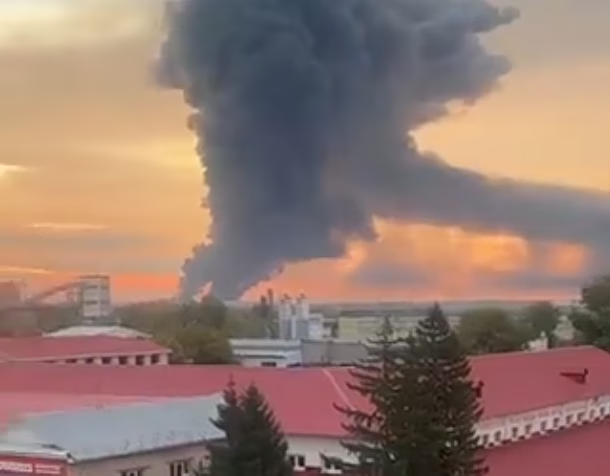
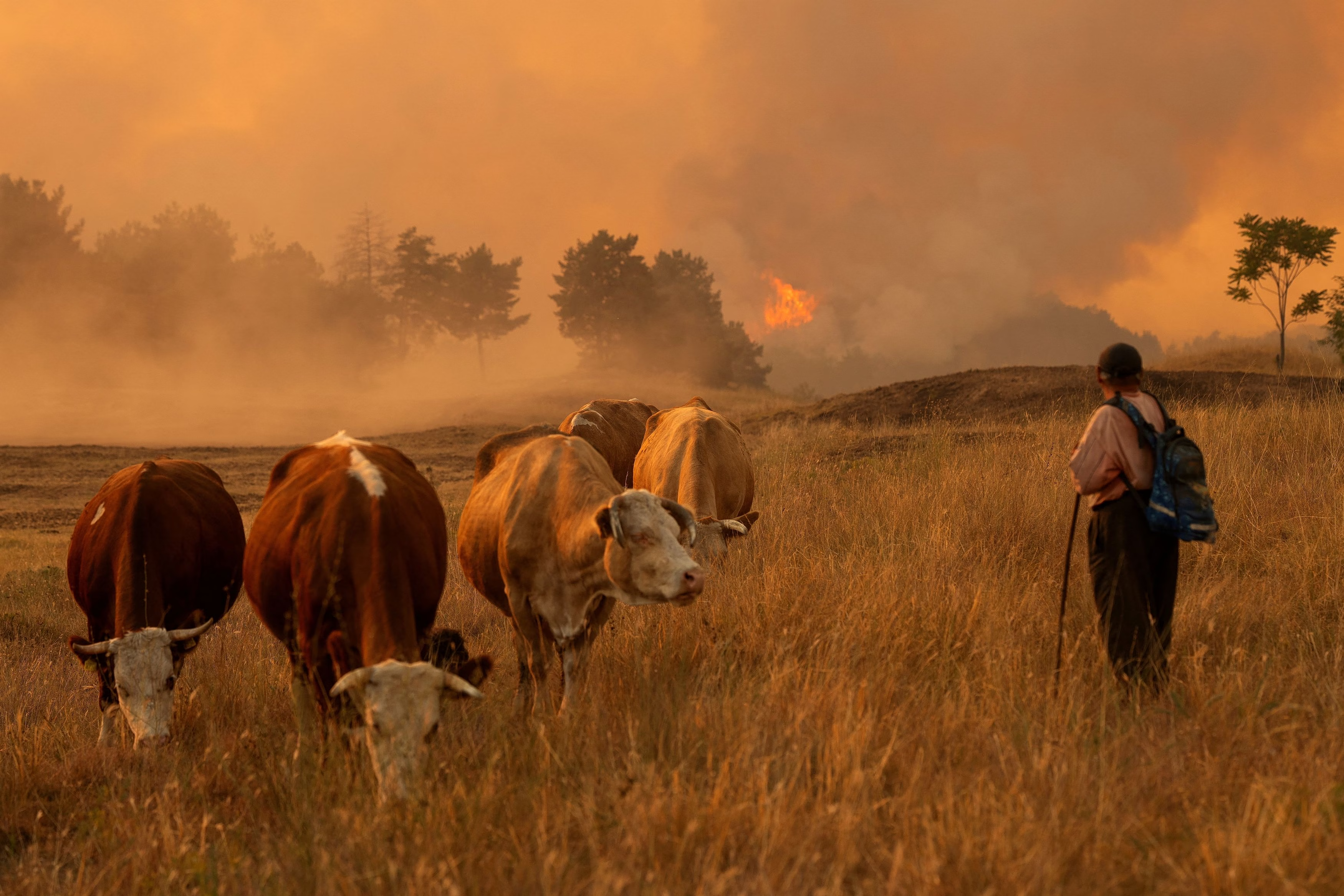
The European Union has activated its emergency response framework to send helicopters and firefighting personnel to Serbia, where a significant wildfire has been spreading across the country's territory. The deployment marks another instance of the EU extending its civil protection capabilities beyond its own borders to assist a non-member state facing a natural disaster.
Serbia's Access to EU Emergency Aid
Although Serbia is not a member of the European Union, the country is eligible to receive urgent assistance through the EU Civil Protection Mechanism, a cooperative framework designed to enable a coordinated European response to major emergencies. This mechanism allows participating and partner countries to request and receive support from EU member states during crises that exceed national response capacities.
The mechanism has been used on numerous occasions to assist countries both within and outside the EU, reflecting its broad humanitarian mandate. Serbia's candidacy status for EU membership has further facilitated institutional cooperation between Belgrade and Brussels on matters of civil protection and disaster response.
Scale of the Wildfire and Response Efforts
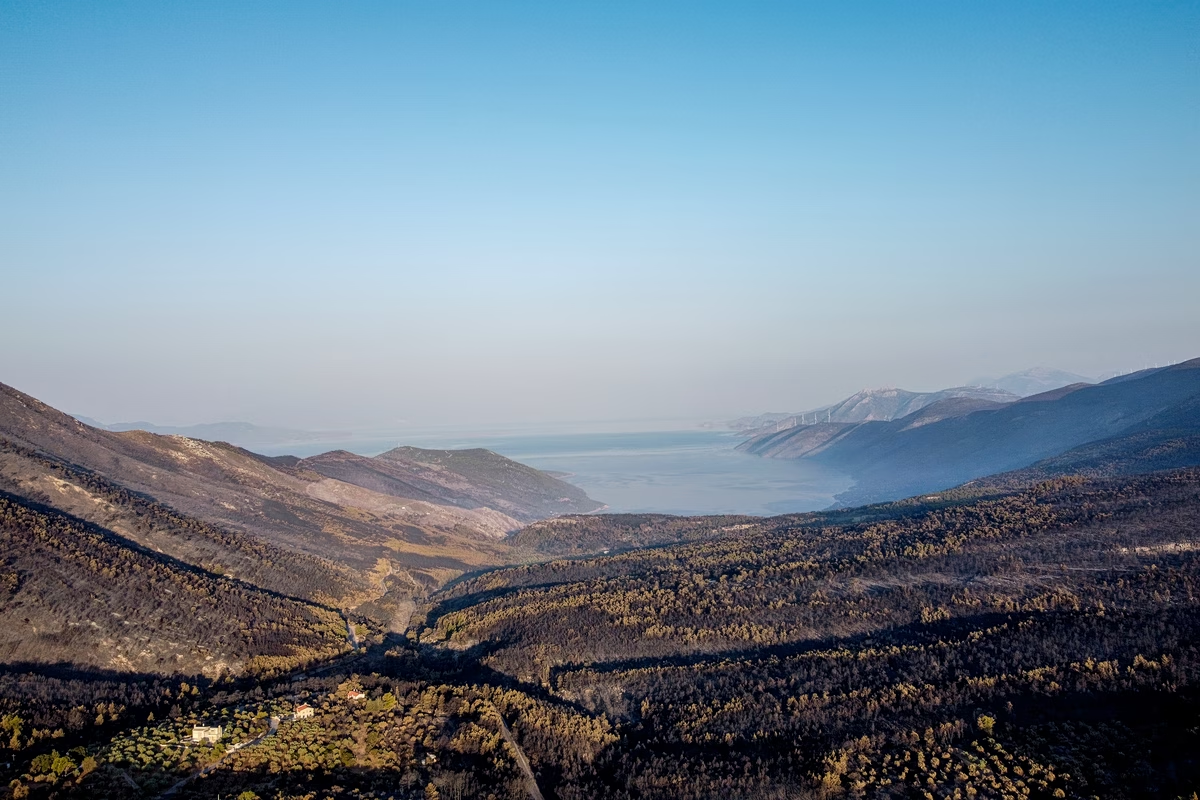
The wildfire affecting Serbia has been described as large-scale, prompting Serbian authorities to seek international assistance as local firefighting resources came under considerable strain. Wildfires of this magnitude can spread rapidly under conditions of high temperatures, dry vegetation, and strong winds — conditions that have become increasingly common across southeastern Europe during summer months.
The EU's response includes the deployment of firefighting helicopters, which are critical for aerial water drops in areas that are difficult to access by ground vehicles. Alongside aerial assets, trained firefighting personnel have also been dispatched to provide on-the-ground support to Serbian emergency services.
Role of the EU Civil Protection Mechanism
The EU Civil Protection Mechanism serves as a central coordination hub for disaster response across Europe and beyond. When a country's own emergency resources are overwhelmed, it can formally request assistance through this mechanism, which then facilitates the rapid mobilization of resources from participating nations.
- The mechanism was established to foster solidarity and mutual assistance among European nations during major disasters.
- It covers a wide range of emergencies, including wildfires, floods, earthquakes, and industrial accidents.
- Non-EU countries, including candidate and neighboring states, can access support under specific conditions.
- Resources mobilized through the mechanism include personnel, equipment, and technical expertise.
The mechanism has previously been activated to respond to wildfires in Greece, Turkey, North Macedonia, and other countries in the broader European neighborhood. Its deployment in Serbia follows a pattern of increased demand for cross-border firefighting cooperation as climate-related risks intensify across the region.
Broader Context: Rising Wildfire Risk in Southeastern Europe
Southeastern Europe has experienced a notable increase in the frequency and intensity of wildfires in recent years. Scientists and climate researchers have linked this trend to rising average temperatures, prolonged drought periods, and shifts in seasonal weather patterns associated with climate change. Countries across the Balkans and the wider Mediterranean region have struggled to contain fires that break out under extreme heat conditions during summer.
Serbia, like many of its neighbors, faces particular challenges in wildfire management due to the combination of extensive forested and rural areas, limited specialized aerial firefighting fleets, and the logistical complexities of coordinating large-scale emergency responses. International cooperation through frameworks like the EU Civil Protection Mechanism has therefore become an increasingly vital component of national disaster preparedness strategies.
EU-Serbia Relations and Civil Protection Cooperation
Serbia formally applied for EU membership and has been engaged in accession negotiations, which has helped establish closer institutional ties with the European Union across a range of policy areas, including civil protection, environmental management, and emergency response. The willingness of the EU to extend support during crises such as the current wildfire reflects both the humanitarian principles underpinning the Civil Protection Mechanism and the broader political relationship between the EU and candidate countries in the Western Balkans.
EU officials have repeatedly emphasized the importance of solidarity in responding to natural disasters, regardless of a country's membership status. The rapid mobilization of resources for Serbia underscores this commitment and highlights the practical value of maintaining cooperative frameworks with non-member states in the region.
Ongoing Operations and Outlook
Firefighting operations in Serbia were continuing as resources from the EU arrived to supplement national efforts. Authorities were working to establish firebreaks, conduct aerial water drops, and evacuate residents from areas at risk. The coordination between Serbian emergency services and the incoming EU teams required careful logistical planning to ensure effective deployment of personnel and equipment in the affected zones.
The full extent of the damage caused by the wildfire, including the area of land burned and any impact on communities or infrastructure, was still being assessed. Environmental experts noted that large wildfires of this nature can have lasting consequences for biodiversity, soil stability, and local water resources, in addition to the immediate threats posed to human life and property.
Meteorological conditions in the affected region were being closely monitored, as weather patterns including wind speed and direction can significantly influence the behavior and spread of active wildfires. Emergency managers indicated that the situation remained dynamic, and the duration of the international support deployment would depend on developments on the ground.
Summary
The EU's decision to send helicopters and firefighters to Serbia in response to a major wildfire demonstrates the practical function of the Civil Protection Mechanism as a tool for cross-border disaster solidarity. Serbia's ability to access this support, despite not being an EU member, illustrates the inclusive design of the mechanism and the importance of regional cooperation in addressing the growing challenge of wildfires across southeastern Europe.