Coast Guard Dispatches Vessel Following Reports of Turkish Fishing Activity
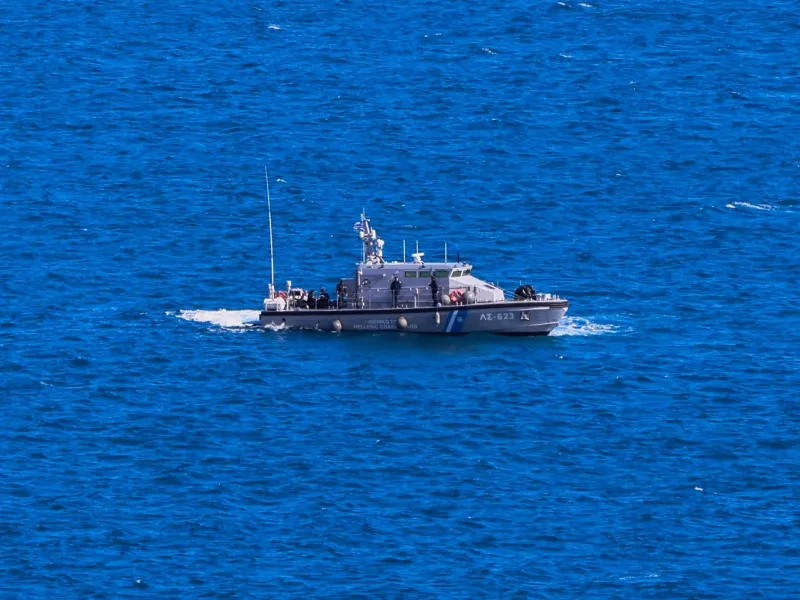
The Hellenic Coast Guard moved swiftly to investigate reports of Turkish fishing vessels operating in the vicinity of the Northern Sporades Marine Park of Alonnisos, one of Greece's most protected and ecologically sensitive maritime zones. According to sources within the Coast Guard, a patrol vessel was promptly deployed from the nearby island of Skopelos to assess the situation and determine whether any violations of Greek maritime law had occurred.
Upon arrival at the reported location, Coast Guard officers found that the Turkish fishing boats had already moved away from the area. Authorities confirmed that, by the time the patrol vessel reached the scene, the vessels in question had withdrawn to waters beyond the boundaries of Greek territorial jurisdiction, effectively placing themselves outside the reach of Greek maritime enforcement.
Details of the Incident
The episode unfolded in an area that holds particular significance both ecologically and geopolitically. The Northern Sporades Marine Park, which surrounds the island of Alonnisos, is recognized as one of the largest marine protected areas in all of Europe. It serves as a critical habitat for the Mediterranean monk seal, an endangered species, as well as numerous other marine species that benefit from the strict conservation regulations enforced within the park's boundaries.
The presence of foreign fishing vessels, particularly those from neighboring Turkey, in or near such a protected zone raises immediate concerns for Greek authorities, both from an environmental protection standpoint and a sovereign rights perspective. Unauthorized fishing within Greek territorial waters is considered a serious infringement, and Greek maritime authorities maintain regular patrols throughout the Aegean Sea to monitor and prevent such incidents.
Coast Guard sources indicated that the response to the reported sighting was rapid, with a vessel being scrambled from Skopelos as soon as the alert was received. The proximity of the Skopelos station to the reported location of the Turkish vessels allowed for a relatively quick response, though it ultimately proved insufficient to intercept the boats before they exited Greek waters.
Geopolitical Context in the Aegean
Incidents involving Turkish vessels operating close to or within Greek territorial waters are not uncommon in the Aegean Sea, a body of water whose complex maritime boundaries have long been a source of diplomatic tension between Greece and Turkey. The two NATO allies share a contentious history regarding overlapping maritime claims, fishing rights, and the delineation of territorial waters, exclusive economic zones, and continental shelf boundaries.
Greek authorities regularly monitor foreign fishing activity in the Aegean, particularly in areas close to protected marine zones and island communities where local fishing economies depend on the sustainable management of marine resources. The detection and reporting of Turkish fishing vessels near Alonnisos is part of a broader pattern of incidents that reflect the ongoing sensitivities surrounding maritime sovereignty in the region.
For the local communities of the Northern Sporades, which include the islands of Alonnisos, Skopelos, and Skiathos, the integrity of the surrounding waters is both an economic and cultural concern. Fishing remains an important livelihood for many residents, and the protection of marine resources within the park is seen as essential for the long-term sustainability of both the local ecosystem and the regional fishing industry.
Regulatory Framework and Enforcement Challenges
The Northern Sporades Marine Park operates under a strict regulatory framework designed to safeguard its biodiversity. Fishing within its core zones is either prohibited or subject to stringent limitations, and enforcement is carried out jointly by the Coast Guard and park management authorities. The park's remote and expansive nature, however, presents ongoing challenges for comprehensive surveillance and rapid response.
When foreign vessels are detected near the park's boundaries, the Coast Guard faces the dual challenge of responding quickly enough to intercept the boats while also ensuring that any enforcement action is conducted within the limits of international maritime law. In cases where vessels have already withdrawn beyond Greek territorial waters, authorities have limited options for direct intervention.
In the current incident, the fact that the Turkish fishing boats had moved to international waters by the time the Greek patrol vessel arrived meant that no formal enforcement action could be taken. Coast Guard sources did not indicate whether any formal diplomatic communication or incident report would be filed following the episode, which is a standard procedure in cases where foreign vessels are suspected of having operated unlawfully in Greek waters.
Broader Implications for Maritime Security
The incident near Alonnisos Marine Park highlights the persistent challenges faced by Greek maritime authorities in monitoring and protecting a vast and strategically sensitive stretch of the Aegean. With thousands of islands and islets scattered across the sea, and with maritime boundaries that remain disputed or ambiguously defined in several areas, maintaining consistent surveillance is a resource-intensive and complex undertaking.
Greek authorities have repeatedly called for greater international recognition of the country's maritime boundaries and for clearer frameworks governing fishing rights in contested areas of the Aegean. At the same time, diplomatic channels between Greece and Turkey continue to be used to address recurring incidents of this nature, with varying degrees of success.
While the immediate situation near Alonnisos appears to have resolved without confrontation, the episode serves as a reminder of the ongoing tensions that characterize Greek-Turkish relations in the Aegean Sea. Both nations continue to assert competing interests in the region, and incidents involving fishing vessels, research ships, and military aircraft remain a recurring feature of the bilateral relationship.
For now, the Northern Sporades Marine Park remains under the watchful eye of Greek maritime authorities, who continue to patrol its waters in an effort to protect both its ecological integrity and Greece's sovereign rights in one of the Mediterranean's most treasured and contested maritime environments.