Drought Conditions Reveal Hidden Remnants of Two World Wars
As a powerful heatwave continues to grip much of Europe, an unexpected consequence has begun to emerge along the continent's major rivers and lakes: the slow uncovering of military vehicles, weapons, and warships that have lain hidden beneath the water for decades. Receding water levels, driven by prolonged drought conditions, are pulling back the natural curtain that has concealed some of the most tangible relics of the First and Second World Wars.
Scientists and historians have long known that European waterways hold an enormous amount of submerged wartime debris, but it is only during periods of extreme low water that these objects become visible — and potentially hazardous — to the general public. This summer's extraordinary heat has accelerated that process dramatically, prompting authorities across several countries to issue warnings and mobilize specialist teams.
German Warships Emerge from Major Rivers
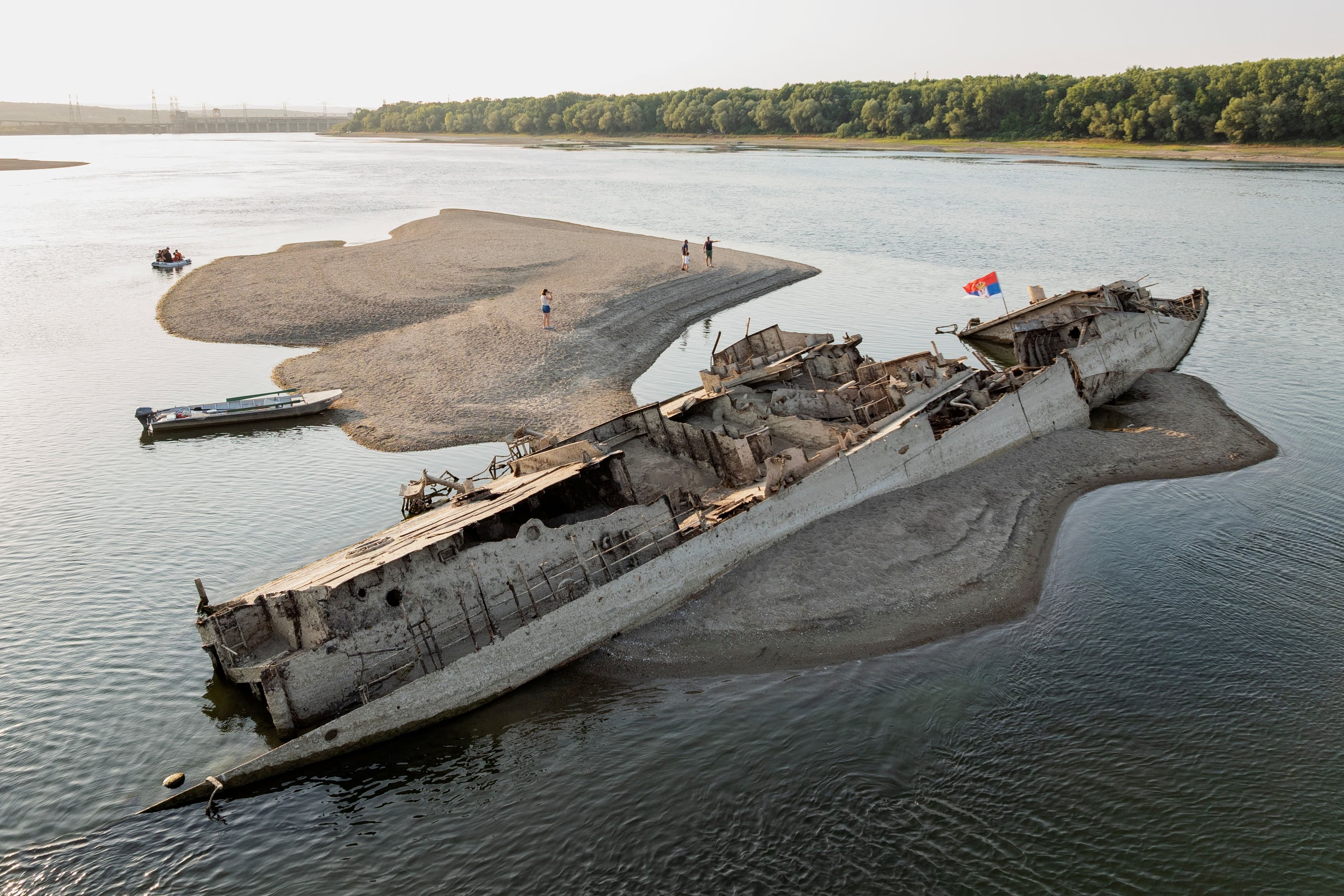
Among the most striking discoveries are the skeletal remains of German military vessels that have begun surfacing along stretches of rivers including the Rhine and the Danube. These ships, many of which were scuttled or sunk during the chaotic final stages of World War II, have spent the better part of eight decades resting on riverbeds. As water levels fall to record or near-record lows in certain regions, their rusted hulls are becoming increasingly exposed.
Local communities and authorities have reacted with a mixture of historical fascination and serious concern. While the appearance of these vessels offers a rare and visceral connection to wartime history, many of them still contain unexploded munitions, fuel residue, and other hazardous materials that pose genuine risks to those who might approach them without proper precautions.
Unexploded Ordnance: A Persistent Danger
Perhaps more alarming than the ships themselves is the growing visibility of unexploded ordnance — bombs, shells, grenades, and other weaponry — that is surfacing in riverbeds, lakeshores, and fields across the continent. Experts in explosive ordnance disposal (EOD) have noted that Europe remains one of the most heavily contaminated regions in the world when it comes to leftover wartime munitions, with millions of pieces of ordnance estimated to still be buried or submerged across the continent.
When water levels drop, these objects can be disturbed by currents, exposed to air for the first time in generations, and occasionally moved into locations where they are more likely to be encountered by the public. The chemical and mechanical deterioration that accompanies decades of submersion can actually make some of these devices more unstable than they were when originally manufactured, adding another layer of risk to an already dangerous situation.
- Unexploded bombs from World War II-era aerial campaigns are among the most common discoveries.
- Artillery shells from both world conflicts continue to surface in agricultural and riverine areas.
- Corroded munitions can become increasingly volatile and unpredictable over time.
- EOD teams across Europe are regularly called upon to assess and safely dispose of these finds.
A Continent Still Living with Its Wartime Past
The phenomenon of wartime relics resurfacing is not new to Europe, but the frequency and scale of discoveries during periods of drought have intensified in recent years, a trend that many experts attribute to the increasing severity of climate-related weather events. Extended dry periods are becoming more common across the continent, meaning that these dangerous encounters with history may become a more regular occurrence.
Germany, in particular, has a well-established and highly professional system for dealing with wartime ordnance discoveries. The country uncovers tens of thousands of pieces of unexploded ordnance each year, and it maintains dedicated bomb disposal units that respond to calls from across the nation. Other countries with significant wartime histories — including France, Belgium, Italy, and Poland — face similar challenges, though resources and protocols vary considerably from one nation to the next.
Experts estimate that it could take more than a century to fully clear Europe of all remaining World War-era munitions, even under optimal conditions and with sustained international cooperation.
Public Safety Measures and Government Responses
In response to this summer's wave of discoveries, several European governments have reinforced public safety messaging, urging citizens not to approach, touch, or attempt to move any suspicious objects they encounter near rivers, lakeshores, or in low-lying areas that have recently been exposed by receding water. Authorities have stressed that even objects that appear to be inert or heavily corroded should be treated as potentially dangerous.
Emergency services and military disposal teams have been placed on heightened alert in several countries, with some regions establishing temporary exclusion zones around areas where multiple items of ordnance or submerged military equipment have been identified. Boat traffic on certain river sections has also been restricted as a precautionary measure while inspections are carried out.
Local governments have been working in coordination with national defense ministries to manage the logistics of removing or securing the newly exposed material. In some cases, authorities have opted to leave certain items in place and establish safety perimeters rather than risk triggering an accidental detonation through the process of removal.
Climate Change and Historical Hazards: An Emerging Intersection
The situation unfolding across Europe this summer underscores a growing and somewhat overlooked intersection between climate change and historical legacy. As global temperatures rise and extreme weather events become more frequent, the environmental changes they produce are not only affecting ecosystems and infrastructure — they are also reshaping humanity's physical relationship with its own past.
Archaeologists and historians have noted that drought conditions, while dangerous in the context of unexploded ordnance, have also led to the discovery of significant cultural and historical sites that were previously inaccessible or unknown. The dual nature of these revelations — simultaneously enriching historical knowledge and presenting safety challenges — makes the management of such events particularly complex for public authorities.
As Europe continues to grapple with the immediate consequences of an intensifying heatwave, the emergence of these wartime relics serves as a stark and sobering reminder that the physical scars of the twentieth century's most destructive conflicts have never fully disappeared. They have simply been waiting, submerged and silent, for conditions to bring them back to the surface.