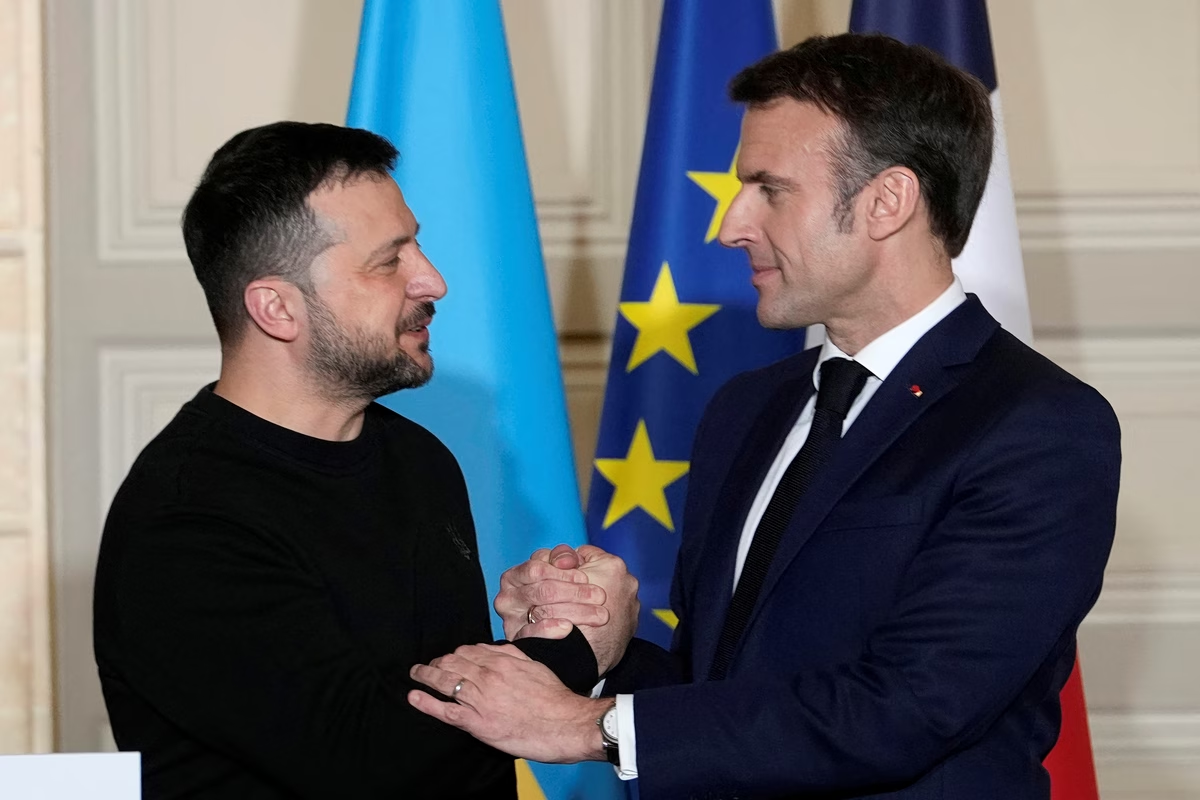
Macron Pledges New Air Defense Support for Ukraine
French President Emmanuel Macron has announced that France intends to deliver a new batch of interceptor missiles to Ukraine, reaffirming Paris's commitment to supporting Kyiv's defense capabilities amid the ongoing conflict with Russia. The announcement was made through an official statement by the French president, in which he underscored the urgency of bolstering Ukraine's air defense infrastructure.
In his statement, Macron wrote that it is "vitally important" to provide Ukraine with all the necessary means to defend its airspace and deter what he described as acts of aggression. The declaration signals a continued and active French role in the broader Western effort to support Ukraine militarily, particularly in the domain of aerial defense systems.
The Strategic Importance of Interceptor Missiles
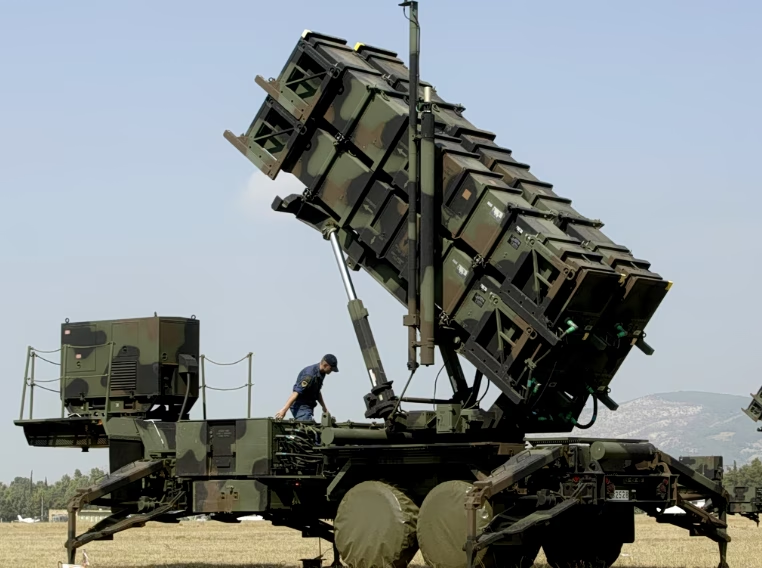
Interceptor missiles play a critical role in modern air defense strategies. Unlike offensive weapons systems, interceptors are designed primarily to neutralize incoming threats — such as ballistic missiles, cruise missiles, and drones — before they reach their intended targets. For Ukraine, which has faced relentless aerial bombardment targeting civilian infrastructure, energy facilities, and military positions, these systems have become indispensable.
The delivery of such weaponry by France adds to a growing list of air defense assets that Western nations have supplied to Ukraine since the full-scale Russian invasion began. Systems from various countries have already been integrated into Ukraine's layered air defense network, and French interceptors are expected to further strengthen that capability.
France's Evolving Role in the Conflict
France's military support for Ukraine has evolved considerably over the course of the conflict. Initially hesitant to provide certain categories of weapons, Paris has gradually expanded the scope and scale of its assistance. This has included artillery ammunition, armored vehicles, and various air defense components. The latest pledge of interceptor missiles represents another step in that direction.
Macron has consistently positioned France as a key pillar of European support for Ukraine, frequently calling on European Union member states to increase their contributions. His government has also been vocal about the need for Europe to take greater responsibility for its own security, a message that has taken on increased urgency given shifting geopolitical dynamics within the transatlantic alliance.
International Context and Reactions
The French announcement comes at a time when Ukraine continues to face significant aerial threats. Russian forces have repeatedly employed a combination of ballistic missiles, cruise missiles, and drone swarms to strike targets across Ukraine, including in major urban centers. Ukrainian air defense units have managed to intercept a substantial number of these threats, but gaps in coverage remain a persistent concern.
Western allies have responded with varying degrees of military support. The United States, Germany, the United Kingdom, and other NATO members have all contributed to Ukraine's air defense network, though debates over the types and quantities of weapons to be supplied continue within alliance circles. France's decision to deliver new interceptor missiles is likely to be welcomed by Kyiv as a meaningful contribution to its ongoing defensive efforts.
Ukraine's Air Defense Needs
Ukrainian officials have consistently called on Western partners to accelerate and expand arms deliveries, particularly when it comes to air defense systems. The country's military leadership has argued that adequate air coverage is not only essential for protecting civilians but also for enabling ground operations and protecting logistics chains that are critical to sustaining the war effort.
- Ukraine has repeatedly requested additional interceptor missiles to replenish depleted stockpiles.
- Air defense assets are considered a top priority by Ukrainian military planners.
- Western nations have been working to coordinate deliveries and avoid overlapping or incompatible systems.
- The frequency and scale of Russian aerial attacks has placed considerable strain on existing Ukrainian air defense resources.
The strain on Ukrainian air defense is not merely a tactical issue — it carries significant humanitarian implications as well. Strikes on power grids, water treatment facilities, and heating infrastructure have affected millions of civilians, particularly during the winter months. Effective air defense is therefore seen as a matter of both national security and humanitarian protection.
Diplomatic Dimensions of the Pledge
Beyond its immediate military significance, Macron's announcement carries diplomatic weight. It signals France's continued political will to stand alongside Ukraine and reinforces the message that Western support for Kyiv remains firm, despite the prolonged duration of the conflict and the economic pressures that sustained military assistance places on donor nations.
France has also been engaged in diplomatic efforts aimed at exploring potential pathways toward a negotiated resolution, though Macron has made clear that any peace settlement must respect Ukraine's sovereignty and territorial integrity. The provision of additional weaponry is framed within this broader context — as a means of strengthening Ukraine's position both on the battlefield and at any future negotiating table.
Looking Ahead
The timeline for the delivery of the new interceptor missiles has not been publicly disclosed, nor have specific details about the quantity or type of systems involved been confirmed. Such information is typically withheld for operational security reasons. However, the political commitment has been clearly stated, and logistical preparations are expected to follow through established channels between French defense authorities and their Ukrainian counterparts.
As the conflict enters yet another phase, the role of air defense systems is likely to remain central to both the military and political calculations of all parties involved. France's pledge adds another layer to an already complex international response and reinforces the position that European nations are prepared to sustain meaningful support for Ukraine for as long as necessary.