The conflicting claims of the Turkish and Greek NAVTEX notices
Turkey issued a NAVTEX asserting that the maritime scientific research activities related to the Greece-Cyprus electrical interconnection cable are being conducted with the "consent of the Turkish authorities." According to the Turkish notice, these activities are taking place within the jurisdiction of the Turkish NAVTEX and on the Turkish continental shelf, the external limits of which were communicated to the United Nations in a letter dated March 18, 2020.
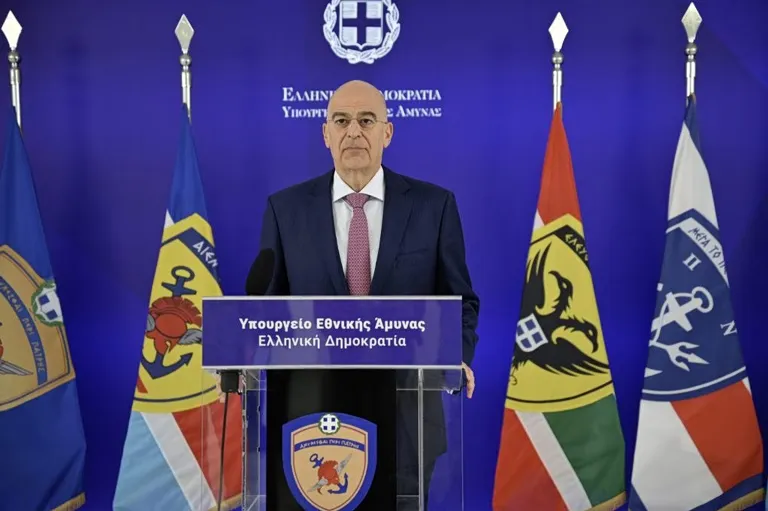
The Greek response, issued by the Hydrographic Service of the Navy under the orders of the Minister of Foreign Affairs, directly challenges the legitimacy of the Turkish claim. The Greek counter-notice identifies the Turkish station as unauthorized to issue NAVTEX messages regarding the survey activities for the Great Sea Interconnector (GSI). Greece maintains that the coordinates for the seabed survey, to be performed by the French-flagged vessel Abeille Marengo, fall within the Greek continental shelf and Exclusive Economic Zone (EEZ) as defined by international law and Greek Law 4001/2011.
Technical details of the vessel and survey area
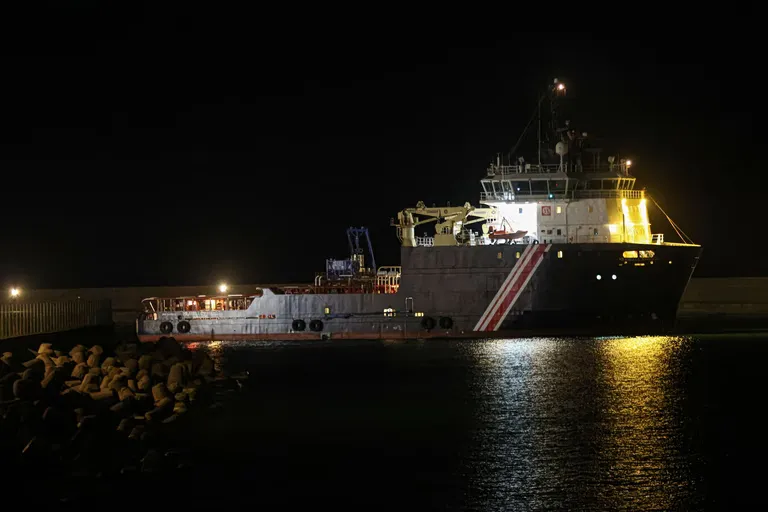
The vessel involved in the current dispute is the Abeille Marengo, a French-flagged research ship identified by MMSI 228505700 and IMO 9388613. The Greek authorities emphasize that the research activities must strictly follow the terms set by Greek instructions for mariners. The Greek Hydrographic Service further clarified that the Heraklion station holds exclusive jurisdiction for publishing NAVTEX messages in the area, rendering the Turkish notice FA76-1127/26 invalid and inapplicable, while the Greek NAVWARN HA15-1411/26 remains valid and in effect.
Official responses from the Greek Ministry of Foreign Affairs
Sources within the Ministry of Foreign Affairs have maintained that the Turkish NAVTEX holds no practical significance regarding the actual operations of the research vessel. They stated that Greece and Cyprus are the only nations that were formally requested for permission and subsequently granted the necessary licenses for the works. The Ministry noted that the movement of the Abeille Marengo was already established and public knowledge based on Greek notices prior to the Turkish announcement.
Furthermore, officials pointed out a procedural discrepancy in the Turkish claim: the Turkish NAVTEX does not mention the issuance of any specific permit, as no such request for permission was ever submitted to the Turkish side. The ship's departure from the port of Herakles, Crete, was officially announced by the Great Sea Interconnector S.A. and the Independent Power Transmission Operator (ADMIE) before the Turkish notice was released. The ship's primary mission involves equipment calibration followed by seabed research to facilitate the development and laying of the interconnection cable.
A pattern of maritime tension in the Eastern Mediterranean
This exchange of maritime notices is not an isolated incident but follows a documented pattern of diplomatic and maritime friction between Athens and Ankara. A nearly identical situation occurred in mid-October 2026 during the deployment of the Kobi Ruegg, a vessel tasked with researching an optical fiber cable intended to connect Saudi Arabia to Europe via Greece and Cyprus.
In that instance, the Greek Navy Hydrographic Service also had to issue a counter-NAVTEX to dispute the authority of the Turkish Antalya station. The Greek response at the time stated that an unauthorized station had transmitted message FA41-1032/26 regarding geophysical surveys by the Kobi Ruegg (MMSI 31100683, IMO 9713753). Greece argued that the majority of the survey coordinates fell within the Greek continental shelf and that the research was being conducted under the terms of Greek permit AR. 2461/2.10.2026.
| Project Name | Vessel Involved | Primary Objective | Conflict Point |
|---|---|---|---|
| Great Sea Interconnector (GSI) | Abeille Marengo | Greece-Cyprus electrical interconnection | Turkish claim of consent vs. Greek EEZ jurisdiction |
| Saudi Arabia-Europe Fiber Optic | Kobi Ruegg | Data transmission system via Greece/Cyprus | Turkish Antalya station authority vs. Greek continental shelf |
Political repercussions and opposition criticism in Greece
The issuance of the Turkish NAVTEX has triggered intense political debate within the Greek Parliament. Following reports that France had sent a formal communication to Ankara regarding the project, opposition parties have criticized the government's handling of the situation. The political friction centers on whether the administration has been sufficiently proactive in protecting Greek sovereign rights in the face of Turkish maritime claims.
Pavlos Christidis, a Member of Parliament for PASOK, accused the government of being "irreparably exposed" by the issuance of the Turkish notice. He called for a clear and decisive government response to clarify the current state of maritime affairs. Similarly, Theofilos Xanthopoulos, the Parliamentary Spokesperson for SYRIZA, used strong language to describe the Turkish claim, noting that Turkey is officially asserting that research is being conducted with their consent. The opposition's stance highlights the domestic pressure on the government to manage the complex geopolitical realities of the Eastern Mediterranean energy corridor.