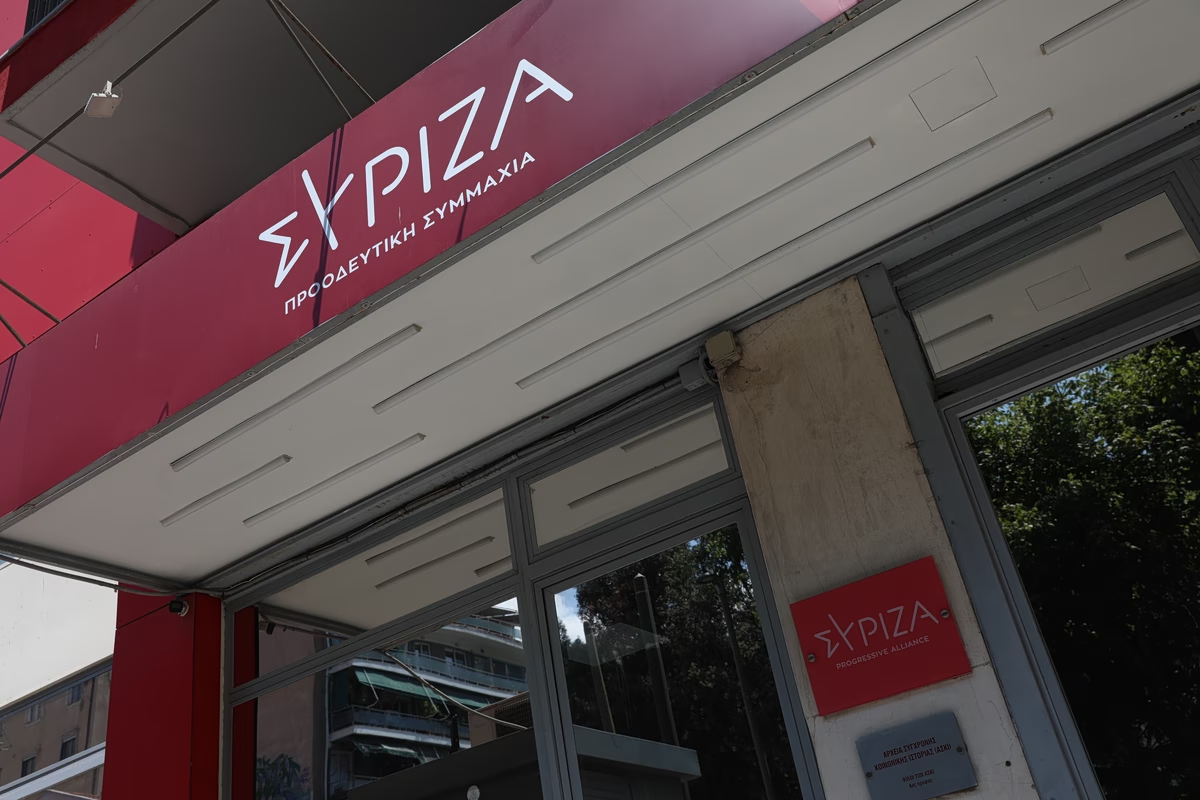
SYRIZA Raises Concerns Over French Investment in Strategic Energy Link
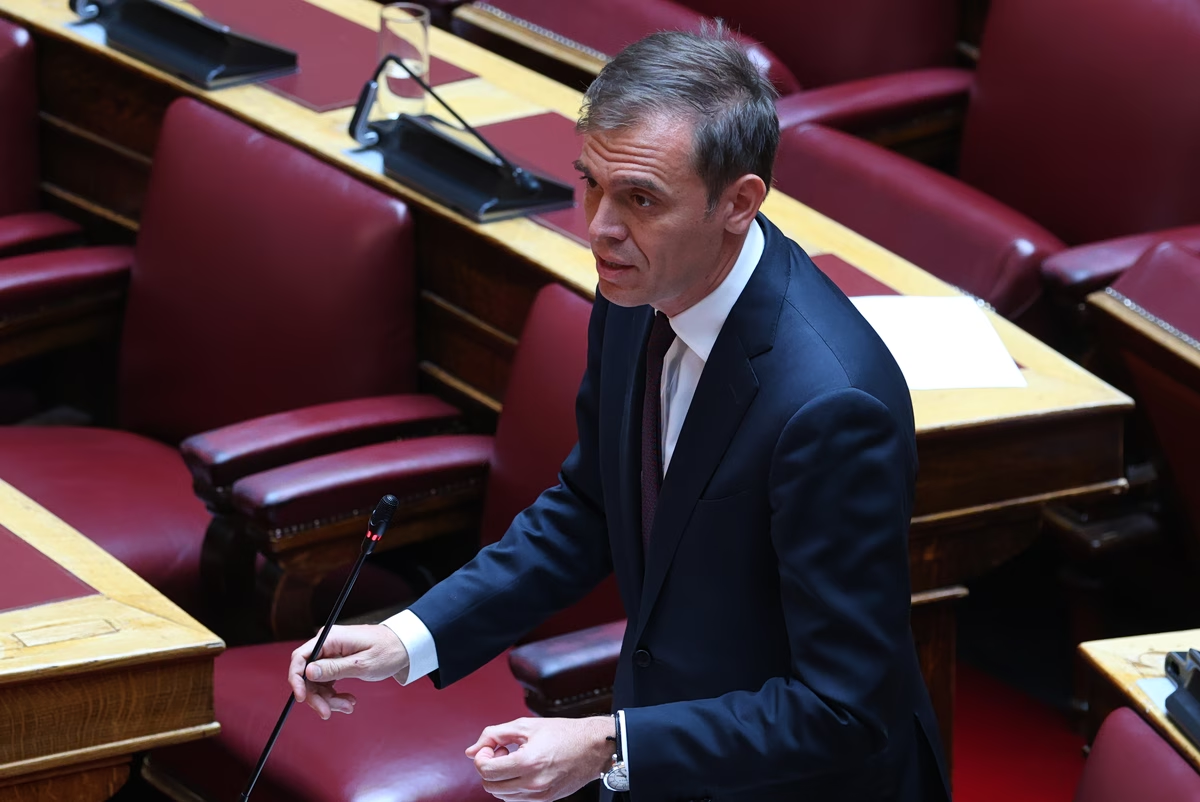
Greek opposition party SYRIZA has submitted a formal parliamentary inquiry regarding the involvement of French infrastructure investment group Meridiam in the Great Sea Interconnector (GSI), the ambitious undersea electricity cable project designed to link Greece, Cyprus, and Israel. The initiative was spearheaded by SYRIZA parliamentarian Rena Dourou, who has called on the government to provide clear answers about the conditions and implications of Meridiam's participation in the project.
The Great Sea Interconnector is widely regarded as one of the most strategically significant energy infrastructure projects in the Eastern Mediterranean. Once completed, it is expected to integrate Cyprus — currently one of the few European Union member states without a direct electricity connection to the continental grid — into the broader European energy network. The project has received European Union funding support and is considered a key element of the bloc's energy diversification strategy.
The Role of Meridiam in the Special Purpose Vehicle
At the center of SYRIZA's inquiry is Meridiam's entry into the special purpose vehicle established to develop and manage the interconnector. Special purpose vehicles, or SPVs, are legal entities created specifically to isolate financial risk and manage large-scale infrastructure projects. Meridiam, a Paris-based asset management firm specializing in long-term infrastructure investments, has built a significant portfolio of public-private partnership projects across Europe, Africa, and North America.
However, SYRIZA lawmakers have flagged what they describe as Meridiam's close ties with Turkey as a point of concern. The opposition party argues that this relationship raises questions about the suitability of a company with such connections being granted a stake in an energy project of considerable geopolitical sensitivity, particularly given the ongoing tensions between Greece and Turkey over a range of bilateral issues, including disputes in the Aegean Sea and the broader Eastern Mediterranean region.
Why the Turkey Connection Matters
The geopolitical dimension of the SYRIZA inquiry cannot be easily separated from the broader context of Greek-Turkish relations. Greece and Turkey, while both NATO members, have maintained a complex and often contentious relationship, with unresolved disputes over maritime boundaries, airspace, and the status of certain islands continuing to generate diplomatic friction. Against this backdrop, opposition lawmakers contend that any foreign investor with significant business interests or institutional relationships in Turkey should be subject to heightened scrutiny before being permitted to participate in critical national infrastructure.
SYRIZA has not alleged any specific wrongdoing on the part of Meridiam or the Greek government. Rather, the parliamentary question appears designed to prompt transparency and elicit a formal government response regarding the vetting process applied to investors in strategically sensitive projects. The opposition is seeking clarity on what criteria were used to evaluate Meridiam's participation and whether national security considerations were factored into the decision-making process.
Government Yet to Formally Respond
As of the time of reporting, the Greek government had not issued a formal public response to the parliamentary inquiry. Under Greek parliamentary procedure, the relevant minister is obligated to provide a written or oral response within a specified timeframe. It remains to be seen whether the government will address the geopolitical concerns raised by SYRIZA or focus its response primarily on the technical and financial merits of Meridiam's involvement.
Meridiam, for its part, has not made any public statement in response to the opposition's questions. The firm has an established track record in European infrastructure and has previously been involved in projects backed by the European Investment Bank and other multilateral financial institutions.
The Broader Significance of the Great Sea Interconnector
The Great Sea Interconnector has been in development for several years and represents a major logistical and engineering challenge. The proposed cable would span hundreds of kilometers across the seabed of the Eastern Mediterranean, making it one of the longest and deepest submarine power cables ever constructed. Upon completion, it would allow Cyprus to import and export electricity with Greece and, by extension, with the wider European grid.
Beyond its technical dimensions, the project carries substantial political and energy security implications. For Cyprus, integration into the European electricity market would reduce the island's dependence on domestically produced energy, which currently relies heavily on imported fossil fuels. For Greece, the project reinforces its emerging role as an energy hub in the southeastern corner of Europe, a position the country has been actively cultivating through a series of pipeline agreements, liquefied natural gas terminal investments, and interconnection projects.
EU Funding and Oversight
The Great Sea Interconnector has been classified as a Project of Common Interest by the European Commission, a designation that makes it eligible for financial support under the Connecting Europe Facility. This EU backing adds another layer of institutional oversight to the project, as funding recipients are typically subject to rigorous compliance and transparency requirements.
The involvement of EU institutions also means that any concerns raised at the national parliamentary level could potentially attract attention from European regulators, particularly if questions about investor vetting and national security screening remain unresolved. The European Union has in recent years moved to strengthen its framework for screening foreign investments in critical infrastructure, reflecting growing awareness of the strategic vulnerabilities that can arise from opaque ownership structures in key sectors.
Opposition Scrutiny and Democratic Accountability
SYRIZA's decision to submit a formal parliamentary question on this matter reflects the opposition's broader commitment to scrutinizing government decisions related to large-scale infrastructure and foreign investment. Parliamentary questions of this nature serve an important democratic function, compelling the executive branch to publicly account for its choices and the processes that underpin them.
Whether the concerns raised about Meridiam's alleged ties to Turkey will gain broader political traction remains to be seen. The Greek government is likely to defend its handling of the Great Sea Interconnector project as being in the national interest, while SYRIZA will continue pressing for greater transparency. As the project moves forward, the debate over investor eligibility and geopolitical risk is likely to remain a point of political contention in Athens.