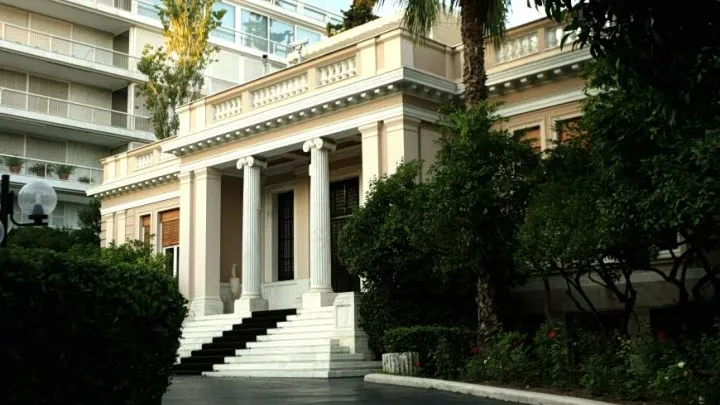
Foreign policy disputes and the Turkish dimension
The current Greek political tension is heavily centered on the government's handling of relations with Ankara. Prime Minister Kyriakos Mitsotakis and Foreign Minister Giorgos Gerepetritis are facing significant pressure following a recent diplomatic statement from France regarding Turkey. This friction has prompted various political actors to intervene in an attempt to bolster the government's position, including former minister Dora Bakoyannis.
Alexis Tsipras, the former Prime Minister and current leader of the opposition, has intensified his critiques of the administration's external strategy. He argues that the current foreign policy has failed significantly, leaving the country unable to exercise its sovereign rights in the region. According to Tsipras, the administration is being forced to seek permission or consensus from Turkey to act within its own maritime and territorial zones.
The essence of sovereignty claims
Tsipras has moved beyond mere rhetorical criticism to address what he describes as the "essence" of the matter. He contends that Turkey has effectively become a regional policeman, a status he claims is being bolstered by the support of the United States. This critique places the Mitsotakis administration in a defensive posture, attempting to reconcile national interests with a complex international landscape where traditional alliances are being tested by regional power shifts.
Allegations of corruption and political connections
Domestic integrity remains a primary flashpoint in the ongoing Greek political tension, with the opposition focusing on the link between political figures and business interests. Alexis Tsipras has repeatedly raised the issue of corruption, suggesting that the government's efforts to combat it may be more focused on improving polling numbers for New Democracy than on actual systemic reform.
Specific attention has been drawn to the connections within the Magnesia region, involving former basketball player Panayiotis Liadelis and former Deputy Minister Zeta Makri. Reports have highlighted the following points regarding these associations:
- Zeta Makri provided significant support to Panayiotis Liadelis during his candidacy for the presidency of the Volos Chamber of Commerce.
- There are unverified claims circulating regarding a joint construction company owned by Liadelis and Makri's son.
- Liadelis has faced past allegations involving various criminal code issues, including attempted extortion.
The persistence of these allegations provides the opposition with a platform to challenge the moral authority of the ruling party, framing the political landscape as one struggling with deep-seated structural issues.
Rising defense spending and the Eurogroup context
The debate over national priorities is further complicated by the intersection of defense requirements and social spending. During a recent Eurogroup session, presided over by Kyriakos Pierrakakis, the presence of NATO Secretary General Mark Rutte underscored the growing importance of military readiness in European discussions.
Following the session, Pierrakakis stated that defense spending is increasing and must remain at high levels in the coming years. This directive suggests a strategic shift in fiscal priorities. The implications of this shift are twofold:
- Increased allocation of national budgets toward military procurement and modernization.
- Potential constraints on social spending as resources are diverted to meet NATO-aligned defense targets.
This trend reflects a broader European movement toward militarization, which often creates friction between security objectives and the socio-economic needs of the domestic population.
International parallels: US politics and French social unrest
The Greek political tension is occurring against a backdrop of significant instability in other major Western democracies, providing a global context for the current era of political volatility. In the United States, the political climate remains fractured following the recent elections, with significant legal and political questions surrounding the transition of power and the actions of former administration officials.
In France, economic decisions are driving significant social unrest. The French government, under Prime Minister Lecornu, recently decided to increase the minimum wage by 23 euros, effective December 1, 2024. This move, while intended to address cost-of-living concerns, has faced backlash from industrial leaders.
Planned protests on Nov 17
The French reaction, led by the Medef (the French employers' federation), warns that such wage increases could discourage foreign investment. This mirrors the global tension between maintaining economic competitiveness and addressing the immediate social demands of the citizenry.
| Country | Primary Issue | Key Actor | Outcome/Status |
|---|---|---|---|
| Greece | Foreign Policy/Corruption | Mitsotakis / Tsipras | High political tension |
| USA | Election/Legal disputes | Donald Trump / Jamie Raskin | Political instability |
| France | Minimum Wage/Protests | Prime Minister Lecornu |